
 E-Paper



Bad Bunny Uses Joy to Put Out Political Firestorm at Super Bowl Halftime
Bad Bunny delivered a pointed message in Spanish to millions of Americans watching the Super Bowl on Sunday night: “We’re still here.”


 Prefer HTon Google


Bad Bunny delivered a pointed message in Spanish to millions of Americans watching the Super Bowl on Sunday night: “We’re still here.”
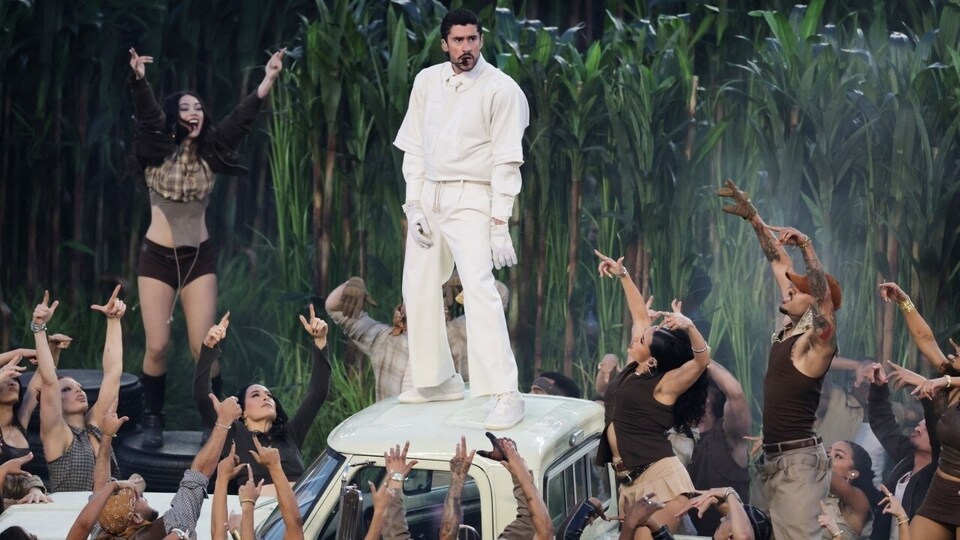
In a history-making halftime show performed almost entirely in Spanish, the Puerto Rican star paid tribute to his heritage and the many countries—from Brazil to Mexico—whose people have come to shape the modern-day U.S.
Just a week ago, Bad Bunny denounced Immigration and Customs Enforcement while accepting a Grammy award, stoking further political furor from conservatives ahead of the Super Bowl. But on the halftime stage, he offered up a buoyant celebration of Latino culture.
The elaborate stage design included a maze of sugar cane and a single-story house similar to the one he used during his 31-date residency in San Juan, Puerto Rico, last summer. As Bad Bunny strutted through the greenery, he passed by old men playing dominoes, women chatting in a nail salon and boxers sparring—a montage of scenes from life in Puerto Rico.
He opened with some of his kinetic reggaeton hits—“Tití Me Preguntó,” an insistent single about a hyperactive love life, and “Yo Perreo Sola,” a club missile—and later moved through muscular Latin trap (“Monaco”) and sparkling salsa (the opening of “Nuevayol”).
A stream of celebrities showed up to offer their support: Jessica Alba, Pedro Pascal, Cardi B, Karol G and Young Miko threw a house-party behind a phalanx of dancers. Lady Gaga sang a salsa version of her hit “Die With a Smile,” originally a duet with Bruno Mars, while Ricky Martin delivered a full-throated rendition of Bad Bunny’s song “Lo Que le Pasó a Hawaii”—which critiques the potential consequences of U.S. statehood for Puerto Rico through the lens of Hawaii.
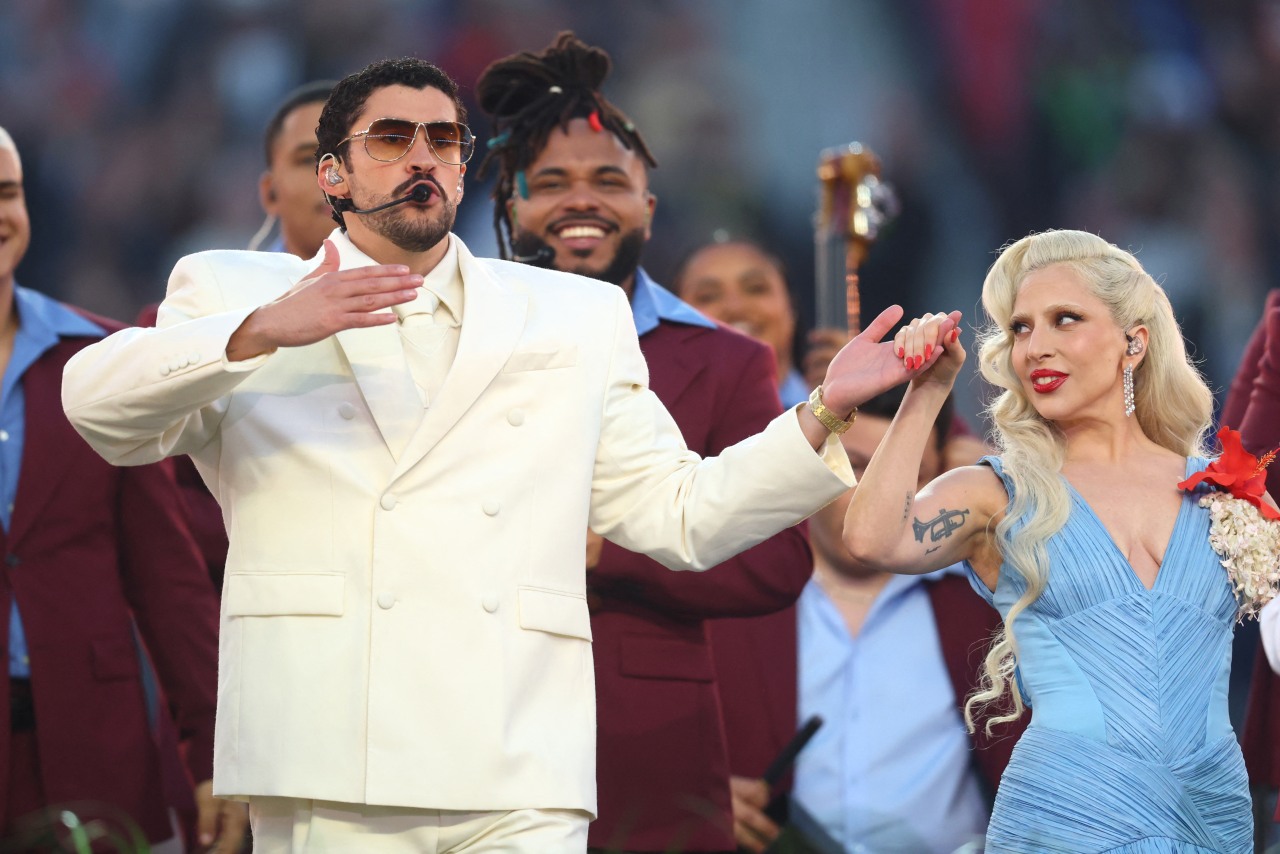
Bad Bunny finished his set by spiking a football which read “Together, We Are America.” Then he led a raucous singalong to his nostalgic hit “DTMF” as a crowd hoisted the flags of nations across Latin America behind him.
“He went from bagging groceries 10 years ago to playing the biggest stage this planet has to offer, and did it unwaveringly on his own terms in his native tongue,” said Carlos Cancela, a Bad Bunny fan and former executive at a major label. “He is quite literally the embodiment of the American Dream.”
But Bad Bunny, whose full name is Benito Antonio Martínez Ocasio, also sparked the latest culture-war controversy as conservatives railed against his selection. Right-wing influencers and commentators zeroed in on the star’s past criticism of President Trump’s immigration agenda, his Spanish-language song lyrics and his gender-fluid fashion choices. Last week, Bad Bunny said, “ICE out,” on stage at the Grammys, where he became the first artist to win album of the year for an all-Spanish release, “Debí Tirar Más Fotos.”
Trump joined the chorus of conservative criticism on Sunday night, calling the show “absolutely terrible, one of the worst, EVER!” and “a ‘slap in the face’ to our Country.”
“It makes no sense, is an affront to the Greatness of America, and doesn’t represent our standards of Success, Creativity, or Excellence. Nobody understands a word this guy is saying,” Trump wrote in a Truth Social post.
Turning Point USA, the group founded by the late conservative activist Charlie Kirk, held its own competing halftime event headlined by musician Kid Rock. The event, billed as the “All-American Halftime Show,” garnered roughly five million views on the group’s YouTube page.
Republican strategist Nathan Brand described Bad Bunny as a unifying factor for conservatives. About his halftime performance, he said, “If you were in the anti-Bad Bunny corner before the show, you’re still in that corner. If you like him, you still probably like him.”
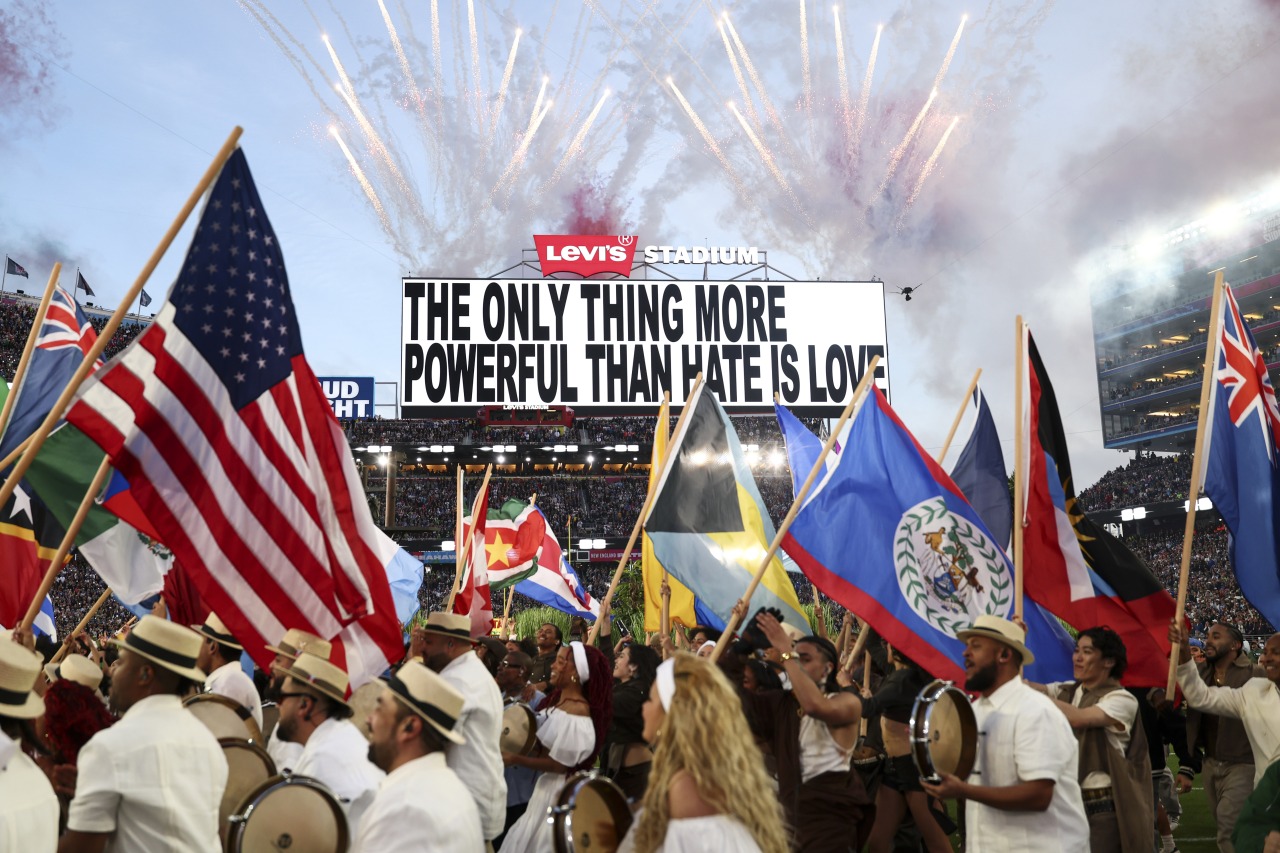
The latter camp includes Sen. Ruben Gallego (D., Ariz.), who called Bad Bunny’s performance “beautiful,” and said he was among “many teary eyed Latinos” who watched the halftime show.
Fans echoed Gallego’s enthusiasm. Victoria Hupp, who lives in the Cleveland area, “loved the celebration of Hispanic culture in America.”
“Many of us in the Latin community see this as a cultural step forward,” said Jorge Brea, who is based in Tampa Bay. “It’s a reminder that you can break through at the highest level, regardless of language, background or the current state of the world. It should be inspiring to anyone watching.”
Write to Elias Leight at elias.leight@wsj.com and Sabrina Rodriguez at sabrina.rodriguez@wsj.com


