E-Paper



The inside story of Trump's decision to strike Iran, assassinate Khamenei
The strike followed months of CIA work tracking top Iran leaders, including Khamenei. Intelligence was shared with Israel, and the timing was then planned.

 Prefer HTon Google


What began as public frustration over stalled nuclear talks ended within hours in a sweeping US military assault that reshaped Iran's leadership and jolted global markets.
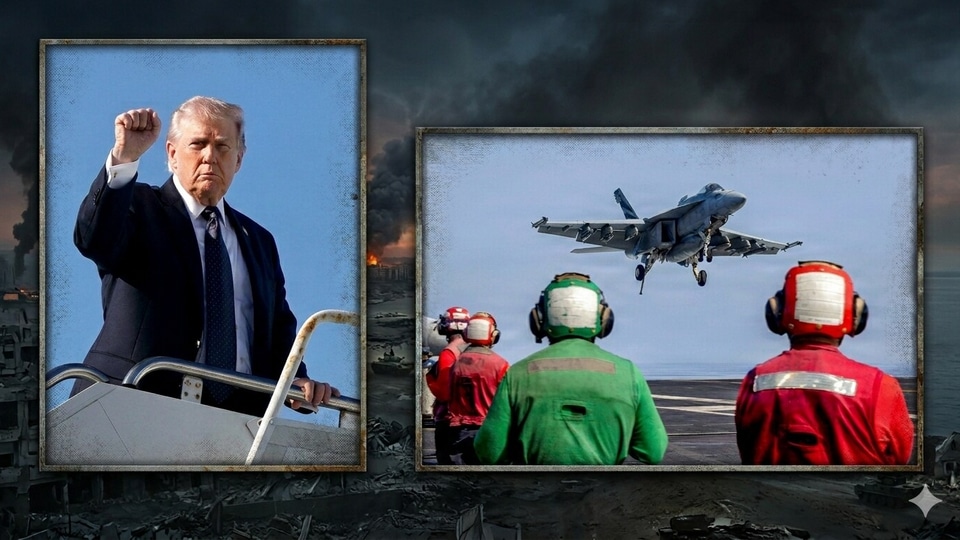
On February 27, President Donald Trump signaled impatience with indirect negotiations with Iran. By mid-afternoon, while flying to Texas aboard Air Force One, he had authorized “Operation Epic Fury,” a multi-domain strike targeting the country’s top leadership - including Supreme Leader Ayatollah Ali Khamenei.
From hesitation to green light
At 12:25 p.m. EST on Friday (Feb 27), Trump emerged from the White House en route to Texas and told reporters he was “not happy with the way” nuclear talks were progressing. Asked whether he had made a final decision, he replied, “No, I haven’t.”
Just over three hours later, at 3:38 p.m. EST, as Air Force One cruised toward Corpus Christi, Trump gave the order.
“The president directed, and I quote, ‘Operation Epic Fury approved ... Good luck,’” General Dan Caine, chairman of the Joint Chiefs of Staff, said at a Pentagon briefing Monday.
The directive triggered final preparations across US forces. Air defense batteries moved into position, pilots rehearsed strike packages, munitions were loaded and two carrier strike groups - the USS Abraham Lincoln and USS Gerald R. Ford - advanced toward launch points.
During the nearly three-hour flight, Trump sought feedback from a small group of Republican lawmakers traveling with him, including Texas Sens. John Cornyn and Ted Cruz. Associated Press, citing a person familiar with the opeartion, reported that the general sentiment was that Tehran was using negotiations as a delay tactic.
Nine minutes after approving the operation, Trump posted on Truth Social about an unrelated dispute, directing the US government to halt use of Anthropic artificial intelligence technology following a public disagreement with the Pentagon.
At 4:03 p.m. EST, upon landing in Texas, Trump again told reporters he was dissatisfied with the talks but declined to say whether he had approved military action. “I’d rather not tell you,” he said. “You would have had the greatest scoop in history, right?”
‘Across every domain’
The operation began at 1:15 a.m. EST on February 28.
“Across every domain - land, air, sea, cyber,” US forces “delivered synchronized and layered effects designed to disrupt, degrade, deny and destroy Iran’s ability to conduct and sustain combat operations on the US side,” Caine said.
He described a vast military effort involving thousands of service members, hundreds of advanced fighter jets, dozens of refueling tankers and the Lincoln and Ford carrier strike groups. Intelligence and surveillance networks supported the mission, and additional forces continued flowing into the region.

The strike followed months of CIA work tracking senior Iranian leaders, including Khamenei. Intelligence was shared with Israel, and the timing of the strikes was adjusted accordingly, according to a person familiar with the operation.
In Tehran, explosions were heard as Israel’s defense minister declared a state of emergency. An Israeli military official said three nearly simultaneous strikes hit separate locations within a minute, killing Khamenei and about 40 senior figures, including the head of Iran’s paramilitary Revolutionary Guard and the defense minister.
At 4:37 p.m. EST, Trump announced Khamenei’s death on Truth Social, saying the Iranian leader had been “unable to avoid our Intelligence and Highly Sophisticated Tracking Systems.”
Cornyn later said Trump had not revealed his plans during the flight, only raising the broader question of whether Iran should be stopped “by whatever necessary action.”
Expanding targets and mixed signals
On March 1, Trump claimed US forces had “destroyed and sunk 9 Iranian Naval Ships” and largely destroyed Iran’s naval headquarters, promising further action.
Also read: How Israel used Iranian traffic cameras to track, kill Supreme Leader Khamenei
In a video message later that day, he said US forces and partners had struck hundreds of targets, including Revolutionary Guard facilities and air defense systems, “all in a matter of literally minutes,” and indicated operations would continue until US objectives were achieved, without specifying them.
According to reports, administration officials privately told congressional staff that intelligence did not indicate Iran was preparing a preemptive strike against the United States. Instead, they cited broader regional threats from Iranian missiles and proxy forces.
A senior White House official also told AP that Iran’s “new potential leadership” had signaled openness to talks.
“This is not Iraq”
On March 2, Defense Secretary Pete Hegseth sought to frame the operation as limited.
“This is not Iraq. This is not endless,” he said at the Pentagon. “This is not a so-called regime change war, but the regime sure did change, and the world is better off for it.”
Trump, speaking separately at the White House, said he expected the campaign to last four to five weeks but that US forces had the capacity to go longer if necessary. In an interview with the New York Post, he declined to rule out deploying ground troops. “I don’t have the yips with respect to boots on the ground,” he said.
Regional and global fallout
Other nations in the region moved quickly to shore up defenses. The United Arab Emirates said it intercepted nine ballistic and six cruise missiles, along with 148 drones. Qatar reported shooting down two Iranian warplanes.
Track Live Updates on explosions in UAE here
Energy markets reacted sharply. Oil prices jumped amid tanker disruptions near the Strait of Hormuz, raising concerns over supply shortages from the Persian Gulf. Global markets wavered, with US futures tracking declines in Europe and Asia.