
 E-Paper



China demography: Lowest number of marriages in 3 decades, and an ageing Beijing
Marriages are closely connected to births in China and the falling number, the lowest record of nuptials since 1986 when China began to make public the number, is likely to further impact government policy to boost birth rates

 Prefer HTon Google


BEIJING: China registered the lowest number of marriages, 7.64 million, in 2021, the lowest in nearly three decades, in what is the latest hurdle against efforts to boost the country’s rapidly falling birth rate as the government tries to stall a looming demographic crisis.
Marriages are closely connected to births in China and the falling number, the lowest record of nuptials since 1986 when China began to make public the number, is likely to further impact government policy to boost birth rates.
The fall in marriage rate will also impact economic growth, experts have warned.
It was a 6.1% fall from 2020, the data showed; the number has now fallen for eight consecutive years, and, for the first, fallen below the yearly eight-million marriages mark since 2003.
“The report showed a growing number of Chinese people are delaying getting hitched. Nearly half of the couples registering for marriage in 2021 were 30 or older, a record high. About 19.5% were over 40,” the news website, Caixin, reported.
Yang Jinrui, deputy director of China’s national health commission’s (NHC) population surveillance and family development department, had said in January most people under 30 were delaying getting married because of the immense pressure to secure a job that pays well enough to raise a family.
“People born in the 1990s and 2000s, who are the bulk of those who might get married or have babies nowadays, have received a longer education and face greater employment pressure,” he said.
The phenomenon has led to more of them choosing to postpone marriage or never marry, Yang said.
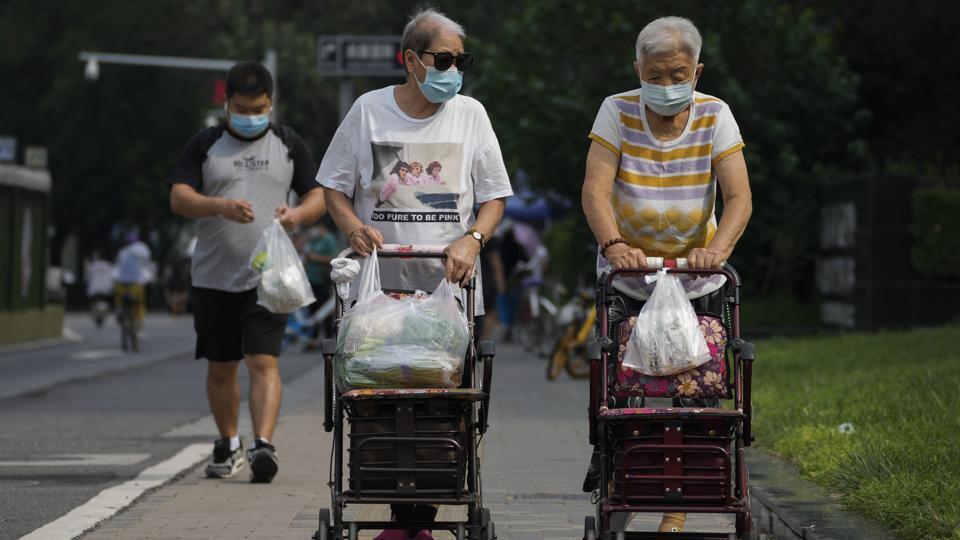
In another development, Beijing has entered the stage of a “moderately ageing society since 2021”, according to a report released on Friday during the ongoing 2022 China International Fair for Trade in Services (CIFTIS), official news agency Xinhua reported.
The data was part of a joint report done by the office of the municipal working committee on ageing and the Beijing Association on Ageing.
Beijing’s population is around 21 million, according to the last census of 2021.
“By the end of last year, Beijing saw over 4.4 million people of its permanent resident population aged 60 or above, accounting for more than one-fifth of the total,” said the report.
The population aged 65 or above was around 3.12 million, accounting for 14.24 % of the total, an increase of 204,000 compared with 2020.
“It makes 2021 the year with the largest increase and highest growth rate in the population aged 65 or above over the past five years,” the Xinhua report said.
“If the registered population aged 15 to 59 is supposed to support the registered population aged 60 and above, it means that one elderly person in Beijing is supported by an average of 2.1 registered workers,” the report said.
A region enters a moderately ageing society when the proportion of its population aged 60 or above is between 20 and 30% or the proportion of the population aged 65 or above is between 14 and 20%.


