
 E-Paper



China media ridicules US F-35 accident with PLA naval aviation still to take-off
Landing a fighter on a 500 feet deck of a moving, pitching and rolling aircraft carrier is the most complex of flight operations. With only 10 years of naval aviation under its belt, China has a lot to learn from US Navy and Indian Navy.

 Prefer HTon Google


The Chinese Communist Party (CCP) information warfare machine went into overdrive after US Stealth Fighter F-35C had a landing mishap on January 24 during flight operations on Supercarrier Carl Vinson while patrolling South China Sea. The USS Carl Vinson along with USS Abraham Lincoln and two landing ships are involved in freedom of navigation operations with the motive of deterring Chinese PLA from attacking Taiwan by taking advantage of US-Russia crisis over Ukraine.
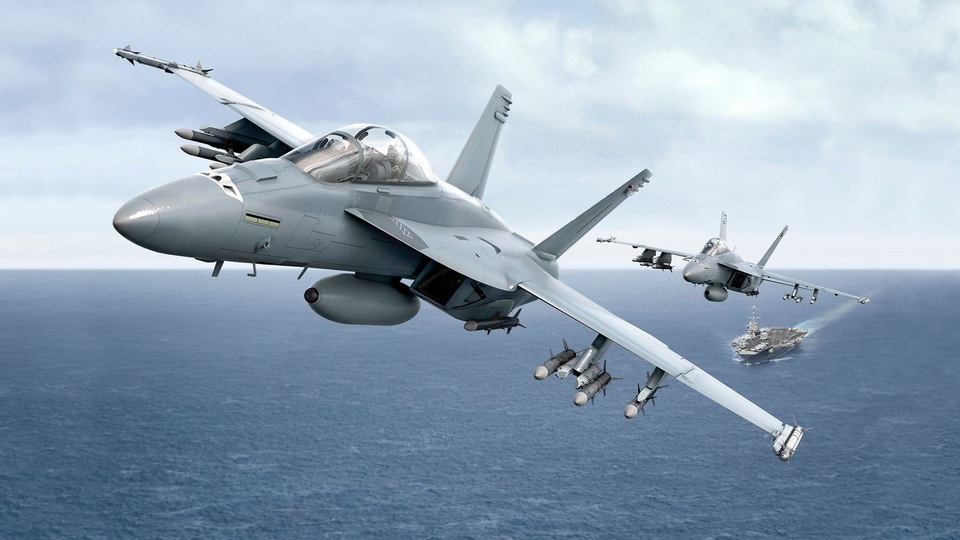
Several analysts with so-called think tanks were quoted in the propaganda media as saying that the F-35C accident exposed the exhaustion of the US military, which has been flaunting its prowess against China at the cost of the physical and mental health of its troops and high technical risks. While the pilot of the crashed F-35C was recovered safely, the US Navy is involved in salvaging operation of the stealth fighter lest the Chinese reach there first and copy the latest war fighting technology.
While the Chinese media may pass caustic comments on US aircraft carrier operations, fact is that fighter accidents onboard aircraft carriers are part and parcel of flight operations. The cold facts are that US Navy has been operating aircraft carriers for 100 years with some 70-odd carriers serving the nation and another three under construction. Maritime aviation is the most complex part of war fighting with the fighter pilot having only 500 feet of flight deck to land and take off from the aircraft carrier. Apart from handling the aircraft, the pilot must factor in the pitch and roll of the megaship apart from blustery winds, rain, and darkness. The US Navy has not only operated these floating islands for ages but has used them successfully to wage war and project power all over the world.
The Chinese military and propaganda media have often passed judgements on Indian military prowess without realising that India has been operating aircraft carriers since 1961 and has an amazing record of maritime aviation including 1971 blockading of Karachi harbour. Many an armchair analysts have argued that carrier-based aviation is prohibitively expensive and outdated due to existence of long distance ballistic missiles. They recommend that shore-based fighters could do the same job as the carrier with mid-air refueling option giving the much-needed operational range. However, the Indian Navy found that the shore-based fighter pilots of the Indian Air Force found themselves disoriented on high seas without land in sight and used as a reference point. The Indian Navy’s sole aircraft carrier INS Vikramaditya is currently under maintenance with the new aircraft carrier INS Vikrant expected to be launched by Prime Minister Narendra Modi on 75th year of Indian Independence.
While India has already decommissioned two of its aircraft carriers, the PLA Navy carrier operation is still to be born. Its first refitted aircraft carrier Liaoning was declared combat ready only in 2016 with first fighter landing only in 2012. Not much is known about its second aircraft carrier Shandong’s fighter operational capability. The construction of third Chinese aircraft carrier Type 003 only began in February 2017 at Jiangnan Shipyard in Shanghai. While the Chinese have successfully copied the Russian Su-33 carrier-based aircraft to stand its own J-15 line, the naval aviation cannot be copied, and the only option is training the fighter pilots on high seas and pitch-black darkness. Fact is that Chinese naval aviation has at least a decade to go before it starts to acquire long sea legs.
Even though China has deployed long range ballistic missiles on its eastern seaboard to deter US carriers, the flat-top vessels have remarkable survival capabilities with the strike group defended by nuclear powered submarines with intercontinental range ballistic missiles and destroyers armed with long range cruise missiles. Since the carrier is constantly on the move, it is not only difficult to target the vessel and at the same time exposing the fixed missile sites to a lethal counter. The world may be threatened by an aggressive PLA and ever growing war making arsenal of China, but one must remember that the Communist China has only fought a border skirmish with India in 1962 and was taken to task by miniscule Vietnam in 1979. Projecting power on turbulent seas far way from home is a different ball game.


