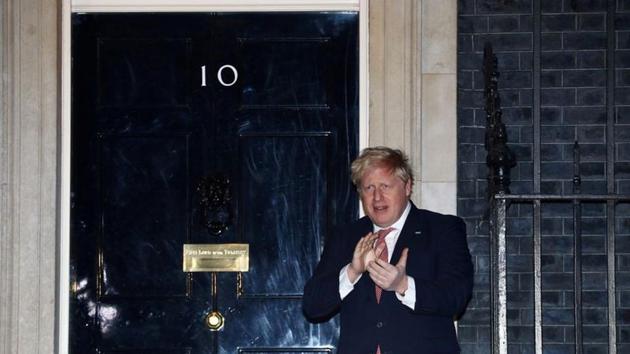
Recovered after being stricken by coronavirus, Prime Minister Boris Johnson prepared to lead the government response to the pandemic challenge again from Monday, as pressure grew from various quarters to announce steps to ease the lockdown.
Foreign secretary Dominic Raab told Sunday television that a vaccine against the virus is “not likely to come to fruition this year”. Human trials for a vaccine have begun in Oxford, with experts hoping for positive results by September, but others have tempered expectations.
Downing Street said Johnson, who has been recuperating in a country retreat after leaving hospital, will resume duty on Monday, at a time when a new opinion poll suggested dwindling public trust in his government’s ability to deal with the pandemic.
According to Raab, who is deputising for Johnson, the prime minister is ‘raring to go’.
Johnson, who studied Classics at Oxford, is reported to have quoted iconic Roman statesman Cicero’s words to his aides: ‘Salus populi suprema lex esto’ (The health of the people should be the supreme law), which has been interpreted as his reluctance to ease the lockdown.
Raab said without the lockdown the death toll would have been worse than the over 20,000 figure as of Saturday, adding that social distancing measures would be in place at least “for some time”. He refused to set a timetable when the lockdown would be eased.
{{/usCountry}}Raab said without the lockdown the death toll would have been worse than the over 20,000 figure as of Saturday, adding that social distancing measures would be in place at least “for some time”. He refused to set a timetable when the lockdown would be eased.
{{/usCountry}}Pressure on easing the lockdown grew after the governments in Scotland and Wales set out conditions needed before a review could be held. Raab has previously set a five-point test before easing the curbs could be considered.
The test includes: protecting the National Health Service’s ability to cope; a sustained and consistent fall in the daily death rates; reliable data showing the rate of infection is decreasing to manageable levels; the range of operational challenges, including testing capacity and PPE, are in hand, with supply able to meet future demand; and that any adjustments to the current measures will not risk a second peak of infections.