President Donald Trump on Friday indicated he may support a ceasefire in the ongoing aerial conflict between Israel and Iran, now in its second week, but said it would depend on how events unfold.
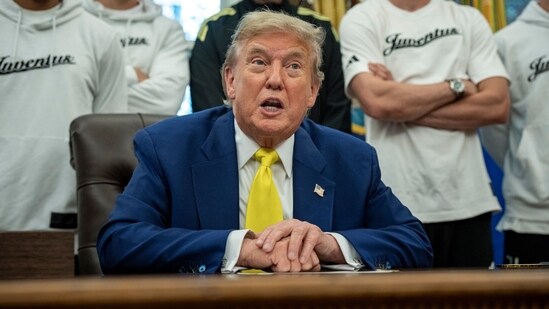
Asked by reporters if he would back a truce while diplomatic talks continue, Trump replied, "I might, depending on the circumstances." He also warned that Iran has a limited timeframe to avoid possible U.S. military action. "I'm giving them a period of time, and I would say two weeks would be the maximum," Trump said, hinting that a decision could come sooner.
Trump expressed doubt over Europe’s ability to mediate the conflict. "Iran doesn't want to speak to Europe. They want to speak to us. Europe is not going to be able to help in this one," he said.
On the same day, Iran’s foreign minister held talks with British, French, German, and EU counterparts in Geneva to discuss restarting diplomatic efforts on its nuclear program. European leaders urged Tehran to engage directly with Washington, but the discussions ended without a breakthrough.
When asked whether U.S. ground troops would be required if conflict escalates, Trump said, "Well, I'm not going to talk about ground forces, because the last thing you want to do is ground forces."
{{/usCountry}}When asked whether U.S. ground troops would be required if conflict escalates, Trump said, "Well, I'm not going to talk about ground forces, because the last thing you want to do is ground forces."
{{/usCountry}}The Israel-Iran air war began on June 13, when Israel launched strikes on Iranian territory, claiming the goal was to stop Iran from advancing its nuclear weapons capability. Israel, which is widely believed to possess nuclear weapons, is not a signatory to the Nuclear Non-Proliferation Treaty (NPT). Iran, which insists its nuclear program is for peaceful purposes, is a member of the NPT and responded with retaliatory strikes.
According to the Human Rights Activists News Agency, Israel's attacks have killed 639 people in Iran. Meanwhile, Israel has reported 24 civilian deaths from Iranian strikes.
Trump and the White House have said a decision on US involvement in the conflict will be made within two weeks. So far, Trump’s stance has ranged from promoting a diplomatic resolution to signalling potential military support for Israel, leaving global observers uncertain about the US course of action.
Europe joins Tehran talks as two-week clock ticks
President Donald Trump on Friday dismissed the prospects of European diplomacy resolving the Israel-Iran conflict, reiterating that Iran is uninterested in engaging with European leaders. "Iran doesn't want to speak to Europe. They want to speak to us. Europe is not going to be able to help in this," Trump said upon arriving in Morristown, New Jersey.
He also played down the possibility of urging Israel to pause its military actions, responding to Iran’s demand that Israel cease its strikes before Tehran resumes dialogue with Washington. When asked if he would press Israel to halt attacks, Trump said it was "very hard to make that request right now," adding, "If somebody's winning, it's a little bit harder to do than if somebody's losing, but we're ready, willing and able, and we've been speaking to Iran, and we'll see what happens."
Addressing the timeline for a potential US military response, Trump said, "I'm giving them a period of time, and I would say two weeks would be the maximum," explaining that the goal was to "see whether or not people come to their senses."
A day earlier, Trump had said he would "make my decision whether or not to go within the next two weeks" because of a "substantial chance of negotiations" with Iran. That statement was interpreted as opening a short diplomatic window, prompting European leaders to meet with Iran’s foreign minister in Geneva. However, Trump said the discussions "didn't help," and his latest remarks suggest he may act sooner if there’s no progress on Iran’s nuclear programme.
(With inputs from agencies)