
 E-Paper



How Russia reacted to India's 'Operation Sindoor' against Pakistan-based terror groups
Moscow denounced all forms of terrorism and highlighted that the global community must work together to fight terror threat effectively.

 Prefer HTon Google


Russia on Wednesday expressed deep concerns over the current situation between India and Pakistan in the wake of the Pahalgam terror attack, followed by India’s “Operation Sindoor” against Pakistan-based terrorist organisations.
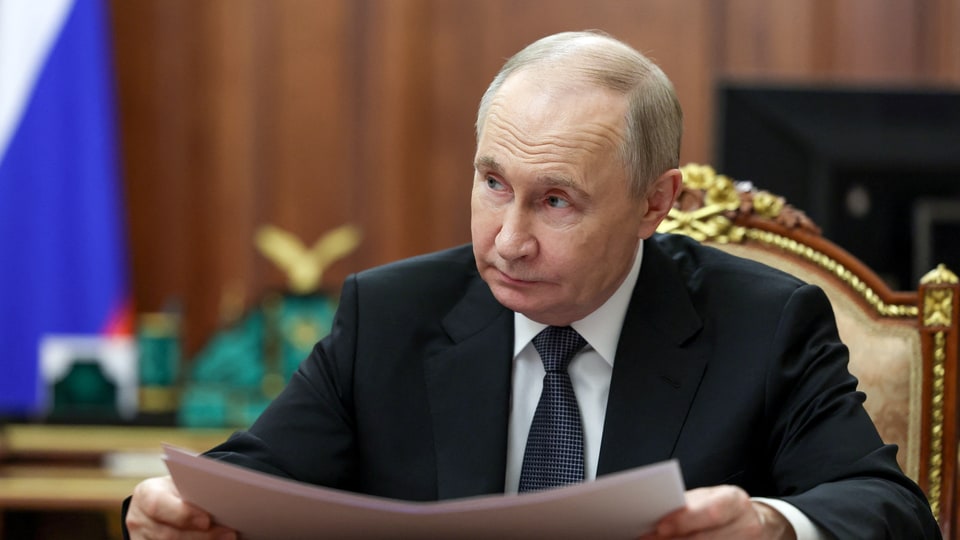
“We are deeply concerned about the intensifying military confrontation between India and Pakistan after the terrorist attack near the city of Pahalgam,” news agency TASS quoted Russia Foreign Ministry spokesperson Maria Zakharova as saying.
Moscow further denounced all forms of terrorism and highlighted that the global community must work together to fight this threat effectively, said Maria Zakharova, reported news agency PTI.
In response to last night's strike carried out by India, Russia spokesperson said, “We hope that the differences between New Delhi and Islamabad will be resolved through peaceful, political and diplomatic means on a bilateral basis in accordance with the provisions of the Simla Agreement of 1972 and the Lahore Declaration of 1999”.
Earlier today, China urged both India and Pakistan to show restraint and prioritize regional peace and stability, according to a statement from its foreign ministry reported by Reuters.
Expressing concern over the situation, the ministry also voiced regret over India's recent military actions, emphasizing the need to avoid further deterioration.
Foreign secretary briefs on Operation Sindoor
Hours after launching Operation Sindoor, top Indian officials shared details of the cross-border strikes that targeted terror camps in Pakistan and Pakistan-occupied Kashmir (PoK).
At a press briefing in Delhi, Foreign Secretary Vikram Misri, Colonel Sofiya Qureshi, and Wing Commander Vyomika Singh explained the goals of the mission and confirmed that nine terror camps were hit—four in Pakistan and five in PoK.
The operation was carried out by the Indian Armed Forces in response to the April 22 Pahalgam attack, in which 26 civilians were killed. That attack was claimed by The Resistance Front, a Pakistan-based terror group.
Colonel Qureshi named the four camps destroyed inside Pakistan as Bahawalpur, Muridke, Sarjal, and Mehmoona Joya. She said the strikes targeted camps linked to groups like Lashkar-e-Taiba (LeT), Jaish-e-Mohammed (JeM), and Hizbul Mujahideen.


