
 E-Paper



How Trump and Putin Reached a New Make-or-Break Moment on Ukraine
The threat of more U.S. sanctions jump-started stalled peace talks but might not produce a deal to halt the fighting.


WASHINGTON—President Trump has long believed the crux of foreign policy is two leaders in a room making historic deals. Pulling off a cease-fire in Ukraine with Russian President Vladimir Putin would be the kind of diplomatic coup he has long craved.
It remains a long shot.
The leaders could meet as soon as next week to pursue a peace agreement following months of maneuvering. But their approaches remain at odds. Trump has urged Putin to stop the war but has shown little interest in the specifics of a deal. The Kremlin boss has rebuffed all appeals to halt the fighting, except on his terms.
After months of failed efforts to forge a deal, first by coercing Kyiv and later by wooing Putin, Trump has come around to the belief that heightened economic pressure on Moscow might be the only way to get an agreement.
To sway Putin, Trump has embarked on a more confrontational course, threatening sanctions on countries that purchase Russian energy. He targeted India, a major buyer of Russian oil, with 50% tariffs on its goods shipped to the U.S. Other nations that import Russian oil and gas, including China, could see their duties raised by Trump’s Friday deadline for an agreement.
But even Trump seemed less than optimistic Thursday following talks earlier in the week between his special envoy, Steve Witkoff, and Putin in Moscow.
“We’re going to see what he has to say,” Trump told reporters of Putin. “That’s going to be up to him.”
The White House is working on arranging a meeting with Putin but would like a three-way meeting with Ukrainian President Volodymyr Zelensky, said White House press secretary Karoline Leavitt. “President Trump would like to meet with both President Putin and President Zelensky because he wants this brutal war to end,” she said.
The Russian leader said he is only open “in principle” to talks with Zelensky. “We are still far from creating such conditions,” said Putin, who has frequently called into question Zelensky’s legitimacy.
Putin wouldn’t have to agree to meet Zelensky for Trump to see him, the White House said.
If the Trump-Putin summit happens, it could prove the biggest test of Trump’s dealmaking skills this term.
Trump returned to the White House vowing he could stop the war in Ukraine within 24 hours, later claiming he was merely joking. Privately, Trump is fuming at his failure to halt the war 200 days into his second presidency, according to aides.
He has slowly come to recognize that a settlement must take account of Zelensky’s bottom line and that of key European governments, who insist they won’t recognize Russian control over any conquered territory—a key Kremlin demand—as part of an agreement.
There is the added concern that Putin may not be serious about reaching a deal. “Putin has made it clear that the Ukraine war is more important to him than the relationship with the U.S.,” said Alina Polyakova, president and CEO of the Washington-based Center for European Policy Analysis.
Another challenge for Trump will be navigating talks with a Russian leader who has a quarter-century of experience dealing with various U.S. presidents and has proved himself skilled in influencing them.
If Trump meets with Putin and emerges empty-handed, he will have to decide whether to increase pressure on Russia, despite his skepticism that economic or military moves would alter the Kremlin’s calculus, or follow through on a threat he had made repeatedly to abandon the peace process.
Either way, Polyakova said, “the war keeps dragging on.”
Trump entered his second term confident his rapport with Putin would overcome the complexities of the war Russia launched in February 2022. The president’s supporters say he has been wrongly caricatured as too cozy and deferential to the Russian leader.
“People have misunderstood Trump’s approach,” said Fred Fleitz, who was a senior National Security Council official during the first term. “It isn’t that Trump likes dictators. He believes America has to coexist with Russia. Since we’re not going to war, how do we deal with them?”
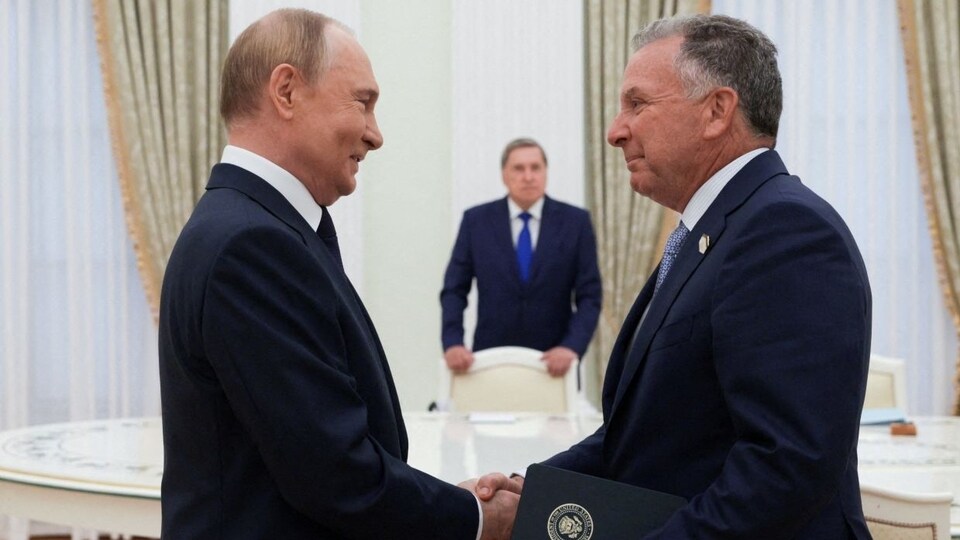
Trump and Putin have held multiple calls and passed numerous messages through intermediaries, U.S. officials and other people familiar with their communications said.
Their conversations, according to a senior administration official, have been typically friendly. Trump often discusses his aim of a revived U.S.-Russian relationship propelled by growing economic cooperation. Putin lists his grievances and core desires, mainly international recognition of Russia’s control over Crimea and the Donbas region, much of which it has seized from Ukraine.
Their calls extend for hours sometimes due to lengthy Putin monologues and the need for translations, current and former U.S. officials said. Trump, usually impatient and anxious to chime in, listens attentively, aides said.
“Putin does this very methodically,” John Bolton, Trump’s third national security adviser during the first term, said of the former KGB officer. “He’s very knowledgeable, he knows what he’s talking about. When he wants to try and influence somebody, he just talks and talks and talks.”
Putin has carefully studied the new Trump administration and understands where Russia’s leverage with the president lies, said Fiona Hill, who was a top Russia aide in the White House during Trump’s first term. “Putin’s done his homework. He’s had years of figuring out who Trump is,” she said.
Part of that homework was determining how to prosecute his war while sending signals of openness to diplomacy.
Russia still attacks Ukrainian cities and infrastructure with long-range missiles and drones, killing civilians with regularity. The conflict along the roughly 750-mile front line remains a grinding war of attrition, with Russia’s summer offensive clawing gradual gains against a staunch and stretched Ukrainian defense. Moscow’s lead in air power and troop numbers have given it the upper hand in the fight, U.S. and European officials quietly admit, though Russia’s glaring weakness remains its heavily sanctioned economy.
Trump’s frustrations with Putin started to seep into the open at the North Atlantic Treaty Organization summit in June, when he called his Russian counterpart’s refusal to end the war “misguided.”
“I’m very surprised. Actually, I thought we would have had that settled easy,” Trump told reporters.
A July 3 phone call lasted barely an hour—far shorter than their previous chats. The call lacked the warmth with which they normally spoke to each other, the senior administration official said. There wasn’t a flashpoint, but Trump ended it feeling perplexed, adding to his gnawing sense of being dragged along.
Trump later acknowledged that Putin would say one thing in their conversations about his interest in halting the war and yet do another thing. “I go home, I tell the first lady, ‘And I spoke with Vladimir today. We had a wonderful conversation.’ She said, ‘Oh, really? Another city was just hit.’”
A frustrated Trump announced last month that he would give Putin 50 days to complete a cease-fire with Ukraine, later shortening the deadline to Friday. Failure to do so would lead the U.S. to sanction some of Russia’s top energy customers, a strategy aimed at choking off Moscow’s major remaining sources of revenue for its war effort.
Administration officials and close presidential confidants said Trump and Putin didn’t have a single, major blowup this year. Instead it was a “series of moments,” in the words of Sen. Lindsey Graham (R., S.C.), that ultimately convinced Trump that “Putin was trying to play him.”
“You see now a turning of the page, and Putin has nobody to blame but himself,” Graham said.
But there are concerns in the U.S. and Europe that Putin floated the idea of a meeting to continue stringing Trump along, not to settle for peace.
Putin might propose that Russia officially control some of the Ukrainian territory it occupies in exchange for a withdrawal of his forces from other parts of Ukraine, said a senior European diplomat and a Ukrainian official. Trump, eager for a deal, might urge Ukraine and allies to accept the offer.
Kyiv and other European governments would likely reject the plan, the official said, playing into Putin’s hands because Trump, rarely concerned with the details of a peace settlement, might then blame Ukraine for continuing to fight.
Trump could cut off intelligence and military support for Ukraine, as he did earlier this year, setting back Zelensky’s efforts to align himself more closely with Trump following a combative Oval Office meeting in February. The U.S. could also remove itself from the diplomatic process entirely, leaving Moscow and Kyiv to continue what Trump has long labeled “Biden’s war.”
But those who know Trump suspect he will keep pursuing the most prized deal of his early presidency, where success or failure could define his legacy. “He wants to be the guy who gets deals,” said Marc Short, a first-term senior White House aide. “That is his brand.”
Write to Alexander Ward at alex.ward@wsj.com, Alex Leary at alex.leary@wsj.com and Matthew Luxmoore at matthew.luxmoore@wsj.com


