
 E-Paper





Follow the latest breaking news, major developments and agenda-setting stories from India and around the world with the newsdesk at Hindustan Times. Operating round the clock, the desk brings together experienced editors, reporters and correspondents to deliver fast, accurate and contextual reporting across subjects that influence public policy, governance, business, society and international affairs. The HT News Desk covers politics, elections, government policies, the economy, business and markets, science and technology, the environment, law and order, infrastructure, education, climate issues and geopolitics, while closely tracking developments across states, institutions and global capitals. The team also leads coverage of major breaking news events, policy announcements, court proceedings, natural disasters, public emergencies and significant international developments. Reports published by the newsdesk are based on information gathered from reporters on the ground, official statements, government agencies, court records, regulatory filings, recognised institutions and other authoritative sources. Stories undergo editorial scrutiny and verification processes to ensure accuracy, fairness and relevance, and are updated as events evolve and additional information becomes available. Whether covering a key political decision in New Delhi, an economic policy shift affecting millions, a landmark court ruling or a major global event, the HT News Desk aims to provide readers with reliable, fact-based journalism that delivers not only the latest developments but also the context and analysis needed to understand their wider implications.
 Trending News
In a nod to Quad, US, Australia call for rules-based order in Indo-Pacific
There was expectation in the run-up to their meeting that discussions would include a project the US, Australia, India and Japan were jointly considering to rival China’s ambitious multi-billion-dollar One Belt, One Road initiative.


The US and Australia have called for a “free, open, and prosperous rules-based order in the Indo-Pacific region,” echoing the central theme that binds The Quad, an emerging four-nation compact with India and Japan focussed on managing and countering the rise of China.
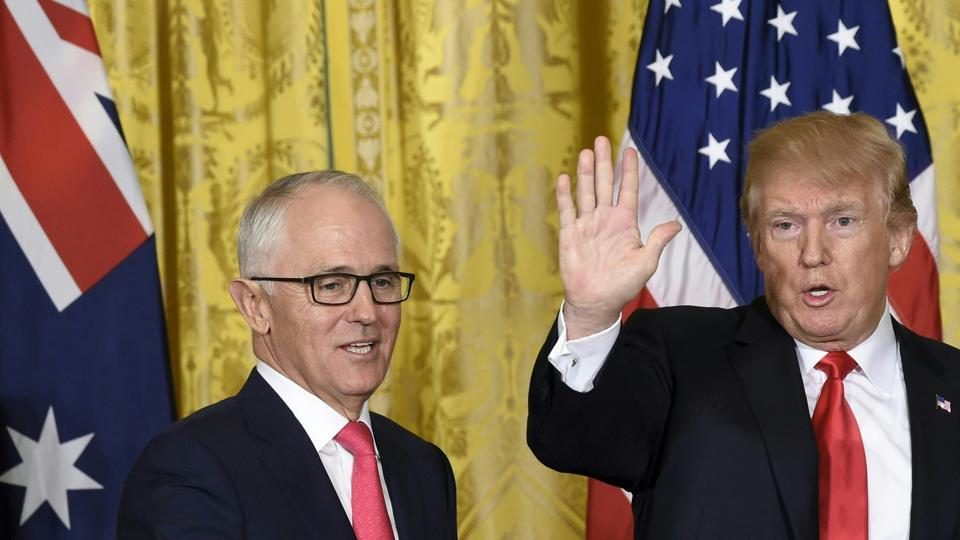
“We are committed to fostering an Indo-Pacific region where all countries abide by international law,” said the US-Australia joint statement after a meeting of their leaders Donald Trump and Malcom Turnbull at the White House on Friday. “A free, open, and prosperous rules-based order in the Indo-Pacific region is in both our nations’ enduring national interests,” it said.
There was expectation in the run-up to their meeting that discussions would include a project the US, Australia, India and Japan were jointly considering to rival China’s ambitious multi-billion-dollar One Belt, One Road initiative. There was speculation they could announce it, something officials had dismissed as not “ripe enough”, The Australian Financial Review reported.
But the two countries, who are close allies, did say in the joint statement that they “intend to continue to use diplomacy and assistance to support good governance and smart development decisions in the region”.
Though there has been talk of the Quad — short for Quadrilateral — for a while, the four countries are taking another shot at it in efforts that began gathering steam around the time of US secretary of state Rex Tillerson’s visit to India.
“We've long had a trilateral relationship in the Indo- Pacific between Japan, Australia, and the US, and we're now working towards whether this will become a quad relationship to include India because of the importance of India's rising economy as well and I think shared national security concerns that we have with India,” Tillerson had said in a speech before the visit in October.
The first formal meeting of Quad officials took place in November on the sidelines of the ASEAN meet in Manila, Philippines.
The participants “agreed that a free, open, prosperous and inclusive Indo-Pacific region serves the long-term interests of all countries in the region and of the world at large”, India’s ministry of external affairs had said using the same language and terms the Quad members have tended to use.


