
 E-Paper



In Dress Rehearsal for Trump Firing a Fed Chairman, U.S. Markets Sank—Then Steadied
Market reaction hinted at investors’ expectations that central bank would retain some independence no matter who is in charge.


 Prefer HTon Google


Markets just did a test run on what would happen if President Trump tried to fire Federal Reserve Chair Jerome Powell, and it wasn’t pretty. It also wasn’t as ugly as many feared.
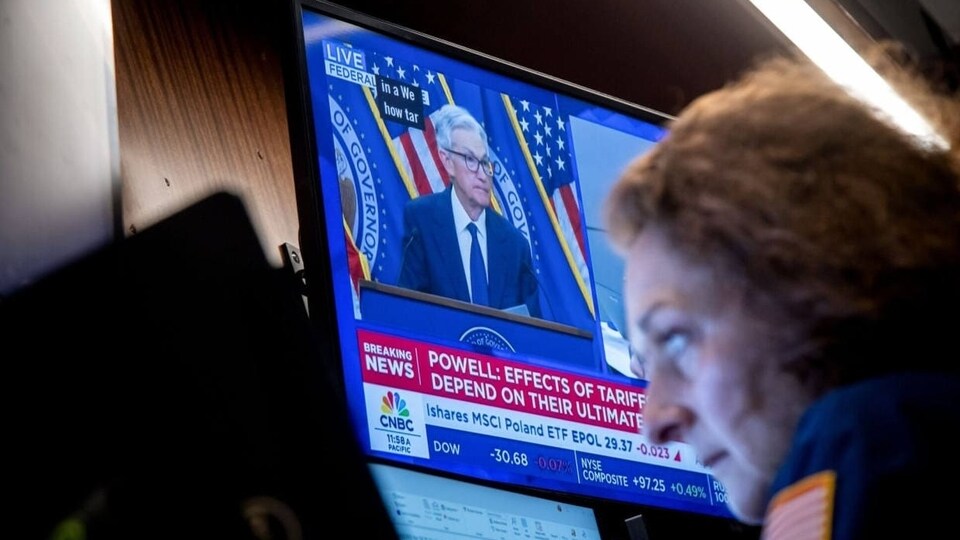
News that the president intended to jettison Powell jolted Wall Street on Wednesday, and the reaction was uniformly negative. Stocks, the dollar and prices of longer-term Treasurys all fell. But the selloff wasn’t unusually dramatic, and began to fade even before Trump denied he would do it an hour later.
The markets’ response not only reflected skepticism that Trump would actually follow through on his threats, but also revealed some hope that the Fed would retain some independence even if he took that drastic step. No matter who Trump were to pick as Powell’s successor, many think that the central bank is still unlikely to do whatever the president wants, partly because of the constraints imposed by investors themselves.
“The market will be the judge at the end of the day,” said Thanos Bardas, global co-head of investment grade at Neuberger Berman.
Inflation Watch
Investors and analysts have long warned that an erosion in the Fed’s independence would be bad for markets because it would threaten the central bank’s hard-earned credibility for being able to control inflation, which is seen as critical for economic growth.
In recent weeks, Trump has said that the Fed’s benchmark interest rate, currently around 4.3%, should be around 3 percentage points lower. Many investors think that rates that low would drive up inflation, which remains above the Fed’s 2% target.
For the most part, though, investors had dismissed Trump’s commentary as noise. After all, the president has repeatedly said that he has no plans to actually remove Powell before his term expires next May.
The markets’ confidence that Powell would see the end of that term began to crumble shortly before 11 a.m. on Wednesday, when CBS News reported that Trump had asked a group of House Republicans whether he should fire Powell and indicated to them that he would do it. That report was quickly confirmed by other news outlets, only for Trump to deny that he had any plans to remove Powell around an hour later.
At the peak of the selloff, the S&P 500 was down around 0.6%, after being up roughly 0.2% just before the CBS report. The WSJ Dollar Index fell as much as 0.7%. A decline in the price of the 10-year U.S. Treasury note drove its yield up 0.04 percentage point, leaving it still a little below its Tuesday afternoon level.
Ultimately, the S&P 500 finished up 0.3% on the day. The dollar was down 0.2% in late afternoon trading, while the 10-year yield was nearly back to where it was in the morning, at around 4.45%.
Do Markets Know Best?
Wednesday’s moves were mitigated by the fact that investors were only responding to strong suggestions that Trump would try to fire Powell, not an actual White House announcement that he was moving forward with that plan.
Still, there were other factors. Many say that aggressive rate cuts when the economy is strong would likely be counterproductive, because it would be apt to drive up longer-term Treasury yields, which play a critical role in determining borrowing costs across the economy.
Treasury yields are heavily influenced by expectations for what short-term rates will average over the life of a bond. Big rate cuts by the Fed might therefore drag down yields on short-term Treasurys. But they could have the opposite impact on longer-term yields—with investors worrying about a surge in inflation that would force the central bank to raise rates even higher down the road.
As long-term yields rise so, too, would interest rates on everything from mortgages to corporate bonds. That is exactly the opposite of what Trump wants, making it difficult to envision the Fed moving in lockstep with his rate-cut demands.
Investors also note that a new Fed chair would be only one of 12 voting members on the Fed’s rate-setting committee, potentially making it hard to dictate policy single-handedly.
Uncharted Territory
Analysts still warn that an attempt to remove Powell could have unpredictable consequences for markets, with investors likely to focus at first on the move’s symbolic importance rather than the precise outcome for interest rates.
Some note that stocks could be vulnerable given how much they have climbed in recent months. The tech-heavy Nasdaq composite hit a record high on Wednesday, while the S&P 500 reached its own record high earlier in the month.
Many investors are focused on how the bond market would react to Powell being removed, “but I wouldn’t forget about equities,” said Benson Durham, head of global policy and asset allocation at Piper Sandler.
Write to Sam Goldfarb at sam.goldfarb@wsj.com


