The human and psychological toll of the coronavirus pandemic hit home for Mexico City clothing designer Irma de la Parra in January, with the death of a longtime friend from Covid-19.
Mexican hospitals usually don’t let family members visit their dying relatives, because of tightly packed hospital wards, a shortage of personal protective equipment and fear of spreading the infection.
After her experience, she learned of many families who had never been able to say one last word, or give one last hug, to friends and relatives. So she decided to make a way for them to give endless hugs.
“We were overwhelmed with sadness because we knew him (her and her husband's friend) since we were very young, and he was a very good person,” De la Parra said of Martín Elizalde, 53, who died Jan. 10. “I said, how is it possible that none of us, not even his family, could see him again?”
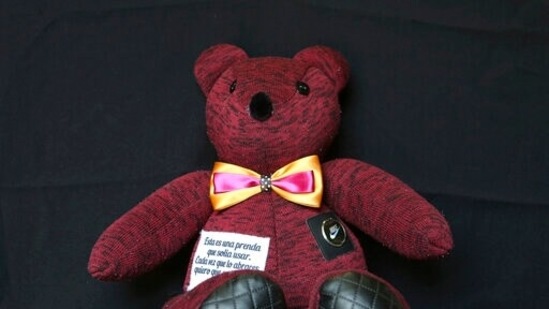
That's when the idea of Remembrance Bears was born. De la Parra had long worked making uniforms for daycare centers, so she had the necessary skills and equipment. She decided to make teddy bears out of the clothes of Covid-19 victims so the families could have something tactile to remember people who never got a last hug.
{{/usCountry}}That's when the idea of Remembrance Bears was born. De la Parra had long worked making uniforms for daycare centers, so she had the necessary skills and equipment. She decided to make teddy bears out of the clothes of Covid-19 victims so the families could have something tactile to remember people who never got a last hug.
{{/usCountry}}The bears are “so that relatives could have something to remember these people who have gone.”
Relatives send clothing items the victims often wore before they got ill, and De la Parra carefully cuts out the pattern for the teddy bear’s outer ‘skin’, and then stuffs them.
She estimates she has now made about 300 Remembrance Bears.
It’s hard, because each bear must be hand sewn and filled with stuffing, and takes about three days to complete. Some of the clothing sent in by relatives is so worn that De la Parra has to sew linings into the bears so they don’t burst. She said she doesn’t look to really make a profit on the bears, charging about $10 apiece.
“When we deliver the bears, oh, people are so happy,” De la Parra said. “I feel it is a way to heal their pain a little, because they take them with so much affection.”
It has changed De la Parra, who lost most of her income early in the pandemic because the daycare workers and other customers who used to buy clothes and uniforms from her stopped coming in.
“My first experience with the pandemic was the economic impact, because we didn’t know many people yet who had gotten sick,” she said. “But as time went on we realized how many people around us were getting sick.”