
 E-Paper



Iran rejects direct talks with US on nuclear program after Trump’s letter
Iran’s refusal of talks adds to rising nuclear tensions as US and Israel warn against Iran obtaining a nuclear weapon, fueling fears of military conflict.

 Prefer HTon Google


Iranian President Masoud Pezeshkian announced on Sunday that Tehran rejects direct negotiations with the United States regarding its rapidly advancing nuclear program. This marks Iran's first response to a letter from US President Donald Trump to the country’s supreme leader.
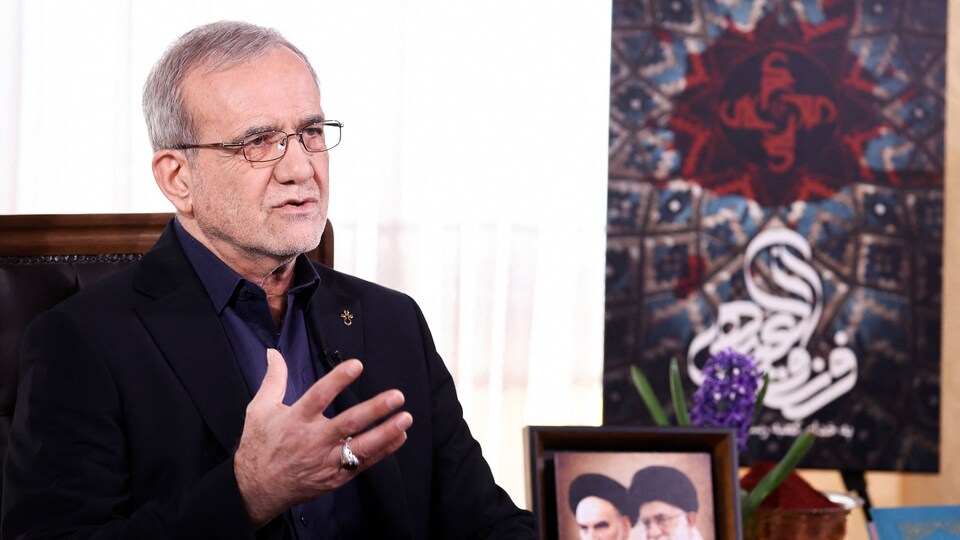
Pezeshkian said that Iran’s response, conveyed through Oman, left open the possibility of indirect talks with Washington. However, such negotiations have stalled since Trump withdrew the U.S. from the 2018 nuclear deal during his first term.
In the aftermath, regional tensions escalated, leading to attacks on land and at sea. The Israel-Hamas war in Gaza further heightened instability, with Israel targeting leaders of Iran’s so-called "Axis of Resistance".
Meanwhile, as the US launches airstrikes against Iran-backed Houthi rebels in Yemen, the possibility of military action against Iran’s nuclear program remains a looming threat.
Trump’s letter reached Tehran on March 12, though he provided few details about its contents in a television interview.
“I've written them a letter saying, I hope you're going to negotiate because if we have to go in militarily, it's going to be a terrible thing,” Trump said in the interview.
The move echoes Trump’s previous letter exchanges with North Korean leader Kim Jong Un during his first term, which led to face-to-face meetings but failed to produce agreements on limiting Pyongyang’s nuclear and missile programs.
The last time Trump attempted to send a letter to Iran’s Supreme Leader Ayatollah Ali Khamenei through the late Japanese Prime Minister Shinzo Abe in 2019, Khamenei mocked the effort.
What was Iran's position after Trump's letter?
Pezeshkian’s announcement highlights the shifting dynamics in Iran since his election six months ago, despite his initial campaign pledge to re-engage with the West. Meanwhile, Trump’s re-election and the revival of his “maximum pressure” campaign on Tehran have led to a sharp decline in Iran’s currency.
Pezeshkian had left the door open for negotiations until Supreme Leader Ayatollah Ali Khamenei, 85, took a firm stance against Trump in February, declaring talks with his administration as neither “intelligent, wise, nor honourable.” Pezeshkian then hardened his rhetoric against the United States.
In recent weeks, Iran has sent mixed signals. During Quds (Jerusalem) Day demonstrations on Friday, organizers instructed crowds to chant only “Death to Israel!”—a departure from previous years when “Death to America!” was also a common slogan.
A video from Iran’s Revolutionary Guard unveiling an underground missile base showed troops stepping on an Israeli flag painted on the ground, but no American flag, which is often seen in such propaganda visuals.
However, Press TV, the English-language branch of Iranian state media, recently published an article listing U.S. military bases in the Middle East as potential targets. The list included Camp Thunder Cove on Diego Garcia in the Indian Ocean, where the U.S. has stationed stealth B-2 bombers, likely used in operations over Yemen.
On Friday, Iranian Parliament Speaker Mohammad Bagher Qalibaf warned that the U.S. is highly vulnerable, stating: “If they violate Iran’s sovereignty, it will be like a spark in a gunpowder depot, setting the entire region ablaze. Their bases and allies will not be safe.”
However, Tehran’s two recent direct attacks on Israel using ballistic missiles and drones caused minimal damage, while Israel retaliated by destroying Iranian air defense systems.
Latest tension over nuclear programme
Iran’s rejection of direct talks marks the latest escalation in tensions over its nuclear program.
Trump’s letter comes as both the US and Israel have warned that they will not allow Iran to acquire a nuclear weapon, raising concerns of a military confrontation. Meanwhile, Tehran continues enriching uranium to near weapons-grade levels of 60% purity, a threshold typically reached only by nuclear-armed nations.
While Iran insists its nuclear program is for peaceful purposes, its officials have increasingly hinted at pursuing a bomb. A February report from the UN’s nuclear watchdog confirmed that Iran had accelerated its production of near-weapons-grade uranium.
Iran’s reluctance to engage with Trump is also likely tied to his ordering the drone strike that killed Iranian General Qassem Soleimani in Baghdad in January 2020.
The US has claimed that Iran plotted to assassinate Trump before the November election, though Tehran denied this, despite officials making direct threats against him.
(With Associated Press inputs)


