
 E-Paper



Japan’s new leadership struggle is far from business as usual
The exit of Ishiba comes amid political and trade turmoil


 Prefer HTon Google


It took ishiba shigeru 15 years and several attempts to become Japan’s prime minister. It took him less than one year to lose the job. On September 7th Mr Ishiba said he was stepping down as president of the ruling Liberal Democratic Party (ldp), which in turn means he will no longer lead the country. He said he would remain in office until the ldp elects a replacement (the timeline for this race will be decided shortly).
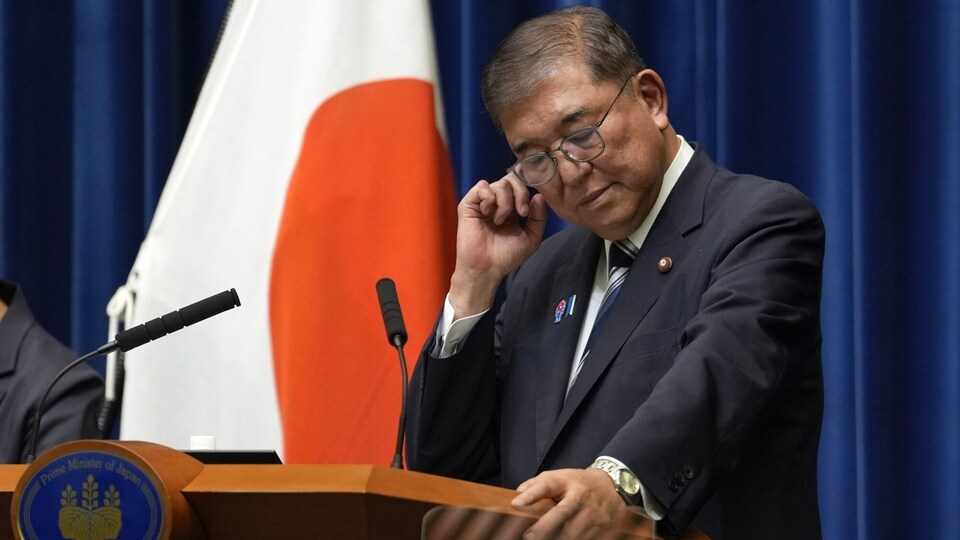
Leadership changes in Japan rarely herald big changes in direction. But the coming contest looks to be unusually consequential, as the hard-right faction of the ldp struggles for power with the centrist ones. It will take place at a momentous juncture for the country. On September 4th Donald Trump signed an executive order enacting a trade bargain reached this summer with Japan, reshaping economic relations. Meanwhile, Japan’s immediate neighbourhood is growing ever more dangerous.
Mr Ishiba’s resignation has not come out of the blue. Always independent-minded, and something of an outsider within his own party, he has proven uninspiring in high office. Shortly after becoming prime minister in October last year, he called a snap election that saw the ldp and its coalition partner lose their majority in the lower house, leaving the ldp running a minority government for the first time in its history. On July 20th the ldp lost its majority in the upper chamber as well.
Mr Ishiba argued that the party’s woes preceded his rise. He managed to hang on for more than a month after the upper-chamber election. This is in part because August brought a flurry of diplomatic events. These included the 80th anniversaries of the atomic bombings of Hiroshima and Nagasaki and Japan’s defeat in the second world war; summits with the leaders of India, South Korea and several African countries; and trade negotiations with America.
But Mr Ishiba could not avoid the reckoning forever. On September 2nd the ldp released a withering report on the party’s performance in the July polls. Four senior officials, including several powerful allies of Mr Ishiba, resigned. Party elders began to call for a fresh leadership election; so too did some members of Mr Ishiba’s own cabinet. The LDP was due to meet on September 8th to decide whether to arrange a snap leadership vote. Mr Ishiba pre-empted this by choosing to resign ahead of time.
Mr Ishiba is right to say that the ldp’s problems run deeper than his own performance in office. In recent years a series of scandals relating to campaign and fundraising practices have eroded the public’s trust in the party. It has struggled to respond to worries about rising living costs, and especially the soaring price of rice. The ldp has also been slow to adapt to social media; it faces a growing challenge from upstart populist parties that are much more adept at reaching the young. If the ldp “is perceived as unchanging, there will be no tomorrow for the party,” Mr Ishiba said in his resignation speech.
The upcoming leadership election will be a fork in the road for the ldp, which has ruled Japan with only two brief interruptions since its founding in 1955. Some in the party now believe it should lean hard to the right, in order to win back supporters who are deserting it for small, nationalist outfits with fierce anti-immigrant policies. Others want to see reform led from the party’s centre, strengthening the ldp’s identity as a “big-tent” for conservatives of all stripes.
These two camps already have champions. Takaichi Sanae, a former internal-affairs minister who narrowly lost to Mr Ishiba in last year’s contest, has become the standard-bearer for the party’s right-wing. Koizumi Shinjiro, the charismatic son of a popular former prime minister, is reform-minded and fresh-faced. But others will probably enter the fray too, once the campaigning gets started. Kobayashi Takayuki, a former economic-security minister, may position himself as a middle ground between the two front-runners. Other ldp grandees, including Hayashi Yoshimasa, the chief cabinet secretary, Kato Katsunobu, the finance minister, and Motegi Toshimitsu, a former foreign minister, could pitch themselves as steady hands.
The implications of this choice could be huge—for Japan and for its role in the world. The new leader will have to decide how to handle an American government that is making big demands of its allies. They will have to implement the trade deal that Mr Ishiba concluded on his way out the door; its terms are far from ideal for Japan. Mr Ishiba’s negotiators managed to get Mr Trump to reduce the tariffs for all Japanese imports, including the crucial automobile sector, to 15%. But there is still much that is unclear about a huge and hazily-defined new $550bn fund for making investments into America that, according to the White House, Japan will somehow finance. The administration appears to believe that America will be able to decide how it is spent.
Japan’s neighbours will be watching the leadership contest closely, too. A right-winger such as Ms Takaichi would raise the temperature with China and with South Korea, which has been trying to improve relations with Japan. But Mr Koizumi, like his father, has also been a frequent visitor to the controversial Yasukuni Shrine, which honours Japan’s war dead. That makes many in Seoul uncomfortable.
In the years ahead Japan will have to find more money for defence and social policies. But the upstart opposition parties have been calling for cuts to the consumption tax in order to help households struggling with living costs. Mr Ishiba was a fiscal hawk; his successor may not be. That makes markets jittery. Last week, as Mr Ishiba’s resignation started to look increasingly inevitable, yields on long-term Japanese government bonds hit their highest levels in decades.
The ldp’s new leader will have to navigate these challenges while also shoring up the party’s faltering grip on power. Once elected, they could choose to call new lower-house elections in the hope this would give them a boost. But it would be a big gamble that could leave the party in an even weaker position. Other options are to beef up the ldp’s ruling coalition by bringing in a new party. Or continuing to rule with a minority. Whoever wins the leadership race is going to need to garner at least some support from opposition lawmakers just to be confirmed as Japan’s prime minister. That will provide an early taste of the contested road ahead.


