
 E-Paper



Marxist leader Anura Kumara Dissanayake is Sri Lanka's new president
Anura Kumara Dissanayake, the 55-year-old leader of the People's Liberation Front, won the presidency with 42.31 per cent of the vote in Saturday's election.

 Prefer HTon Google


Marxist lawmaker Anura Kumara Dissanayake has won Sri Lanka's presidential election, securing 42.31 per cent of the vote, according to official results announced Sunday.
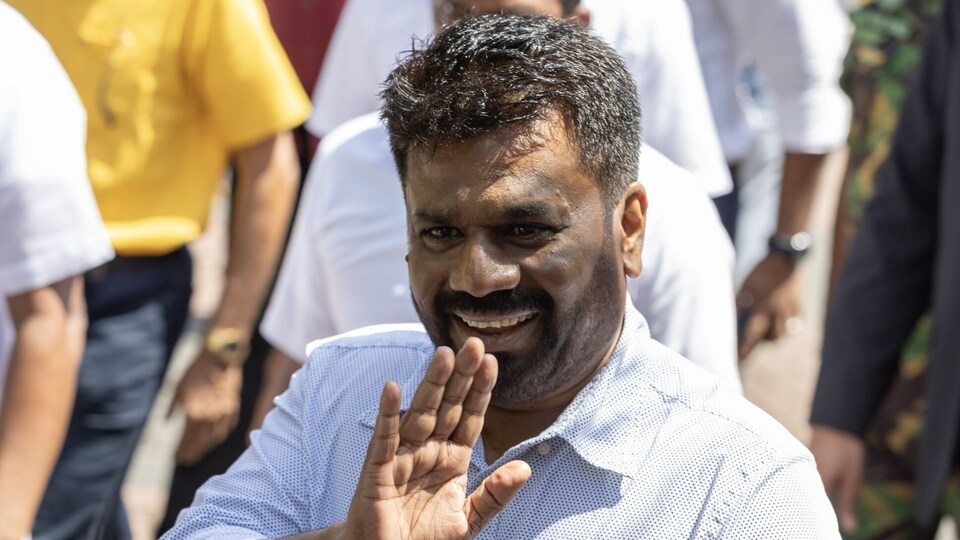
The 55-year-old leader of the People's Liberation Front (JVP), a left-wing coalition, claimed victory on Sunday, even before the full results were officially released. "This victory belongs to all of us," he said in a post on X, as the Election Commission confirmed his lead.
Dissanayake is expected to be sworn in Monday at Colombo's colonial-era Presidential Secretariat. His rise to power signals a rejection of the political establishment blamed for the country's economic downfall. The victory also represents a major turnaround for the JVP, which had received just over 3 per cent of the vote in the 2019 presidential election.
The election, held on Saturday, saw a voter turnout of 76 per cent, with 17 million Sri Lankans eligible to cast their ballots.
Ranil Wickremesinghe pushed to 3rd place
Opposition leader Sajith Premadasa took second place with 32.76 per cent of the vote, while outgoing President Ranil Wickremesinghe, who had overseen the country during its 2022 economic collapse, trailed in third with 17.27 per cent. Wickremesinghe has yet to formally concede, but foreign minister Ali Sabry said it was "clear Dissanayake had won".
The election was widely seen as a referendum on Wickremesinghe's leadership during Sri Lanka’s fragile economic recovery. His government, which took power in the aftermath of a nationwide uprising in 2022, was tasked with navigating a $2.9 billion International Monetary Fund (IMF) bailout aimed at stabilising the country's shattered economy. Wickremesinghe’s tough austerity measures, including tax hikes and cuts to social spending, have faced widespread public backlash, with poverty rates doubling and living costs skyrocketing.
Dissanayake’s campaign tapped into this frustration, with promises to renegotiate the terms of the IMF deal to reduce the burden on ordinary citizens.
"It is a binding document, but there is a provision to renegotiate," said Bimal Ratnayake, a senior member of Dissanayake's party, told AFP.
“We will not tear up the IMF deal, but we can renegotiate it to ease the hardships,” Bimal Ratnayake, a senior member of Dissanayake's party, told AFP. He said the new administration would seek to reduce taxes on food and medicine, which had been raised under Wickremesinghe’s austerity policies.
Despite the peaceful nature of Saturday's vote, authorities imposed a countrywide curfew as a precaution until midday Sunday. Thousands of police were deployed to ensure security, though no major incidents were reported. A ban on victory rallies or public celebrations remains in effect for a week following the final results, officials said.
Sri Lanka’s economy remains in a precarious state, despite some improvements since its default in 2022 on $83 billion of foreign debt. The outgoing government announced last week that it had reached an agreement in principle with private bondholders to restructure $17 billion in debt, the final hurdle in its economic recovery plan. However, widespread public anger persists over high taxes and rising living costs, key factors in Dissanayake’s electoral success.
Dissanayaka's party sought to reassure India that any administration he led would not be caught up in geopolitical rivalry between its northern neighbour and China, the country's largest lender, reported AFP.
With inputs from AFP and AP


