
 E-Paper



Not against boosters, but inequity and vaccine hoarding: WHO chief amid rapid Omicron spread
“The emergence of Omicron has prompted some countries to roll out Covid-19 booster programmes for their entire adult populations, even while we lack evidence for the effectiveness of boosters against this variant,” WHO chief Tedros Adhanom Ghebreyesus said.


The World Health Organisation (WHO) on Tuesday expressed its concerns over global inequality in Covid-19 vaccine distribution even as several developed economies continued to press ahead with a booster programme amid the spread of the highly contagious Omicron variant in several countries.
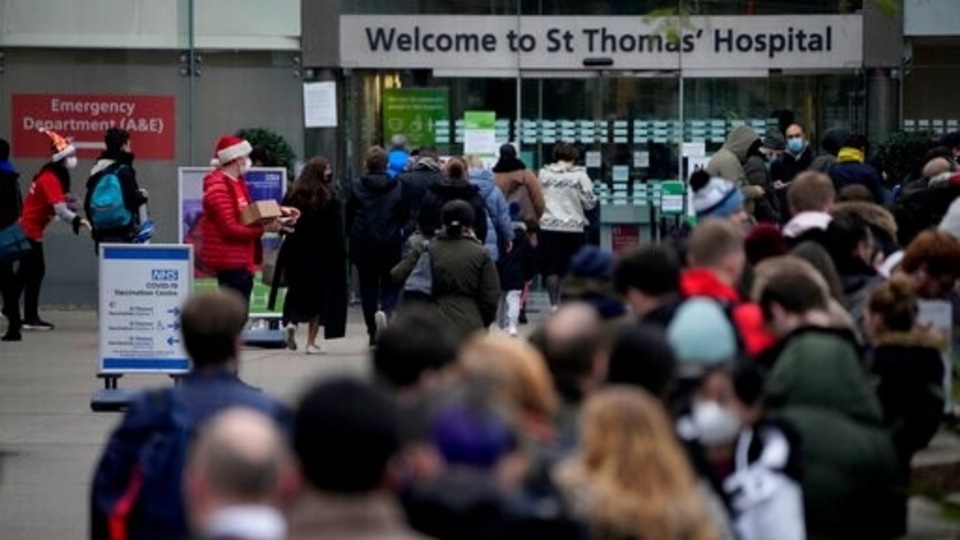
As many as 77 countries have reported cases pertaining to the Omicron variant and it is probably already there in more countries, the WHO said. “Omicron is spreading at a rate we have not seen with any previous variant,” said Tedros Adhanom Ghebreyesus, the director-general of the UN health body, in a press briefing on Covid-19.
While explicitly stating that it was not against the administration of boosters, the WHO chief said vaccine hoarding and the ensuing inequality were its main concerns.
Also read | Omicron Covid-19 variant more transmissible, reduces vaccine efficiency: WHO
“The emergence of Omicron has prompted some countries to roll out Covid-19 booster programmes for their entire adult populations, even while we lack evidence for the effectiveness of boosters against this variant,” Ghebreyesus said, even as he spoke about a key role boosters could play in fighting against the pandemic.
“WHO is concerned that such programmes will repeat the Covid-19 vaccine hoarding we saw this year and exacerbate inequity. It is clear that as we move forward, boosters could play an important role, especially for those at highest risk of severe disease death,” he added.
“Let me be very clear: WHO is not against boosters. We are against inequity. Our main concern is to save lives, everywhere," he added.
He said it was a question of prioritisation and administering booster doses to those at low risk of severe disease or death would endanger the lives of those at high risk and those still awaiting their primary vaccine doses.
“It is really quite simple: the priority in every country, and globally, must be to protect the least protected, not the most protected,” he added.
According to data shared by the WHO, less than 10 per cent of the population have been vaccinated in 41 countries, while it is less than 40 per cent in 98 countries. The WHO also said that it saw “significant inequities” between various population groups within the same country.
“If we end inequity, we end the Covid-19 pandemic. If we allow inequity to continue, we allow the pandemic to continue,” the WHO chief said.
Further, the WHO stressed on Covid-appropriate behaviour such as facemasks, distancing and hand hygiene along with vaccinations. It also called upon vaccine donors and manufacturers to prioritise supplies to COVAX, the global vaccine sharing programme.


