E-Paper



‘Not our war’: How US allies gave a cold shoulder to Trump's appeal to send warships to Strait of Hormuz
Despite the pressure, several key US allies have either rejected or hesitated to join the effort.

 Prefer HTon Google


Countries affected by the blocking of the Strait of Hormuz will be sending warships there, US President Donald Trump claimed on Sunday. This was followed by an appeal to ally nations to join the effort.
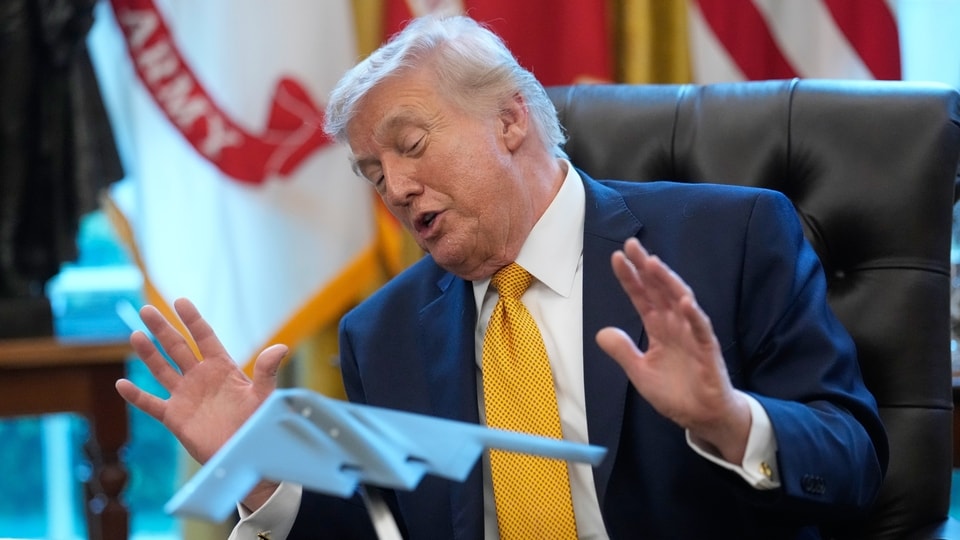
“Numerous countries have told me they’re on the way - some are very enthusiastic about it, and some aren’t. Some are countries that we’ve helped for many, many years,” Trump told reporters on Monday during a White House event.
However, all these tactics to garner international support amid shooting oil prices seem to have fallen flat on the allies.
How have US allies responded?
Despite the pressure, several key US allies have either rejected or hesitated to join the effort.
Germany has ruled out participation, while Japan and Australia have indicated they are unlikely to send naval vessels. Britain and France said they are assessing possible action but have not committed to any steps before the fighting subsides.
German Defence Minister Boris Pistorius openly dismissed Trump’s call, questioning what a limited European deployment could achieve. He asked rhetorically what Trump expected “a handful or two handfuls of European frigates to accomplish in the Strait of Hormuz that the powerful US Navy there cannot achieve on its own?”
He added, “This is not our war. We did not start it.”
This ‘will be remembered’: Trump on US allies in US-Iran war
Trump has now criticised US allies and other major economies for failing to back his plan to ensure safe passage through the strait, which has been effectively shut since the conflict began, tightening global energy supply chains.
He singled out NATO members, claiming they had relied on the US for “tens of billions of dollars” in protection but were now unwilling to step up.
Over the weekend, Trump delivered a pointed warning, saying countries that refuse to participate in reopening the Strait of Hormuz “will be remembered.”
In an interview with the Financial Times, he added that a lack of support from NATO allies would be “very bad for the future” of the alliance.
White House press secretary Karoline Leavitt said on Monday that Trump continues to engage with European allies and is urging them to provide support.
The comments come as fighting in the region shows no sign of easing, with both sides carrying out attacks that have further destabilised the situation.
Why Trump needs his allies for Strait of Hormuz for ‘war’?
Oil markets have reacted sharply to the crisis. US crude fell about 3% to near $95 a barrel in New York after indications that emergency reserves could be tapped in the coming weeks. Brent crude dropped around 1% to trade near $102 a barrel, after briefly slipping below $100.
Even so, Washington’s allies are not in a position to completely ignore US pressure. European countries, in particular, are trying to keep Trump engaged on Ukraine and prevent any US shift towards Russia, which they fear could undermine Kyiv and ease pressure on Moscow.
At the same time, Europe remains highly vulnerable to disruptions in the Strait of Hormuz, especially after cutting back on Russian energy imports following Moscow’s 2022 invasion of Ukraine. Tensions have also been fuelled by a recent US decision to temporarily lift sanctions on Russian oil exports, a move that angered European governments, according to the WSJ report.
Still, Trump’s influence over allies appears to have weakened compared to a year ago. European countries had previously aligned more closely with Washington, agreeing to increase NATO defence spending and accept US tariffs as part of a trade deal. In recent months, however, that deference has eroded.
The US decision to withdraw direct financial aid to Ukraine has forced European nations to take on a greater role in supporting Kyiv, reinforcing their willingness to act more independently of Washington.
What are some options for US allies?
Across both Europe and Asia, responses to Trump’s request have ranged from cautious to openly reluctant.
European officials are discussing whether to redirect an existing Red Sea naval mission towards the Strait of Hormuz, but such a move would require unanimous approval and faces resistance from some countries, including Germany, Bloomberg reported.
In Asia, key US partners such as Japan and South Korea have also stopped short of committing forces. Japanese officials have said there are no plans to deploy ships to escort tankers, while the UK has likewise avoided committing to a full naval mission, with Prime Minister Keir Starmer saying only that options are being explored with allies.
China, while not responding directly to Trump’s appeal, has criticised the proposal. The state-run Global Times described it as an attempt by the US to spread the burden of “a war that Washington started and can’t finish.”