
 E-Paper



Pakistan on US aid cut: Unilateral acts counter-productive to war on terror
On Thursday, the US suspended up to $1.15 billion in security-related assistance to Pakistan till it showed tangible evidence of decisive action in combating terrorists.


Pakistan on Friday responded to the US suspension of more than $1 billion in security-related aid by saying “unilateral pronouncements and shifting goalposts” would be counter-productive for the war on terrorism.
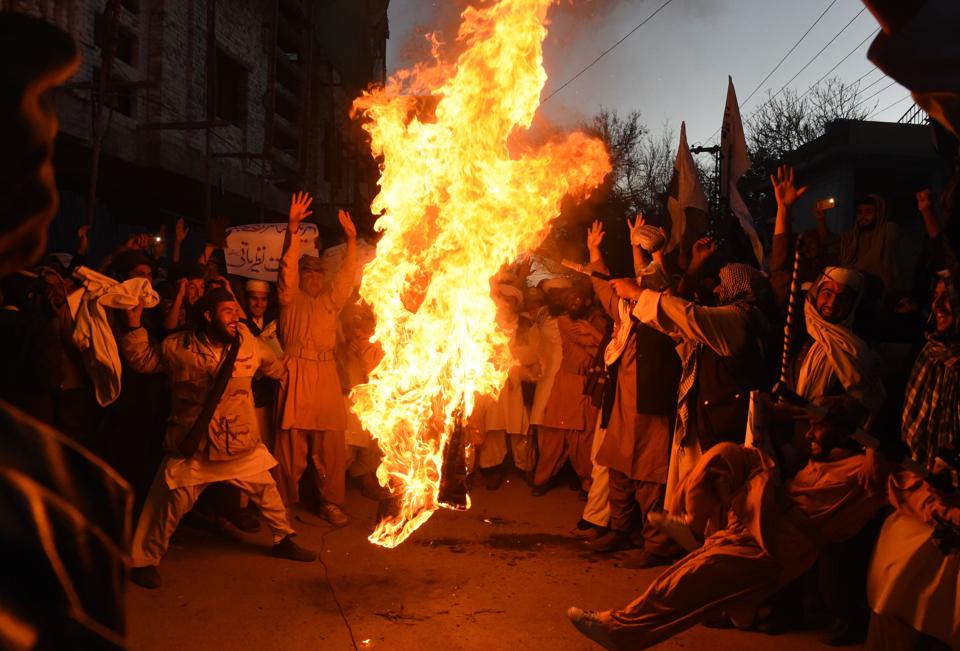
The US said on Thursday the assistance would be suspended till Pakistan showed tangible evidence of decisive action in combating terrorists operating from its soil. The action followed a tweet by President Donald Trump on New Year’s day about cutting off all aid to Islamabad for its “lies and deceit” in the fight against terrorism.
The official reaction issued by the Foreign Office was more measured than the angry reactions from some Pakistani leaders, including foreign minister Khawaja Asif, who has said the country could account for all the aid provided by the US.
“Working towards enduring peace requires mutual respect and trust along with patience and persistence,” the Foreign Office spokesman said in a statement.
“Arbitrary deadlines, unilateral pronouncements and shifting goalposts are counterproductive in addressing common threats,” the spokesman said, adding that the emergence of “new and more deadly groups such as Daesh (Islamic State) in Afghanistan call for enhancing international cooperation”.
The US has not yet specified the actions Pakistan will have to take to earn back the assistance, extended to mostly enable Islamabad to bolster its counterterrorism capabilities.
“We are engaged with the US Administration on the issue of security cooperation and await further details. Impact of US’ decision on pursuit of common objectives is also likely to emerge more clearly in due course of time,” the Foreign Office statement said.
It pointed out Pakistan had fought the war on terror “largely from its own resources which has cost over $120 billion in 15 years”. It added Pakistan is “determined to continue” the fight to secure the lives of its citizens and for broader stability in the region.
The statement also said Pakistan-US cooperation in fighting terror had “directly served US national security interests” and the larger interests of the world community.
“It has helped decimate al-Qaeda and fight other groups who took advantage of ungoverned spaces, a long porous border and posed a common threat to peace. Through a series of major counter-terrorism operations Pakistan cleared all these areas resulting in elimination of organised terrorist presence leading to significant improvement in security in Pakistan,” it said.
However, Pakistan contended that its efforts to achieve peace were “awaiting reciprocal actions from the Afghan side in terms of clearance of vast stretches of ungoverned spaces on the Afghan side, bilateral border management, repatriation of Afghan refugees, controlling poppy cultivation, drug trafficking and initiating Afghan-led and owned political reconciliation in Afghanistan”.
The reaction from most quarters in Pakistan was muted, with officials insisting the country will be able to survive the new challenge to relations with the US. The Prime Minister’s adviser on finance, Miftah Ismail, told the media the economy “will survive despite the US witholding its funds”.
Ismail said the US will suffer itself by making Pakistan economically weak. He insisted the US needs Pakistan more. “America cannot fight in Afghanistan without the assistance of Pakistan,” he said.
Foreign minister Asif was more vocal in his response when he tweeted “History teaches us not to blindly trust the US.”
“You have asked what did we do? A dictator surrendered (before the US) on a single phone call, our country witnessed the worse bloodbath, you carried out 57,800 attacks on Afghanistan from our bases, your forces were supplied arms and explosives through our soil, thousands of our civilians and soldiers became victims of the war initiated by you,” he said in a tweet.
“We tried to please you on the cost of our economy, we provided tens of thousands of visas as a result of which the networks of Black Water spread across our country,” he added.
The specific assistance affected by the US decision includes Foreign Military Financing (FMF) and money from the Coalition Support Fund (CSF), reimbursement for supporting foreign troops in Afghanistan.


