
 E-Paper



Pak-Taliban upbeat, but the Afghan battle has just begun
The Afghan special forces and hardcore military elements have withdrawn not because they fear Taliban onslaught but for military consolidation. After Gen Bismillah Khan Mohammadi's appointment as Afghan Defence minister, the security forces are not only retaking districts but also counter-attacking.

 Prefer HTon Google


At the Shanghai Cooperation Organisation (SCO) foreign ministers' meet in Tajikistan and connectivity conference in neighbouring Uzbekistan past week, it was quite evident that rapidly changing events in Afghanistan had taken top priority in the global diplomatic circuit. Yet, all the countries including US, Russia, China and neighboring Central Asian republics are in a wait and watch mode even as the deep Pakistani state handling the Taliban are conducting a psychological operation by trying to convince the world that the fundamentalist are unstoppable and it is a matter of time when Kabul falls to them.
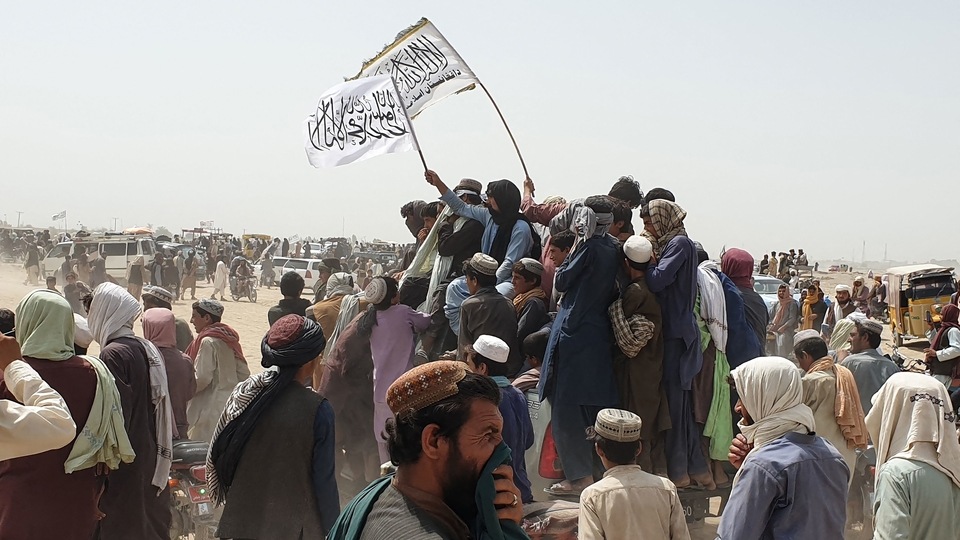
While the security advisors from New York to Dushanbe are concerned about the Republic of Afghanistan being turned into Islamic emirate, the Taliban today is projecting an image that it is equally adept at fighting guerilla war as also a powerful negotiator as it has forced the US on the dialogue table to concede on issues critical to their longevity.
The Taliban under ISI spin doctors have succeeded to certain extent in spreading that Pakistan-based Haibatullah Akhundzada, Sirajuddin Haqqani and Mullah Yaqoob have matured with both a military and diplomatic plan as compared to 1996 when the Taliban under Mullah Omar (father of Yaqoob) seized power in Kabul by torture, mayhem and public executions through hanging and stoning. The Islamic Emirate of Afghanistan was established in September 1996 but was ostracised by the global community sans mentor Pakistan, Saudi Arabia and United Arab Emirates who recognised the Islamic State. The Taliban are now playing a two-pronged game by waging war in Afghanistan and talking peace outside the country to ensure that US and the west grant recognition to the Emirate when they capture Kabul through force or a transitional government. Mentor Pakistan will also reap collateral benefits of this after all they brought the once political pariah Taliban to the negotiating table with possible relief from the FATF grey list.
A perception is deliberately being created to say that Taliban 2.0 is a different force from its original version and the rapid fall of Badakhshan, once a citadel of revolutionary Ahmed Shah Masoud, shows that the decimation of Northern Alliance, the powerful counter force to the Taliban in 1990s. A similar narrative is being built by Pakistani deep state me in northern territories where Marshal Abdul Rashid Dostum writ used to run by claiming that Afghan security forces have virtually surrendered to the Talib. The projection that Taliban now comprises of non-Pashtun commanders including Shias, Uzbeks and Tajiks and represents a cross section of Afghanistan rather than a puritan Sunni Pashtun force with Deobandi ideology of the 1990s is to show the so called inclusivity of the Islamic warriors. Rather than be in a hurry, the Taliban are playing a deliberate game by consolidating their gained positions and at the same time talking about ceasefire in faraway Doha with both US and Russia not having stomach for any more battles for Afghanistan. China is playing through its proxy Pakistan and will coopt Afghanistan under Taliban in the Belt Road Initiative (BRI) to exploit natural resources of the strife torn country. However, this is far distant from truth on the ground.
Fact is that Taliban is still largely a Sunni Pashtun force and not all the 30 percent Pashtuns in Afghanistan are with the fundamentalists as they have developed other interests. The ISI backed Taliban has taken control of border crossings in Afghanistan including Spin Boldak near Kandahar as it spells money and weapons from the truckers crossing the Afghan-Pak border. The Afghan special forces and hardcore military elements have withdrawn not because they fear Taliban onslaught but for military consolidation. After Gen Bismillah Khan Mohammadi has been appointed as new Afghan Defence Minister, the security forces are not only retaking districts but also counter-attacking. Gen Khan, who was Army Chief of Afghan National Army from 2002 to 2010, has been able to iron out differences within the Kabul government and has a cogent military strategy. It is quite evident that the Afghan security forces will not only defend but also take the war to the Taliban in their strongholds.
“The Taliban currently has talk-talk war-war strategy to project that they have changed. It is only a matter of time that war-war strategy of Taliban will be evident to the world particularly the US and Russia. The ISI spin doctors are projecting an imminent Taliban victory but the fact is that Afghanistan is heading towards a civil war as the Afghan security forces will pushback for Taliban still do not take prisoners but kill them,” said a former foreign secretary. The Taliban animal has matured in age and cunning but its stripes remain unchanged.


