Facing a barrage of criticism, Prime Minister Theresa May on Tuesday apologised for the harsh treatment of Commonwealth citizens who migrated to Britain after World War 2 and were recently told they were here illegally and faced deportation.
The issue blew up after several individuals - who arrived here after 1948 with their parents, lived and worked for decades - were told by immigration officials they could be detained and deported since they did not have documents to support their indefinite stay.
Under immigration rules then in force, people who came from Caribbean countries, India and elsewhere before 1973 to meet labour shortages in Britain were entitled to stay permanently. The rules changed in the following decades due to growing concern over immigration.
According to the Oxford Migration Observatory, there are nearly 57,000 such people in the UK who arrived before 1973, of whom 13,000 are from India.
All the cases that have emerged so far are of people from Caribbean countries, but campaign group Joint Council for the Welfare of Immigrants said that “on a daily basis here at JCWI, we were coming across cases of Australian, Nigerian, Canadian and South African, Indian and Pakistan-born citizens facing the same problem”.
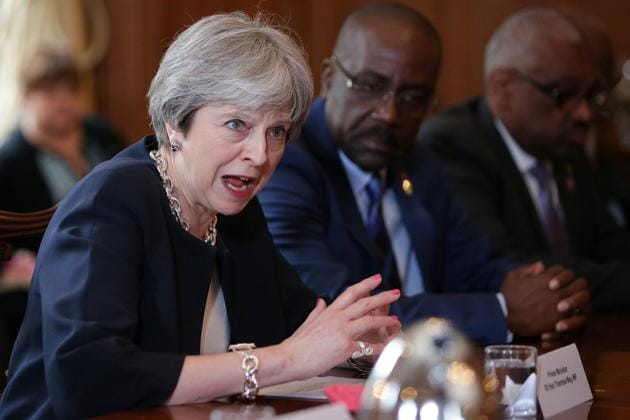
May told leaders from Caribbean countries, here for the Commonwealth Heads of Government Meeting, “I take this issue very seriously. The home secretary apologised in the House of Commons yesterday for any anxiety caused. And I want to apologise to you today. Because we are genuinely sorry for any anxiety that has been caused.
{{/usCountry}}May told leaders from Caribbean countries, here for the Commonwealth Heads of Government Meeting, “I take this issue very seriously. The home secretary apologised in the House of Commons yesterday for any anxiety caused. And I want to apologise to you today. Because we are genuinely sorry for any anxiety that has been caused.
{{/usCountry}}“Those who arrived from the Caribbean before 1973 and lived here permanently, without significant periods of time away in the last 30 years, have the right to remain in the UK, as do the vast majority of long-term residents who arrived later. I don’t want anybody to be in any doubt about their right to remain here in the UK.”
Some of those affected were detained in immigration centres and some may have been deported. Home secretary Amber Rudd admitted such residents had been wrongly treated, apologised and blamed the Home Office for being “too concerned with policy”.
The affected individuals were entitled to stay permanently as British citizens but did not regularise their stay by obtaining necessary documentation. Many lost jobs, were denied hospital treatment and faced other issues due to this, detailed in several recent accounts in the media.
Critics have blamed immigration policies introduced by May when she was home secretary to create what she then called a “hostile environment”. Rudd has set up a 20-member unit in the Home Office to deal with their cases.
The affected people from Caribbean countries are called the “Windrush generation”, as many of them arrived between 1948 and 1971 abroad the ship MV Empire Windrush to meet labour shortages.