
 E-Paper



Putin’s Ukraine Summitry Was a Big Con
A week after Alaska, it looks like nothing has changed in the Kremlin.


 Prefer HTon Google


The Trump-Putin Alaska summit followed by the visit of European leaders at the White House were supposed to jump-start momentum to end the Russia-Ukraine war. A week later we are back at the same old stand, as Vladimir Putin is playing familiar tricks and showing no serious interest in a deal. The question is what President Trump will do about it.
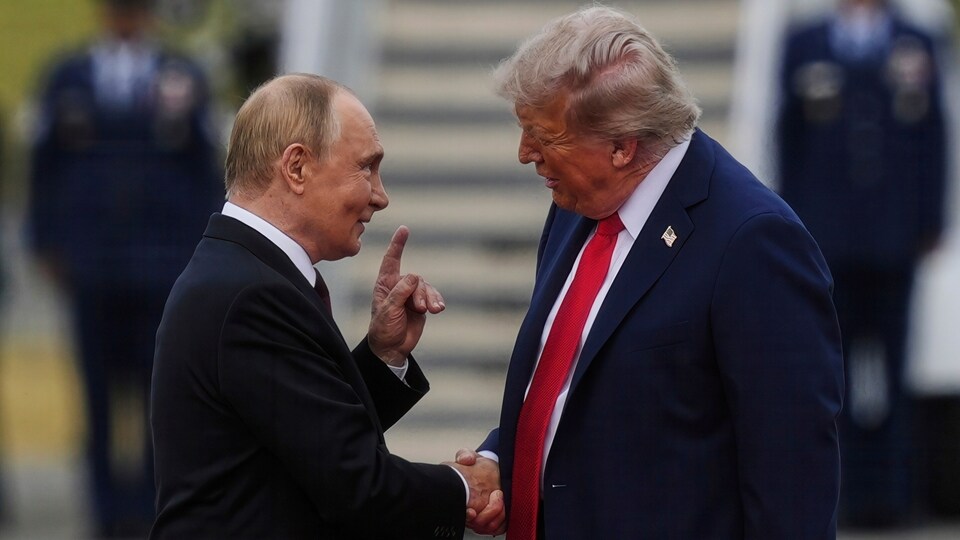
Mr. Trump suggested this week that Mr. Putin wants peace and is open to a bilateral meeting with Ukraine President Volodymyr Zelensky. Where’s the evidence other than statements by Americans? Russian Foreign Minister Sergei Lavrov on Wednesday tossed all sorts of obstacles in the way of such a meeting, which Mr. Zelensky has long sought.
Mr. Lavrov said Russia must play a role in providing security guarantees for Ukraine. Oh, and its ally China should be at the table. That’s right: Mr. Putin thinks he should select the military forces that are supposed to deter him from restarting his conquest. Meanwhile, Mr. Putin has launched some of the largest drone and missile attacks of the war, including targets in the west far from the front lines.
This isn’t the behavior of someone interested in peace. Mr. Putin and his mouthpieces are still talking about the war as a project to pull Ukraine into a Russian co-prosperity sphere. Mr. Lavrov said this week that Russia is “protecting” Ukraine from its own democratically elected government, according to the Institute for the Study of War. Mr. Putin still thinks he can swallow Ukraine.
The question now is how quickly Mr. Trump concludes he’s being played again, and the evidence is mixed. The President posted on social media Thursday that President Biden “would not let Ukraine FIGHT BACK, only DEFEND,” and it “is very hard, if not impossible, to win a war without attacking” the invading country. “There is no chance of winning!”
Good point. Mr. Biden, or whoever was running his Ukraine policy, had no strategy for victory. But Mr. Trump has also been reluctant to open up U.S. weapons stores and give Ukraine a real long-range missile arsenal and the freedom to use it.
Elbridge Colby, the chief Pentagon strategist, reportedly told Europeans this week that the U.S. will play only a minimal role in helping Ukraine with security guarantees. How will this note of American diffidence make Mr. Putin more likely to end the war?
Mr. Putin reads the papers, and the Trump Administration is trying to drive a bargain with the Russian dictator even as it tells Americans that what happens in Ukraine isn’t America’s problem. Mr. Putin also knows that Europe without U.S. help lacks the military power to be more than a trip-wire for his next attack.
Mr. Trump’s hawkish turn this summer is arguably what prodded Mr. Putin to seek a summit after months of U.S. sweet-talk failed. All the happy smiles of diplomacy won’t make a difference unless Mr. Putin thinks that the cost to him of continuing the war is higher than the risk of ending it.
It’s past time for Mr. Trump to apply secondary sanctions on countries that buy Russian oil and gas. That might get China’s attention. Here’s another idea: Confiscate each week a portion of the $300 billion in Russian reserves frozen in the West as long as the bombing continues. The hard truth is that a durable peace in Ukraine isn’t likely without a much harder policy from Mr. Trump.


