
 E-Paper



Ravi Shankar’s 1961 sitar gifted to British Museum
The sitar was gifted to the British Museum in London by Sukanya Shankar, the widow of Ravi Shankar, their daughter Anoushka Shankar and the Ravi Shankar Foundation.


One of four sitars made in 1961 by Kolkata-based instrument maker Nodu Mullick for the iconic Ravi Shankar has been gifted by his family to the British Museum in London, where it is on display as one of its most valuable possessions from South Asia.
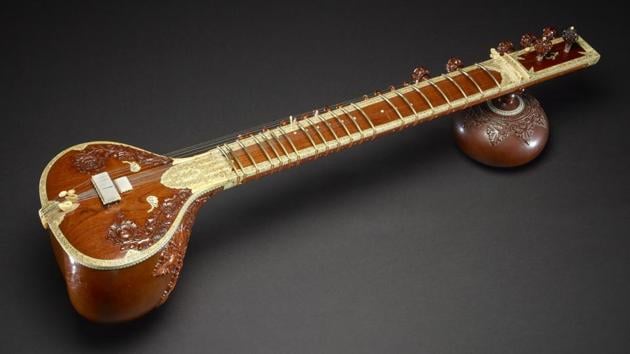
Placed in Room 33 of the renovated Sir Joseph Hotung Gallery of China and South Asia, the sitar played by Shankar (1920-2012) is considered “particularly special” by Richard Blurton, head of the museum’s South and Southeast Asia section.
“Other examples of Indian musical instruments exist in the museum’s collection, though none are as beautifully decorated or so connected to a cultural figure of the stature of Pandit Ravi Shankar,” Blurton said on Wednesday, adding the instrument was the first one made by Mullick for the maestro.
The sitar was gifted to the museum by Sukanya Shankar, the widow of Shankar, their daughter Anoushka Shankar and the Ravi Shankar Foundation. Shankar performed several times in the UK, and was best known in the country for his collaboration with Beatles member George Harrison.
The sitar is described by the museum thus: “The neck and sounding board are made of teak, while the bulbous resonator is a gourd (a second, smaller, removable gourd resonator is at the top of the neck).
“The metal strings are tensioned across the neck and the belly, and are kept taut by pegs in the neck. The neck is decorated with stained and inlaid bone, and the belly with laid-on patterning in wood of vegetal scrolling.”
Watch: Ravi Shankar’s sitar
Shankar’s elder brother Uday, a well-known dancer who studied and performed in London, is known to have visited the British Museum to study Indian medieval sculpture as part of his efforts to develop his new Indian dance. “The wonderful gift of the sitar is therefore just the latest chapter in the history of connections between the Shankar family and the museum,” Blurton said.
Delighted with the acquisition, Blurton added: “The gift of the sitar to the Museum enables us to tell both the human story of Ravi Shankar’s life and work, both in the west and in India, but also to place him, and other cultural ambassadors, within the context of the discovery of the cultural achievements of the entire world.
“This is an endeavour that lies at the very heart of the British Museum’s mission in the 21st century.”


