Russia on Friday held a launching ceremony for a powerful nuclear icebreaker, called Sibir (Siberia), in its drive to prepare a fleet for navigating the Northern Passage and hauling goods, particularly energy, to Asian markets.
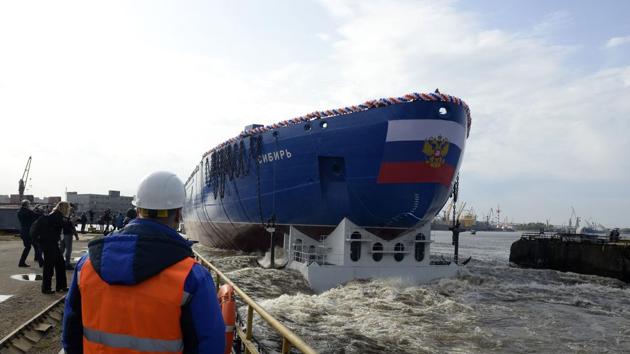
The massive new ship measures 173 metres in length and has two nuclear reactors with the propulsion power of 60 megawatts.
It can crush ice up to three metres thick and carry a crew of 53 people.
Organisers at the launching ceremony in Saint-Petersburg’s Baltic Shipyard broke a bottle of champagne against the vessel’s massive hull.
The icebreaker also received a formal blessing from an Orthodox priest.
“Nuclear energy ensures Russia’s undisputed leadership in the far north,” said Vyacheslav Ruksha, head of Atomflot state company which manages Russia’s nuclear icebreakers.
“But only with nuclear icebreakers can our country fully unveil all possibilities and advantages of the Northern Passage to the world,” he said.
The Sibir is the second of three icebreakers of a new class of the biggest nuclear powered icebreakers ever constructed.
The first one, called Arktika (the Arctic), was floated out last summer and is set to be completed in 2019.
{{/usCountry}}The first one, called Arktika (the Arctic), was floated out last summer and is set to be completed in 2019.
{{/usCountry}}The Sibir will be commissioned a year later.
The new series is meant to ensure year-round navigation in western Arctic, and the design of the vessels makes it possible to use them in the Arctic Ocean as well as in rivers, according to the Rosatom nuclear energy corporation.
The Northern Passage is a naval route gradually becoming more accessible due to climate change. It is 12 to 15 days shorter than traditional commercial routes through the Suez canal.