
 E-Paper



Sheikh Hasina death sentence: The verdict, India's response, and what's next
The verdict brings joy and relief to the families of those who were killed due to police brutality, but uncertainty for Sheikh Hasina.

 Prefer HTon Google


Sheikh Hasina, former Bangladesh prime minister, was sentenced to death on Monday after a tribunal court found her guilty of committing “crimes against humanity” during the student uprising of 2024. While the verdict brings joy and relief to the families of those who were killed due to police brutality, the verdict comes as Hasina continues to remain in exile in India.
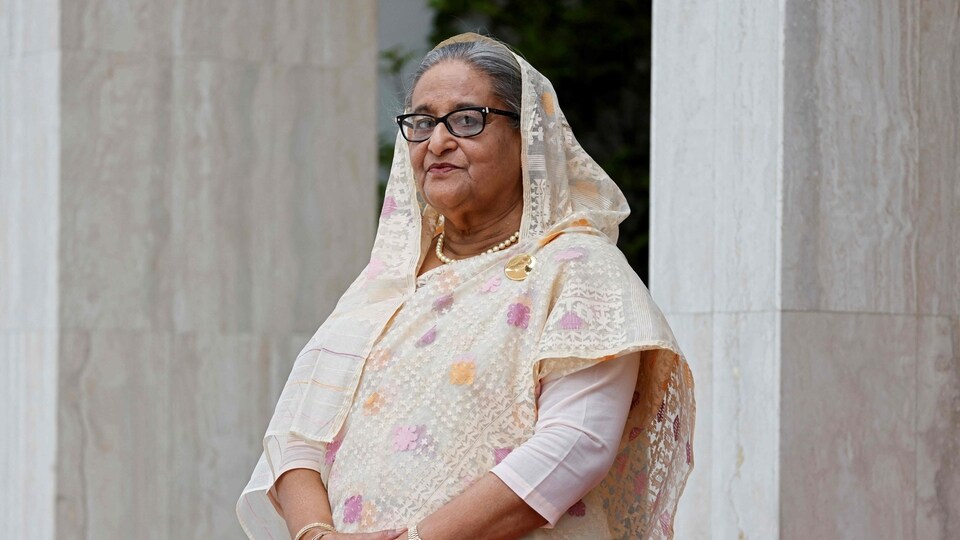
Along with Sheikh Hasina, former interior minister Asaduzzaman Khan Kamal was also given the death sentence. Meanwhile, former Inspector General of Police Chowdhury Abdullah Al-Mamun was given a lenient sentence of five years in prison due to his cooperation with the investigation and pleading guilty in July.
Also Read | Bangladesh urges India to hand over Sheikh Hasina after death sentence: 'Providing refuge would be...'
Sheikh Hasina given death sentence
The verdict
The verdict, which was read by Judge Golam Mortuza Mozumder, said that Hasina was “found guilty on three counts”, which include incitement of violence, order to kill and failing to take any action to prevent the atrocities.
While the court initially stated a life sentence for the former prime minister, after the other charges were added the tribunal announced it will be awarding the death sentence to the Awami league chief.
"We have decided to inflict her with only one sentence -- that is, sentence of death,” said Judge Mozumder.
Sheikh Hasina and her two aides were charges with five crimes, namely -
- orchestrating mass killings of protesters in Dhaka
- the use of helicopters and drones to fire on civilian crowds
- the murder of student activist Abu Sayed
- the incineration of bodies in Ashulia to destroy evidence
- the coordinated killing of demonstrators in Chankharpul.
The responses
Sheikh Hasina continues to deny the charges against her and stated on Monday that the verdict against her was “rigged” and “politically motivated” by a “kangaroo court”. Meanwhile, the Yunus-led interim government has welcomed the verdict against the ousted prime minister.
“The courts of Bangladesh have spoken with a clarity that resonates across the nation and beyond. The conviction and sentencing affirm a fundamental principle: no one, regardless of power, is above the law," a statement from Bangladesh's chief adviser Muhammad Yunus read.
Following her sentencing, Bangladesh urged India to extradite Sheikh Hasina and former interior minister Asaduzzaman Khan Kamal. Both of them were tried in absentia as they fled Dhaka after the August uprising,.
Invoking the extradition treaty, Bangladesh said New Delhi was obliged to do return the both leaders.
India also responded to the matter and said it has noted the verdict. “As a close neighbour, India remains committed to the best interests of the people of Bangladesh, including in peace, democracy, inclusion and stability in that country,” the statement from the Ministry of External Affairs added further.
Also Read | India reacts to Sheikh Hasina's death sentence: ‘Committed to best interests of....’
The United Nations also reacted to the verdict and stated that while the ruling was "an important moment for victims", the death sentence for former prime minister Sheikh Hasina is "regretted".
The UN rights office spokesperson said that the office had "consistently advocated for all accountability proceedings -- especially on charges of international crimes -- to unquestionably meet international standards of due process and fair trial".
"We ... regret the imposition of the death penalty, which we oppose in all circumstances." the spokeswoman added.
What's next for Sheikh Hasina?
What's next for Sheikh Hasina now depends on how New Delhi moves ahead with the extradition request.
Following the verdict, Bangladesh foreign ministry called on India to extradite Hasina and the former interior minister.
“It would be a grave unfriendly act and a contempt of justice for any other country to grant asylum to these individuals convicted of crimes against humanity,” the statement added.
As the world waits for the extradition, the first act the International Crimes Tribunal will do is confiscate Hasina's properties and taken over by the state.
The verdict against the former prime minister can also be appealed, but only if Hasina is arrested or she voluntarily returns to Bangladesh in the next 30 days. If the Bangladeshi leader chooses to ignore the summons issued for her, she can be labeled as a fugitive.
If Hasina is declared a fugitive by the court, the government can then proceed to seize her property and cancel her passport. Furthermore, Dhaka has also then escalate its extradition requests and move to issue an Interpol red notice.


