
 E-Paper



SpaceX's Super Heavy booster launches Starship, 'crashes' into Indian Ocean | Video
During the spacecraft's entry over the Indian Ocean, SpaceX conducted a series of tests as practice for future landings back at the launch site.

 Prefer HTon Google


Elon Musk's SpaceX on Monday successfully launched the Starship Super Heavy rocket on its 11th flight test, emphasising its push for total reusability.
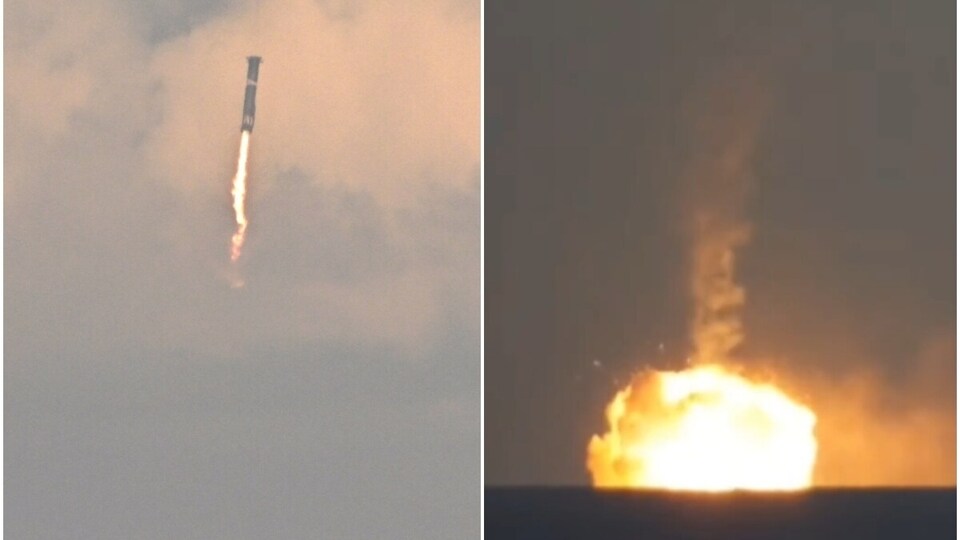
Starship, with the upper stage stacked atop its Super Heavy booster, was launched from SpaceX's very own Starbase in Texas, at 6:30 pm CT (23:20 GMT).
The Starship and the booster separated as part of the "hot staging" process minutes after lift off, following which the booster, as planned, returned for a controlled entry into the Gulf of Mexico, before crashing into the Indian Ocean.
A loud explosion was heard, and nothing was recovered.
WATCH:
Musk's company said that at the hot-staging separation event, the Starship's Raptor engines ignited. "Super Heavy is boosting back towards its splashdown site and preparing for its landing burn experiment," SpaceX said in a video post on X.
ALSO READ | SpaceX's Starship passes development rut, deploys first mock satellites
Loud cheers were heard in the video as the rocket splashed down in the Gulf of Mexico, which US President Donald Trump terms the Gulf of America.
SpaceX founder and CEO Elon Musk intends to use the full-scale Starship to send people to Mars. However, NASA's need is more urgent. The American space agency is unlikely to land astronauts on the moon by a decade's end without the 403-foot Starship, the reusable vehicle designed to transport them from lunar orbit to the surface and back up, the Associated Press reported.
Before the launch, Musk reportedly said that he was going outside, instead of remaining inside the Launch Control, to watch the flight test, "much more visceral".
ALSO READ | Elon Musk aiming to send uncrewed SpaceX Starship to Mars by end of 2026
Following a series of explosive failures, the Starship marked its success during the previous test flight in August.
During the spacecraft's entry over the Indian Ocean, SpaceX conducted a series of tests as practice for future landings back at the launch site. The entire flight lasted just over an hour, with the Starship carrying eight mock satellites mimicking SpaceX's Starlinks.
NASA's acting administrator Sean Duffy took to X to praise Starship's progress and said, "Another major step toward landing Americans on the moon's south pole."
SpaceX's Starship spacecraft and Super Heavy rocket represent a fully reusable transportation system to carry satellites as well as humans to Earth orbit, the Moon, Mars and beyond.
The 123 metres (403 feet) tall Starship has a payload capacity of 100 to 150 tons, which SpaceX said is fully reusable.
The Super Heavy booster is the first stage of the Starship launch system. It is powered by 33 Raptop engines, using sub-cooled liquid methane (CH4) and liquid oxygen (LOX).


