
President Trump on Monday waded back into a controversy over Joe Biden’s use of an autopen to grant pardons during his final days in the White House, pointing to the signature-duplicating device to question the legitimacy of his predecessor’s clemency decisions.
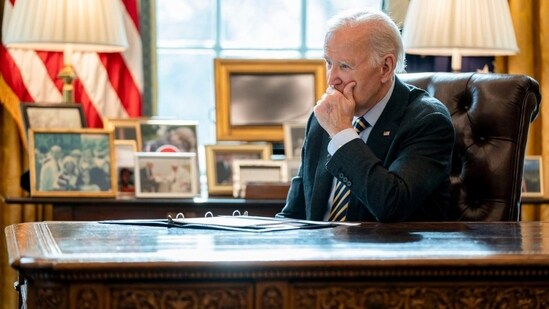
“I guarantee he knew nothing about what he was signing—I guarantee it,” Trump said while taking questions in the Oval Office, the latest in an escalating feud between the two men.
Here’s what we know about the clash.
Trump
President Trump on Monday waded back into a controversy over Joe Biden’s use of an autopen to grant pardons during his final days in the White House, pointing to the signature-duplicating device to question the legitimacy of his predecessor’s clemency decisions.
“I guarantee he knew nothing about what he was signing—I guarantee it,” Trump said while taking questions in the Oval Office, the latest in an escalating feud between the two men.
Here’s what we know about the clash.
Trump has argued the autopen is beneath the weightiest signings
Trump’s comments came in response to a New York Times interview with Biden, who said he had orally granted all of the pardons and commutations at the end of his White House term. Biden called Trump and other Republicans “liars” for asserting his aides had used an autopen to issue pardons and commutations without his approval, in remarks that ratcheted up his pushback against claims he wasn’t in control of significant clemency decisions.
In previous statements, Trump has said it is “disgraceful” to use the autopen for substantive documents, arguing it is more appropriate for niceties such as signing letters to children and others who write to the White House. He repeated that attack line Monday, saying, “That’s what the autopen’s supposed to be, to write to a young 7-year-old boy.”
“It’s not supposed to be for signing major legislation and all of the things,” he said.
Trump previously claimed some of Biden’s pardons were “void” because he used an autopen. But legal scholars said there is no mechanism for undoing clemency once granted.
Why is the autopen a source of so much scrutiny now?
The autopen is making headlines amid parallel investigations by the White House, Justice Department and Congress into high-profile clemency decisions Biden made at the end of his presidency. The scrutiny picked up last month when Trump signed an executive order assigning the White House counsel and attorney general to investigate Biden’s mental acuity and whether his aides had illegally used the device.
As part of the investigation, the National Archives has turned over tens of thousands of Biden White House emails that could shed light on the decision-making process, with keywords including “clemency,” “commutation” and “pardon.” The Times reported, based on a partial review of the emails, the Biden White House had a process to establish that Biden had orally made decisions before a top aide put the clemency records through the autopen.
On Capitol Hill, the Republican-led House Oversight Committee has requested interviews with more than a dozen of Biden’s former aides. Biden’s White House physician declined to answer questions in closed-door questioning last week, citing both doctor-patient confidentiality and his Fifth Amendment right against self-incrimination.
Where is the autopen kept?
The autopen isn’t technically in the White House. During the Biden administration, it was kept next door in the Eisenhower Executive Office Building, on the fourth floor, according to people familiar with the layout. The current administration didn’t respond to a question about whether it has been moved.
Previous administrations have blessed the autopen’s use
Used for decades, the autopen received a formal blessing from the Justice Department in a 2005 legal opinion. In that guidance, the department during the George W. Bush administration said the commander in chief could approve a bill from Congress by directing a subordinate to affix the president’s signature, “for example by autopen.”
“The President need not personally perform the physical act of affixing his signature to a bill he approves and decides to sign in order for the bill to become law,” the Justice Department’s Office of Legal Counsel concluded.
The opinion stressed that the president could only delegate the signature—not the decision to sign the document itself.
How have past presidents used the autopen?
From keeping up with signature requests to last-minute bill signings, the autopen has helped presidents out of binds.
A 1983 article in The Washingtonian traced the autopen’s presidential use back to the “polygraph” device Thomas Jefferson invented to have his writing simultaneously copied. “Every President from Kennedy on has relied on the Autopen to help satisfy the enormous demand for his signature,” the article stated.
In 2011, President Obama was attending an international summit in France when he called upon the autopen to sign a bill that extended provisions of the Patriot Act. Obama awoke early to review and approve the bill and directed that it be signed by autopen in Washington shortly before provisions of the surveillance law were set to expire.
This explanatory article might be updated periodically.
Write to C. Ryan Barber at ryan.barber@wsj.com and Annie Linskey at annie.linskey@wsj.com
One Subscription.
Get 360° coverage—from daily headlines
to 100 year archives.
Archives
HT App & Website