
 E-Paper



The War Room newsletter: “Be quiet, small man”—diplomacy, Musk style
More broadly, Taiwan is not just a giant chip factory. It is also a large and vitally placed island


 Prefer HTon Google


This is the introduction to the War Room, a weekly, subscriber-only newsletter in which our correspondents turn their gaze on the latest developments in defence.
Shashank Joshi, our defence editor, on more controversial diplomacy from the Trump administration
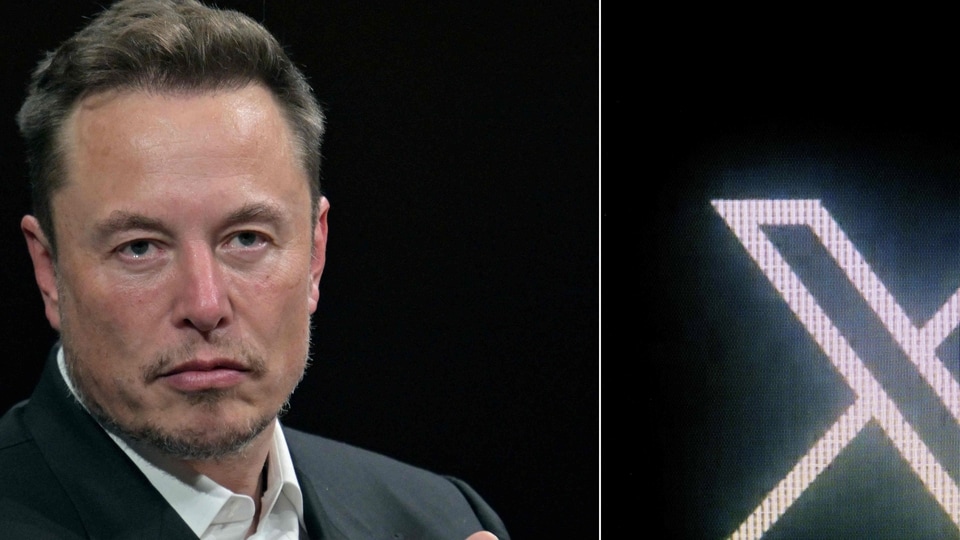
I am pleased to report that I have had no further virtual run-ins with J.D. Vance, America’s vice-president, despite some robust real-time fact-checking on my part. However his colleagues in the Trump administration have been busy with flame wars of their own. On March 9th Elon Musk, a senior adviser to Donald Trump, boasted that Starlink, the satellite-communication system owned by his SpaceX company, was “the backbone of the Ukrainian army” and that “their entire front line would collapse if I turned it off”. Radek Sikorski, Poland’s foreign minister, replied that his government had paid for Ukraine’s access to the service. “If SpaceX proves to be an unreliable provider we will be forced to look for other suppliers.” That was too much for the irascible Mr Musk. “Be quiet, small man,” he shot back, adding: “there is no substitute for Starlink.” Then Marco Rubio, America’s secretary of state, who evidently has equally copious time on his hands, chimed in. He told Mr Sikorski (pictured on the right), his counterpart, that he was “just making things up”. He demanded that Mr Sikorski “say thank you because without Starlink Ukraine would have lost this war long ago and Russians would be on the border with Poland right now”.The episode is revealing. It shows the bullying and hectoring that has become de rigueur in American foreign policy; an echo of the humiliation meted out to Volodymyr Zelensky, Ukraine’s president, just over a week ago. It also shows the collapse of trust and even civility in the transatlantic alliance. Who would have thought, just a few months ago, that a top White House official would be publicly telling the foreign minister of a NATO ally—a country which hosts American troops, and is among America’s closest partners in Europe—to “be quiet, small man”? No wonder that Donald Tusk, Poland’s prime minister (pictured on the left), on March 7th said his country would “undoubtedly” be safer with nuclear weapons. (Mr Tusk was responding to comments by Emmanuel Macron, France’s president, days earlier, “to open the strategic debate on the protection of our allies on the European continent by our…deterrent”.) Meanwhile, Ukraine’s future hangs in the balance. On March 11th American and Ukrainian officials will meet in Jeddah, Saudi Arabia. The idea is to agree “a framework for a peace agreement and an initial ceasefire”. Mr Zelensky will be in Saudi Arabia at the same time, though ostensibly to see its leadership. If the meeting goes well, Ukraine hopes that America will resume the flow of military aid and intelligence which it cut off, cruelly, in recent days. The intelligence cut-off was a partial one, aimed at curtailing Ukrainian operations aimed at killing Russians, such as the long-range strikes by American-supplied GMLRS rockets. In an unintentionally revealing moment, Keith Kellogg, notionally Mr Trump’s envoy to Ukraine—though in practice eclipsed by more influential officials such as Steve Witkoff—compared the intelligence cut-off to an act of animal cruelty. It is “sort of like hitting a mule with a two-by-four across the nose”, he said. “Got their attention”.Mr Trump’s policies certainly seem to involve an element of sadism. Vladimir Putin was “doing what anybody else would do”, said Mr Trump, when asked about Russian aerial attacks on Ukrainian cities. What is less clear is what Mr Trump is aiming at. A fresh minerals deal, this one more than 200 pages long, I understand, is in the works. Ukrainians fear that, in Jeddah, Mr Trump might also force Ukraine to sign up to draconian Russian terms, such as caps on the size of the army, before any serious negotiating begins. It is increasingly clear that Mr Trump and many of those around him are ideologically sympathetic to Russia and seek a complete normalisation of ties. “I’m finding it more difficult, frankly, to deal with Ukraine. And they don’t have the cards,” Mr Trump said on March 7th. “It may be easier dealing with Russia.”Britain and France, leading a push on behalf of European allies, still hope that they can persuade Mr Trump to provide a “backstop” for a European military force in Ukraine. I am told that, in recent conversations, American officials have been reasonably open to the idea of providing enablers for a European deployment, such as intelligence, logistics and command and control. But that is not the same as a promise to intercede if things go south. And some members of the Trump administration seem to be doing their best to sabotage things. On March 4th Mr Vance mocked the idea that “20,000 troops from some random country that hasn’t fought a war in 30 or 40 years” could keep the peace. As you can imagine, that went down like a bucket of cold sick in countries which fought alongside America in Afghanistan and Iraq. Remember: some, like Britain, Denmark and Estonia, lost as many soldiers, as a share of their population, as America in those conflicts.It may seem as though the world revolves around Mr Trump and his zany court. But let us take a moment to ponder news elsewhere. In Syria there has been serious violence on the coast between pro-government and pro-Assad forces, with around 1,000 civilians left dead. Our briefing in the latest issue looks at Syria in detail. We are concerned about the dire state of Syria’s economy and urge Western countries to lift the sanctions that were originally imposed on the previous regime. In Asia, the shadow of Chinese military power continues to get longer and darker. On Friday the Taiwanese defence ministry said it had detected 11 surveillance balloons near the island, a new record. We wrote about Australian jitters over Chinese live-fire drills in the Tasman Sea—the furthest south China has ever sent its navy for training. And our International section looked at how the modern drugs trade is evolving. Last year, we note, Indian officials in the Punjab border region said that they had intercepted 107 drones carrying drugs from Pakistan.Thank you as always for your letters. Jeremy asks whether the row between Mr Trump and Mr Zelensky was engineered by the White House to force Mr Zelensky to resign. I am sceptical that this was a planned ambush; Mr Trump is thin-skinned enough, and Mr Vance pugnacious enough, that it is easy to see how the talks veered off course. But what is clear is that some in the White House want Mr Zelensky out. American officials have been meeting Yulia Tymoshenko, a former prime minister, and people close to Petro Poroshenko, a former president, with an eye on early elections—which would be illegal under Ukraine’s martial law. What Ukrainians fear is that Mr Trump might attempt a constitutional coup by working to collapse Mr Zelensky’s majority in parliament. With friends like this, who needs enemies?Walter asks about the American intelligence cut-off, and wants to know whether drone footage can substitute for satellite images. It is true that surveillance flights and commercial satellite images can substitute for high-end intelligence in some cases. But not in all of them. Drone coverage is extensive but not comprehensive. America seems to have severed the mechanism by which Ukraine’s armed forces had access to commercial satellite-image providers like Maxar. And there are still some areas where you need the most advanced satellites. Data from America’s infrared satellites, which can spot missile launches, still seems to be getting through, I’m told. But “geospatial” intelligence seems to have been lost. This includes satellites that can map terrain in sufficient detail to generate the targeting “grids” used by HIMARS rocket launchers. Even the majority of NATO countries lack that sort of capability, though France is probably the furthest ahead.Caroline asks whether placing British or French nuclear weapons in Ukraine would violate the Nuclear Non-Proliferation Treaty (NPT). That isn’t on the cards, of course, though there is an increasingly loud debate over how, within NATO, Britain and France might compensate for any withdrawal of the American nuclear umbrella. One idea is that France could deploy nuclear-capable aircraft to, say, Germany or Poland. That would be no different to what America does today in its deployment of B61 nuclear bombs to Europe, which can be carried by European jets. The bombs technically remain in American custody until a war, which means there is no violation of the NPT. Of course, that cuts both ways: Russia began deploying nuclear weapons to Belarus in 2023. For more on the shifting landscape of European nuclear deterrence, look out for my forthcoming piece this week.Wayne asks why America should care about Taiwan. Surely, he says, its chip factories can just be moved to America? Indeed, TSMC, Taiwan’s chip behemoth, is building three chipmaking “fabs” in Arizona with the help of American subsidies. But, as we explained last month, building chips in America is more expensive, it is harder to find engineers and the culture of the industry is quite different. More broadly, Taiwan is not just a giant chip factory. It is also a large and vitally placed island; if it fell to China, it would become physically harder to defend Japan. Finally, in a special spin-off video next week, we’ll examine Europe’s nuclear deterrent if America withdraws its support for Ukraine. I will be talking to Malcolm Chalmers, deputy director general at RUSI, a think-tank. Malcolm is a font of nuclear knowledge. If you have any questions for us, let us know at thewarroom@economist.com. Thank you for reading and see you all next week.


