
 E-Paper



UK economy faces deepest recession as PM Boris Johnson mulls ease in curbs
Presenting century-wise data on the size of the British economy since 1700, the apex bank, however, said growth could bounce back to 15% for 2021 as a whole, with GDP recovering to its pre-coronavirus peak by the second half of next year.


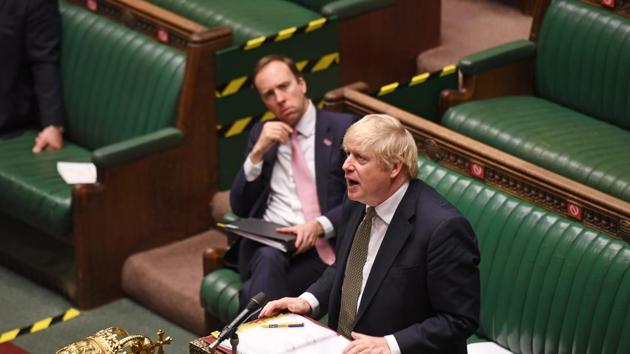
Battered on various fronts, the UK economy faces a 14% shrink this year, registering the deepest recession since 1706, the Bank of England said on Thursday, as Prime Minister Boris Johnson prepared to announce some easing of lockdown curbs from Monday.
Presenting century-wise data on the size of the British economy since 1700, the apex bank, however, said growth could bounce back to 15% for 2021 as a whole, with GDP recovering to its pre-coronavirus peak by the second half of next year.
Andrew Bailey, the bank’s governor, said he expected any permanent damage from the pandemic to be relatively small, since the economy was likely to recover “much more rapidly than the pull back from the global financial crisis” of 2008.
“The scale of the shock and the measures necessary to protect public health mean a significant loss of economic output has been inevitable in the near term,” he said.
Referring to wage subsidy schemes announced by chancellor Rishi Sunak for the employed and the self-employed, Bailey said the success of these schemes and the bank’s own stimulus meant there would be “limited scarring to the economy”.
Johnson is due to address the nation at 7 pm on Sunday on easing some lockdown measures from Monday, with ministers keen to re-start the economy. The main message to ‘stay at home’ is likely to be withdrawn with limited allowances for travel and gatherings.
Scotland and Wales have separately announced their approaches about easing the measures. The two UK constituents and Northern Ireland have the power to diverge from measures announced by London, but there are efforts that the easing is applied uniformly across the UK. Johnson was due to chair a meet on the issue on Thrusday.
A new official analysis by the Office for National Statistics said the risk of death from coronavirus among Indian and other non-white groups in the UK is “significantly higher” than those of white ethnicity, complementing similar reports from other sources.
It said that Indian and other non-white males are 4.2 times more likely to die from a Covid-19-related death and non-white females are 4.3 times more likely than white ethnicity males and females. The UK’s Indian-origin population is estimated to number 1.5 million.
Meanwhile, health officials said 4 lakh surgical gowns imported from Turkey did not meet UK standards and were unusable, adding to growing concerns over shortage in personal protective equipment (PPE). In Nottingham, Indian-origin Labour MP Nadia Whittome was dismissed as a carer for the elderly when she raised the issue of lack of PPE.
The Department of Health and Social Care said: “We are working night and day to source PPE internationally and domestically and brought together the NHS, industry and the armed forces to create a comprehensive PPE distribution network to deliver critical supplies to the frontline”.
“All deliveries of PPE are checked to ensure the equipment meets the safety and quality standards our frontline staff need. If equipment does not meet our specifications or pass our quality assurance processes it is not distributed to the front line.”


