
 E-Paper


Asteroid 2024 YR4 may hit Earth in 2032; know which nations are at risk as scientist warns ‘so much could go wrong’
An asteroid known as 2024 YR4 has a 97.9% chance to safely pass the Earth in 2032, as per NASA scientists.

 Prefer HTon Google


An asteroid known as 2024 YR4 has a 97.9% chance to safely pass the Earth in 2032, as per NASA scientists, who indicated that there is a 2.1% chance that it may have any impact. However, if a collision happens, the asteroid may hit on December 22, 2032, according to reports.
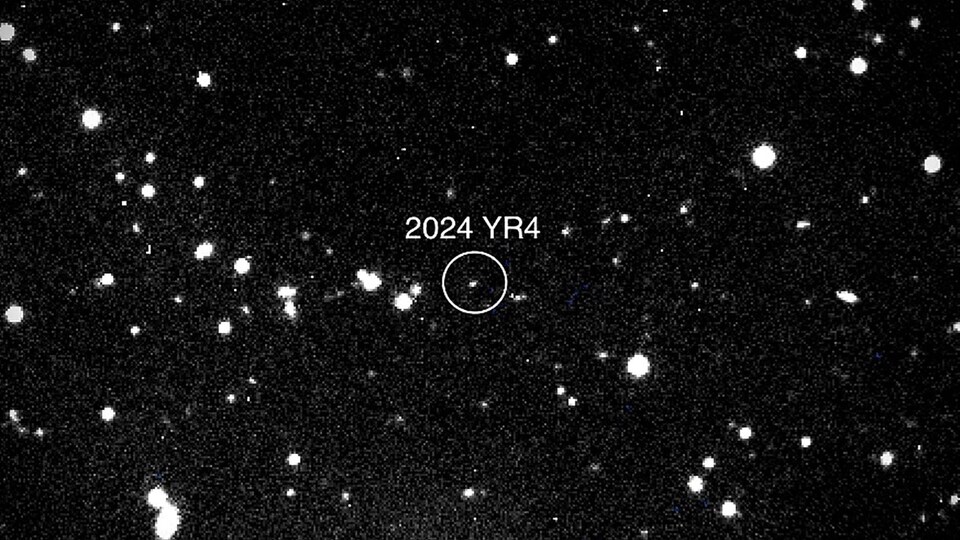
Based on its path, speed, and size, scientists have determined potential impact sites for YR4 in 2024. Impact projections are only estimates since accurate measurements are still difficult due to its remote position.
Asteroid 2024 YR4: Which countries are at risk?
David Rankin, a scientist with NASA's Catalina Sky Survey Project, has estimated a “risk corridor” for the asteroid, showing a sizable portion of the Earth that may be struck.
Starting from South America, the “risk corridor” extends over the Pacific Ocean, South Asia, the Arabian Sea, and Africa.
Venezuela, Colombia, Ecuador, India, Pakistan, Bangladesh, Ethiopia, Sudan, and Nigeria are among the specific nations that could be affected.
The Earth's spin at the time of collision would determine where it would ultimately strike.
Meanwhile, a global team is assessing the potential harm utilising the James Webb Space Telescope.
Back in 1908, a similar-sized asteroid, the Tunguska, struck Siberia and devastated 830 square kilometers of forest.
Also Read: Are we all aliens? Asteroid samples hint at existence of ancient watery world
What to know about discovery of Asteroid 2024 YR4
The NASA-funded Asteroid Terrestrial-impact Last Alert System station in Chile made the initial discovery of 2024 YR4 in December 2024.
While it had a 1.3% chance of striking Earth at the time, NASA nonetheless ranked it as the most hazardous object.
According to a European Space Agency representative who spoke to the Daily Mail, astronomers worldwide are using sophisticated telescopes to determine the asteroid's orbit as precisely as possible. “But knowing its orbit will only tell us the asteroid could impact Earth, not how significant an impact could be.”
The James Webb Space Telescope will resolve this issue through the use of infrared sensors, which are usedto measure the heat emitted from the asteroid.
Any warning issued?
Author and volcanologist Robin George Andrews worries that eight years may not be enough time to get prepared. He posted on X that while the DART mission was fantastic, it might not be able to halt 2024 YR4. Andrews cautioned that a similar strategy might not be effective in this case, citing NASA's 2022 DART mission, which successfully changed the orbit of a smaller asteroid.
“If we try to deflect 2024 YR4 with just four years to go — in 2028, when it’s close again — then that deflection would need to be VERY strong,” he said, hinting that a huge kinetic impactor or a nuclear device might be required.
Andrews emphasised that shattering the asteroid into pieces would be an unsafe tactic. “Destroying an incoming asteroid is tricky — you don’t want to turn a cannonball into a shotgun spray.” He added that it would be risky to try to attack it with a spacecraft similar to DART. He stated that “so much could go wrong” and that it might be necessary to use several spacecraft to guarantee success.
“Maybe 2024 YR4's odd will rise, and we will successfully deflect it in 2028 using a monster-sized spacecraft. Or maybe we'll break an awkward taboo and instead opt to use a nuclear warhead to try to deflect it, which would provide a bigger punch to the asteroid than DART,” he added.


