After the jury in the Lindsay Clancy trial returned deadlocked for the third time on Friday in Plymouth, Massachusetts, Judge William Sullivan ruled a mistrial. “It is with a heavy heart that we report we are unable to come to a unanimous decision and will not be able to,” the jury said in its statement.
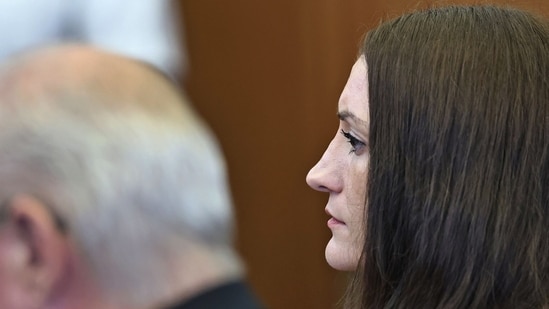
Clancy's attorney Kevin Reddington filed an emergency stay with the Supreme Judicial Court to intervene - barring which Judge William Sullivan said that he intends to declare a mistrial. But the emergency stay appeal was denied.
But experts believe that a mistrial is much more likely at this stage. Reddington has filed an emergency stay at the Massachusetts Supreme Judicial Court, CNN confirmed citing records from the clerk's office.
Given that the trial ended without a resolution, a key question is what happens to Lindsay Clancy after the mistrial verdict? In this article, we will look at how the 36-year-old suspect will have to live after a mistrial, having neither a conviction nor an acquittal.
What Happens To Lindsay Clancy In Case Of A Mistrial Ruling?
{{/usCountry}}What Happens To Lindsay Clancy In Case Of A Mistrial Ruling?
{{/usCountry}}A mistrial ruling for Lindsay Clancy does not mean she has been acquitted of the charges. The three murder charges against the 36-year-old - for killing her three children - will remain alive.
Additionally, Lindsay Clancy's current custody status will stay as it is. This means that the 36-year-old will remain at the Tewksbury Hospital in Massachusetts, where she has been staying under a court order since 2023.
At this stage, the role of the prosecution and the defense are both critical. The prosecution will try to force a retrial or negotiate a plea deal, according to Brad Bailey, a Boston attorney who spoke to the Associated Press. The only other option for them is to dismiss the charges, which is unlikely.
Reddington's defense, meanwhile, is likely to be on preventing a potential retrial. But that is unlikely, experts feel, and the veteran attorney, in turn, may push to drop the charges against Lindsay Clancy.
“Sometimes they decide not to, because of the sense that there may be the same result each time they try it, and because of the expenditures involved in trying the case to begin with, particularly when you have expert witnesses,” Bailey told AP. “Those are going to be expensive cases.”