
 E-Paper


Luxury cruise ship trapped in Antarctic ice rescued by US Coast Guard
The luxury cruise, Scenic Eclipse II, was freed from the Ross Sea by the U.S. Coast Guard

 Prefer HTon Google


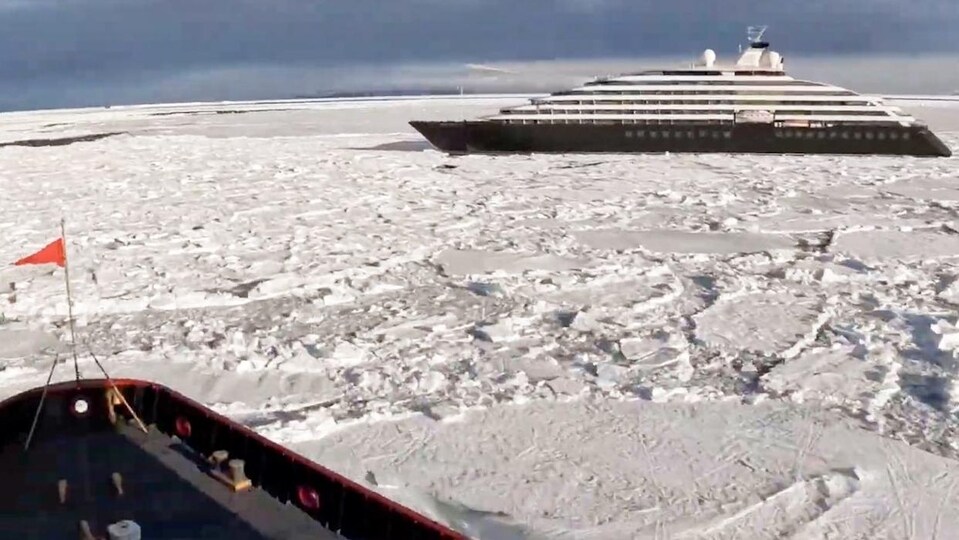
Scenic Eclipse II, a luxury cruise ship, was stuck in thick ice in the Antarctic Ross Sea by the U.S. Coast Guard's only heavy icebreaking vessel, the USCGC Polar Star, on January 23.
Read more: The titanic task of catering on the world’s biggest cruise ship
How did the rescue unfold?
The Australian-owned cruise ship got stuck in ice on January 17 and sent a distress call to the USCGC at 11 p.m., local time, Friday. According to the press release from USCGC, the ship was stuck “eight nautical miles from McMurdo Sound.”
The USCGC Polar Star responded to the call, navigated through the ice fields to reach Scenic Eclipse II stuck in ice. Footage acquired by PEOPLE shows Polar Star cutting through thick ice, forming cracks and creating a navigable path to the cruise ship.
Once they reached the cruise ship, Polar Star made two close passes to break the surrounding ice. This made enough space for the ship to sail through. After freeing the vessel, the icebreaker escorted it approximately four nautical miles to open water, ensuring a safe retreat from the ice-filled sea.
Read more: US Coast Guard seizes oil tanker near Venezuela, Kristi Noem releases video
Polar Star's 50th anniversary
The rescue took place on the 50th anniversary of Polar Star's commissioning, according to USCGC's Instagram post.
According to the press release by the Coast Guard, the Polar Star was commissioned on January 17, 1976. “Polar Star is the nation’s only active heavy icebreaker and has served as a cornerstone of U.S. presence in the polar regions.”
Every year, the USCGC Polar Star travels to Antarctica via the Ross Sea as part of Operation Deep Freeze, which aims to "resupply the United States Antarctic stations in support of the National Science Foundation (NSF), the lead agency for the United States Antarctic Program."
Polar Star left its homeport in Seattle on Thursday, November 20 to Antarctica in support of Operation Deep Freeze.


