
 E-Paper


Mega tsunamis and the US: How real is the La Palma-style threat?
Regions most at risk include Alaska, Hawaii, and the West Coast, all of which are characterized by significant geological activity.

 Prefer HTon Google


A recent study published in the Proceedings of the National Academy of Sciences has raised alarm over the possibility of massive "mega-tsunamis" threatening coastal areas of the United States. Unlike typical tsunamis, these colossal waves could reach heights of up to 1,000 feet, with the potential to devastate entire communities along vulnerable shorelines.
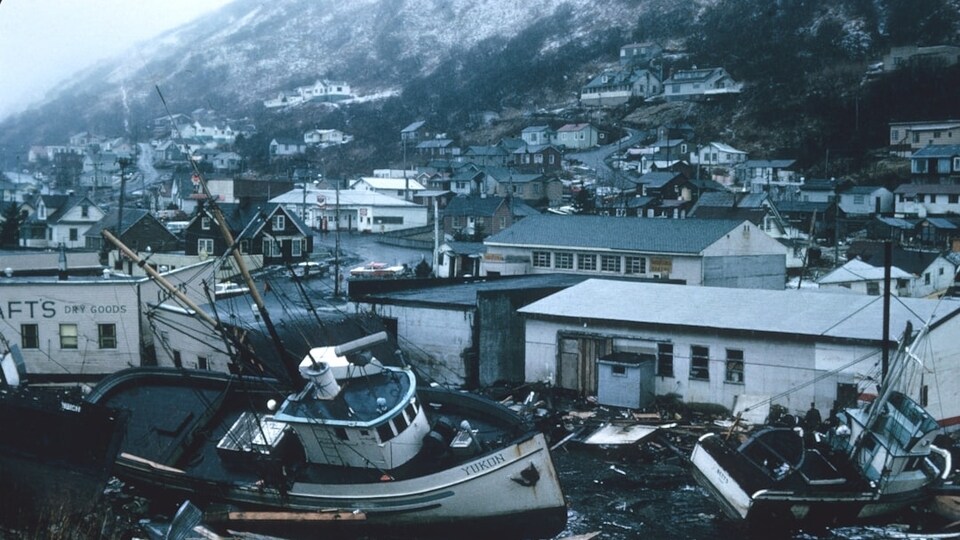
According to geologists, mega-tsunami's are most often triggered by landslides, earthquakes, or other seismic events. Regions most at risk include Alaska, Hawaii, and the West Coast, all of which are characterized by significant geological activity.
East Coast Threat: La Palma Volcano
One prominent theory centers on the Cumbre Vieja volcano on La Palma in the Canary Islands. Researchers Dr. Simon Day and Dr. Steven Ward, in a 2001 study, suggested that a collapse of the volcano’s western flank into the Atlantic Ocean could generate a mega-tsunami capable of reaching the US East Coast. Their research proposes that an initial wave, potentially 2,000 feet tall, could still be around 150 feet high upon landfall in the Americas.
This scenario has even been dramatized in the Netflix series La Palma, which portrays a family vacationing during the catastrophic event. While the theory remains controversial among scientists, it has drawn attention to the potential global impacts of remote geological events.
Alaska: A Proven Precedent
In 1958, Alaska’s Lituya Bay experienced a real-life mega-tsunami after a massive landslide triggered by an earthquake sent a wave surging to an astonishing height of 1,719 feet—the tallest tsunami ever recorded. Eyewitnesses described a deafening "boom" before entire forests and structures were swept away. One fisherman’s boat was lifted high enough for him to see above the treetops.
Given Alaska’s rugged terrain, seismic activity, and accelerating glacier melt due to climate change, the region remains particularly vulnerable to future landslides and tsunamis.
Hawaii: Volcanic Flanks at Risk
In Hawaii, the primary concern stems from volcanic activity. Unlike Alaska, the risk here comes from large sections of volcanic rock breaking off and sliding into the ocean—especially during eruptions or earthquakes. Roughly 105,000 years ago, a wave estimated at 1,000 feet in height struck the island of Lanai due to such a collapse.
Scientists are closely monitoring high-risk areas, particularly the southeastern regions of the Big Island, where younger volcanoes like Kilauea and Mauna Loa continue to show signs of instability.
West Coast: The Cascadia Threat
The Cascadia Subduction Zone, stretching from northern California to British Columbia, poses a significant tsunami threat to the U.S. West Coast. A magnitude 9.0 earthquake in the year 1700 caused a 100-foot tsunami that wiped out coastal forests, leaving behind what are now known as “ghost forests.”
The US Geological Survey and FEMA estimate that there is a high likelihood up to 37% of a magnitude 8 to 9 earthquake occurring in the region within the next 50 years. Coastal towns such as Tillamook, Astoria, and Newport are particularly at risk of being inundated should such an event occur.
Preparing for the Worst
Given the scale of potential devastation, scientists emphasize the importance of monitoring geological activity and improving early warning systems. Public education and disaster preparedness are also key to mitigating the impact of a potential mega-tsunami.
While these events are rare, their consequences could be catastrophic - making vigilance and planning essential for communities along the nation’s coastlines.


