E-Paper


Mega-tsunami warning: These 3 US states could face direct impact in next 50 years
A groundbreaking study from Virginia Tech warned that three US states are at significant risk of experiencing catastrophic mega-tsunamis in the next 50 years.

 Prefer HTon Google


Scientists have warned that a potentially catastrophic mega-tsunami, triggered by a major earthquake along the Cascadia Subduction Zone (CSZ), could hit parts of the US Pacific Coast. Researchers from Virginia Tech have said that the Cascadia Subduction Zone is one of North America’s most hazardous fault lines. The recent warning takes us back to a May 2025 report that claimed that three US states could face direct impact of mega-tsunamis in the next 50 years.
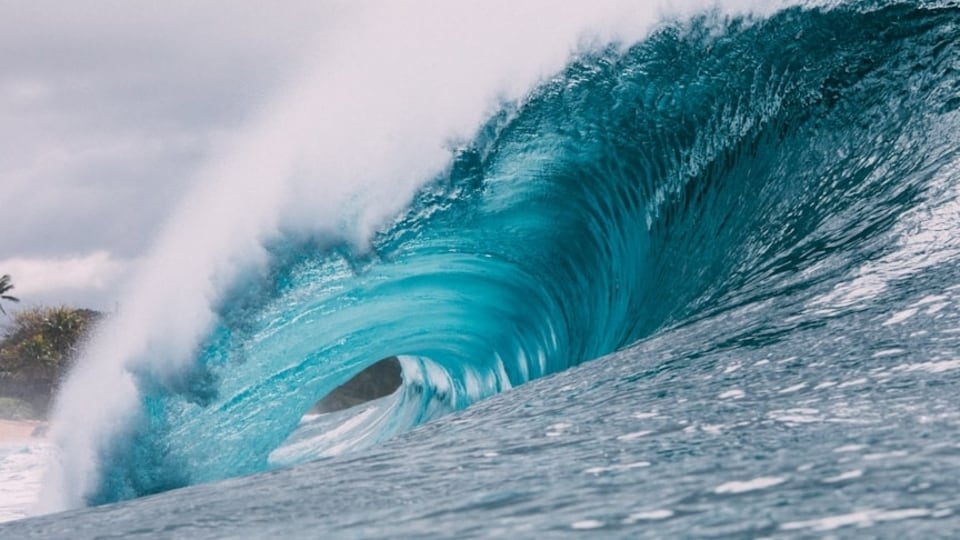
A groundbreaking study from Virginia Tech, published in the Proceedings of the National Academy of Sciences, previously warned that three states – Alaska, Hawaii, and Washington – are at significant risk of experiencing catastrophic mega-tsunamis in the next 50 years. These colossal waves can reach up to 1,000 feet, and could be triggered by massive earthquakes and geological events.
Alaska is under increased threat as it faces dual threats from both seismic activity and climate change-induced landslides. The Aleutian Islands, part of the Pacific Ring of Fire, are prone to very powerful earthquakes. A study from the University of Hawaiʻi at Mānoa has estimated that there is a 9% chance of a magnitude 9.0 or greater earthquake in the Aleutians within the next 50 years – an event that could potentially generate a mega-tsunami with waves reaching up to 75 feet.
Hawaii is also under increased risk as the Big Island's active volcanoes, such as Kīlauea, are susceptible to flank collapses. These are massive landslides in which huge sections of the volcano's flank slide into the ocean, displacing massive amounts of water and generating tsunamis that can affect coastal areas of Hawaii.
Read More | Japanese man flees home with pets mid-breakfast after tsunami alert. Watch
The Cascadia Subduction Zone, stretching from Northern California to Vancouver Island, is a major fault line where the Juan de Fuca Plate is gradually sinking beneath the North American Plate. If a major earthquake hits this region, it could cause coastal land to sink by up to 6.5 feet, expanding floodplains and increasing flood risks. The tsunami resulting from this could send waves up to 40 feet high, affecting communities along the Pacific Northwest coast, including northern California, northern Oregon, and southern Washington.
What is a mega-tsunami?
According to sms-tsunami-warning.com, a mega-tsunami is an extremely destructive and rare phenomenon that may strike the world every few thousand years. “Huge earthquake-induced rockslides next to bodies of water can generate mega-tsunamis since the massive amount of water displacement increases the wave size more than a submarine earthquake,” the website says. “Luckily, huge landslides and the mega-tsunamis that they can generate are extremely rare. In most cases, tsunamis caused by rockslides, unlike the ocean-wide tsunamis caused by some underwater earthquakes, dissipate quickly and rarely affect coastlines distant from the source due to the small area of sea affected. However, a massive landslide can give rise to much larger local shock waves (solitons = solitary waves that can travel for long distances without changing their shape or losing energy).”
Read More | From Lituya Bay to Icy Bay, some of the worst tsunamis in US history
The website explained that in some cases, they can end up generating a mega-tsunami that can reach the height of hundreds of meters. “That is the case when a massive landslide occurs in a limited body of water and the resulting wave is unable to disperse, just as it happened in Alaska where a major rock fall generated the Lituya Bay tsunami. It was the largest tsunami wave ever observed anywhere in the world and it was caused by a rock fall in Lituya Bay, Alaska on July 9, 1958,” it added.