
 E-Paper


Stock market today: Why are US stocks lower today? Tech selloff, Iran talks and PCE inflation data weigh on markets
US stock futures rose as Iran peace talks eased tensions, oil prices fell, and investors awaited key PCE inflation data and Micron earnings this week.

 Prefer HTon Google


The U.S. stock market ended mostly lower on Monday as investors worried about technology stocks, the Iran situation, and upcoming inflation data, as per Market trading data. The S&P 500 fell 0.4%, showing weakness across the broader market. The Nasdaq Composite dropped 1.3%, mainly because large technology stocks came under pressure. The Dow Jones Industrial Average was the only major index to finish higher, gaining 71 points or 0.1%. A strong 3% rise in Caterpillar shares helped keep the Dow in positive territory.
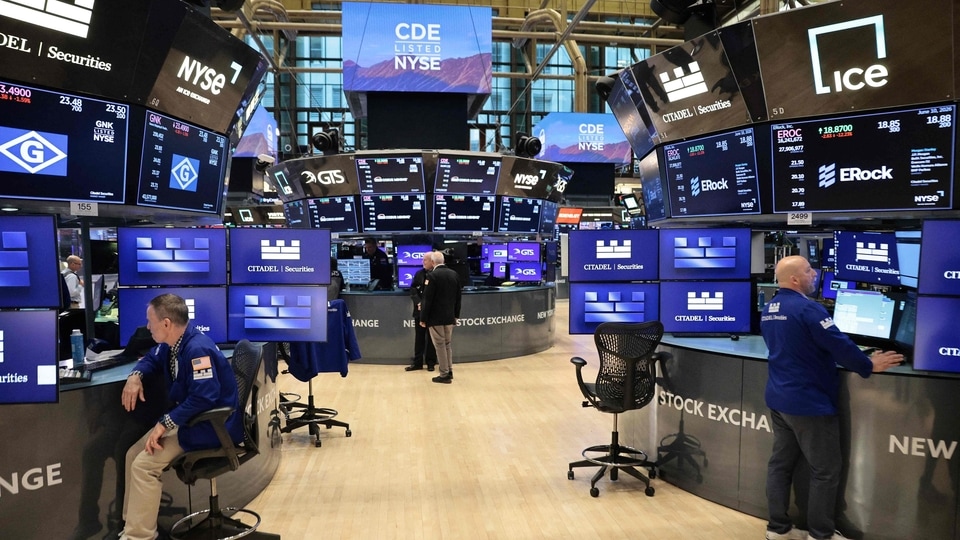
Tech stocks dragged the market lower
Big technology companies were the biggest reason behind the market decline on Monday. Alphabet shares fell 5% after investors became concerned about artificial intelligence talent leaving the company. Amazon stock dropped 4%, adding to pressure on the broader market.
Meta Platforms shares declined 2% during the session. Microsoft stock also fell 2%, contributing to losses in the technology sector. Because these companies have a large weight in major indexes, their declines pushed the market lower, as per Market analysis via CNBC.
Also read: Why is Google stock falling? Alphabet share prices drop despite $75 million A24 AI deal
SpaceX was another major loser
SpaceX shares plunged 14% on Monday. The drop put SpaceX on track for its third consecutive day of losses. The sharp fall in SpaceX added further pressure on investor sentiment.
Also read: SpaceX stock in focus as company signs $6.3 billion AI deal with Reflection AI
Iran peace talks
Iran said there had been "encouraging progress" in talks with the United States taking place in Switzerland. Officials from both countries reportedly agreed on a roadmap aimed at reaching a final deal within 60 days, as per Yahoo Finance. The update eased some investor concerns about possible military conflict in the Middle East. Markets had been worried after President Donald Trump warned that the US could strike Iran if Tehran failed to control Hezbollah's actions against Israel.
Oil prices fell
Oil prices fell further after the U.S. Treasury Department allowed Iranian oil sales for the next 60 days. Brent crude oil dropped 3.31% to close at $77.90 per barrel. U.S. West Texas Intermediate crude fell 2.32% to close at $74.82 per barrel.
Oil prices declined as traders weighed Trump's warnings against hopes for a peace agreement. Investors believe successful negotiations could help normalize oil shipments through the Strait of Hormuz.
AI demand remains a major market focus
Investors continued to watch developments in the artificial intelligence sector. South Korean memory chip maker SK Hynix overtook Samsung to become South Korea's most valuable listed company, as noted by Yahoo Finance. The shift highlights strong investor confidence in companies benefiting from AI-related demand. Memory chips are a critical part of AI servers and data centers.
Also read: Alan Greenspan cause of death: How did former Federal Reserve chair die at 100?
Inflation report
A major focus for Wall Street this week is Thursday's inflation report. The report will show the May reading of the Personal Consumption Expenditures (PCE) Price Index. The PCE index is the Federal Reserve's preferred measure of inflation. Economists surveyed by FactSet expect core PCE inflation to increase compared with April. Higher inflation could make it harder for the Federal Reserve to cut interest rates.
Treasury yields moved higher
US Treasury prices fell while yields rose on Monday, according to Bloomberg. Investors reassessed inflation risks after President Trump renewed military threats toward Iran. Rising geopolitical tensions initially pushed oil prices higher earlier in the day. Higher oil prices can increase inflation by raising energy costs across the economy.
Bond market reaction
Bond investors worried that higher energy prices could make it harder for the Federal Reserve to bring inflation under control. US and Iranian officials continued talks in Switzerland aimed at securing a longer-lasting peace agreement, as noted by Bloomberg. Trump warned that the US could take military action if Iran does not stop Hezbollah-linked activities. He also suggested the US could impose tolls or penalties if negotiations fail.


