
 E-Paper


Trump suffers new setback on use of wartime deportation law
A federal appeals court blocked the Trump Administration from deporting Venezuelan men under a two-century old wartime law.

 Prefer HTon Google


A federal appeals court blocked the Trump Administration from deporting Venezuelan men under a two-century old wartime law, teeing up the case to return to the US Supreme Court.
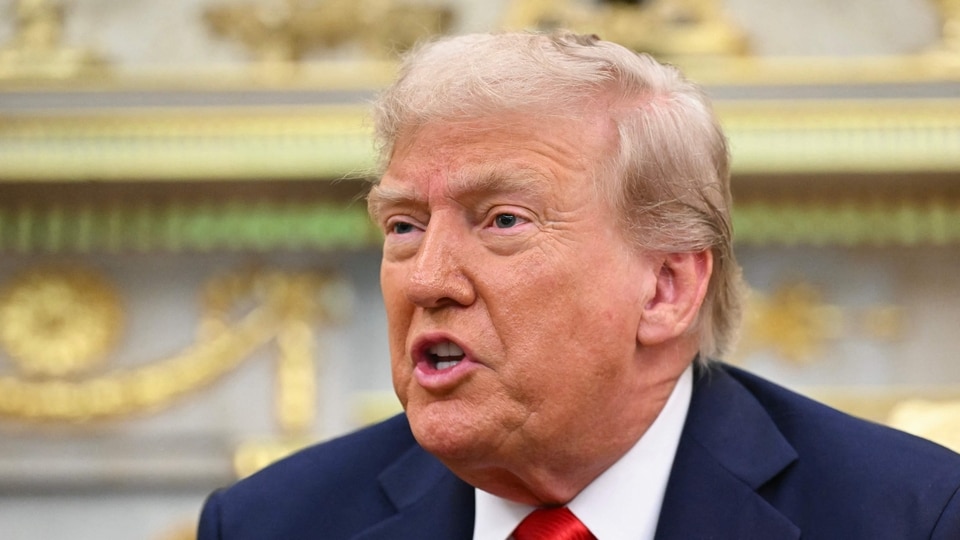
President Donald Trump can’t use the Alien Enemies Act of 1798 to deport accused members of the violent Tren de Aragua gang because their presence in the US doesn’t amount to an “invasion” or “predatory incursion” by a foreign nation, according to a 2-1 decision late Tuesday by the 5th US Circuit Court of Appeals.
Trump invoked the Alen Enemies Act in a March presidential proclamation that said Tren de Aragua had been sent to the US by President Nicolás Maduro with a specific goal of “destabilizing democratic nations in the Americas, including the United States.”
The conservative-leaning appeals court rejected Trump’s argument that Maduro’s alleged actions allowed the president to invoke the law.
“A country’s encouraging its residents and citizens to enter this country illegally is not the modern-day equivalent of sending an armed, organized force to occupy, to disrupt, or to otherwise harm the United States,” according to the New Orleans-based panel. “There is no finding that this mass immigration was an armed, organized force or forces.”
The decision comes as Trump’s wide ranging crackdown on undocumented immigrants continues to trigger legal challenges across the country, with mixed results. Earlier Tuesday, a judge ruled Trump illegally used the federal troops to help enforce immigration law when he deployed the National Guard to California during protests against his crackdown.
The White House didn’t immediately respond to a message seeking comment.
The Supreme Court ruled earlier this year that Venezuelans facing deportation under the Alien Enemies Act must receive notice that they face removal in a “reasonable time and in such a manner” to bring a legal challenge. Several federal judges have ruled that Trump improperly invoked the law, but the Supreme Court has not ruled on that question.
The 5th Circuit ruling comes amid rising tension with Venezuela. Trump on Tuesday said the US military killed 11 “terrorists” when it targeted a boat allegedly carrying drugs from Venezuela.
In July, about 250 Venezuelans who were deported to El Salvador by Trump, including accused gang members removed under the Alien Enemies Act, were returned to Venezuela in a prisoner swap involving 10 Americans.
Trump has continued to defend his use of the Alien Enemies Act despite numerous court losses. The statute lets the president bypass federal immigration law to deport “alien enemies” when the US is involved in a declared war or a foreign nation has started or threatened an “invasion or predatory incursion.”
The Supreme Court previously blocked the Trump administration from using the law to remove accused Venezuelan gang members being detained in northern Texas, in the same case now on appeal. The justices then advised the 5th Circuit to expedite the case. Oral arguments were held in June.
In their decision, the appeals court judges noted that the case had already “made an extraordinarily rapid rise to the Supreme Court.”
The 5th Circuit ruling applies in several states, including Texas and Louisiana, where many immigrants set for deportation are being held.
The appeals court and the Supreme Court have both said that the Trump administration can continue to deport accused gang members and terrorists under the usual immigration laws, which require more due process.
The decision is a win for the American Civil Liberties Union, which filed the suit on behalf of two accused gang members.
The appeals court did not dispute Trump’s “factual assertions” about Venezuela’s actions, and agreed with his finding that drug-trafficking “is being used as a weapon.” But the majority held that such conduct still does not amount to an invasion or predatory incursion as envisioned by Congress in 1798.
“The completely accurate implication of this finding is that drugs are a scourge and weaken our citizens and our country, but it is not beyond reason that in 1798 an enemy country could try to sicken and physically weaken those within the United States,” the court said. “That would not have been an invasion or predatory incursion then, and it is not one today.”
The judge who dissented, Andrew Oldham, said the majority had failed to give proper deference to Trump’s determinations about a foreign invasion.
“That contravenes over 200 years of legal precedent,” Oldham wrote. “And it transmogrifies the least-dangerous branch into robed crusaders who get to playact as multitudinous Commanders in Chief.”
--With assistance from David Voreacos.
(Updates with detail from the ruling.)
More stories like this are available on bloomberg.com
©2025 Bloomberg L.P.


