The murder trial of former Massachusetts nurse Lindsay Clancy has brought attention to postpartum psychosis, a rare but serious mental health condition that can affect some women after childbirth. Clancy's defense says she was suffering from postpartum psychosis when her three children were killed, while prosecutors argue she acted intentionally.
What is postpartum psychosis?
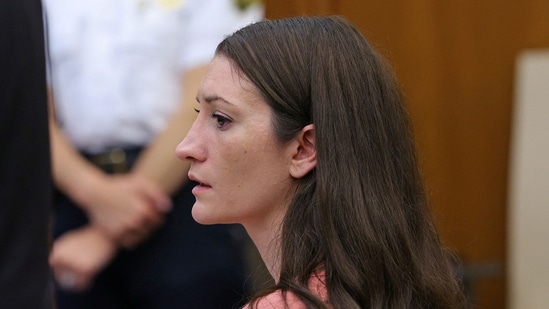
The murder trial of Massachusetts mother Lindsay Clancy has brought attention to a rare but severe mental health condition.
As per PBS, postpartum depression is not uncommon but postpartum psychosis affects only about one in 1,000 women. Dr Julia Riddle, a psychiatrist who focuses on reproductive mental health at the University of North Carolina Center for Women's Mood Disorders, explained that the highest risk is linked to bipolar disorder. “The people that are highest risk -- as you mentioned, so it's about one to two in 1,000 -- highest risk seems to be associated with bipolar disorder, because this is an affective disorder, which means a mood disorder,” she said. She added that other indicators may include a difficult delivery, losing a lot of sleep, or having family members with a history of postpartum psychosis or bipolar disorder.
Deep Dive
What are the common symptoms of postpartum psychosis?
Why is postpartum psychosis often misdiagnosed?
How can postpartum psychosis be treated effectively?
Dr Riddle also described what it typically looks like. “It is considered usually rapid, so very, very soon after delivery. So, a woman gives birth, and usually it's within the first few weeks, family will notice a change. They're acting odd. They don't seem with us. They're a little more detached, or they're more irritable and agitated,” she said. She explained that one of the most worrying signs is not being able to sleep, and that things can progress to a loss of reality. “This is when we start to really worry about thoughts of suicide in particular and sometimes when some of these infanticide thoughts can come up,” she said.
{{/usCountry}}Dr Riddle also described what it typically looks like. “It is considered usually rapid, so very, very soon after delivery. So, a woman gives birth, and usually it's within the first few weeks, family will notice a change. They're acting odd. They don't seem with us. They're a little more detached, or they're more irritable and agitated,” she said. She explained that one of the most worrying signs is not being able to sleep, and that things can progress to a loss of reality. “This is when we start to really worry about thoughts of suicide in particular and sometimes when some of these infanticide thoughts can come up,” she said.
{{/usCountry}}However, Dr Riddle stressed that most women with this condition are not violent. “It is rare. This is a treatable illness. When this gets recognized and treated, women get better, and the vast majority, the vast, vast majority are not violent,” she said.
Why is postpartum psychosis so hard to diagnose?
As per PBS, Dr Riddle said diagnosing postpartum psychosis is difficult because it isn't part of standard training, “This is not part of psychiatric training, N.P. training, P.A. training, psychology, or social work training. This is not something that is currently required as part of our education.” She added that this makes it hard for both patients and professionals, saying, “It is hard for a patient to know when they're seeing someone that has the appropriate training. But it's also hard as a trainee or someone practicing to get these -- to get this training.”
What did Lindsay Clancy's psychiatrist tell the court?
According to People, on the ninth day of Lindsay Clancy's trial on Friday, August 7, Dr Alia Goodheart testified about treating Clancy during a voluntary five-day stay at McLean Hospital, an inpatient mental health facility in Belmont, Massachusetts. Clancy was taken there by ambulance on January 1, 2023. Goodheart told the court that she considered Clancy a “low-risk” patient when she was admitted. Clancy said she was having insomnia and feeling numb, which she believed were side effects of her prescribed medication. She also said she had suicidal thoughts, but Goodheart testified that Clancy did not have a plan to act on them. “I had no reason to believe she was not a reliable reporter,” Goodheart testified.
According to People, Goodheart's initial diagnosis was “major depressive disorder, severe without psychotic features.” As the days passed, Goodheart said Clancy reported sleeping well and appeared to be improving. It was ultimately determined that Clancy could be discharged on January 5, 2023, as long as she attended a psychiatric follow-up appointment the next day. “I did not have any concerns about her safety or a risk for anybody else,” Goodheart testified. She also said Clancy showed no signs of psychosis during her treatment and had no prior diagnosis of the condition.
During cross-examination, defense attorney Kevin Reddington asked Dr. Alia Goodheart about Lindsay Clancy's earlier medical records and the medications she was taking. Goodheart said Clancy was not asked to sign a release to access her previous records. She also said an initial blood test did not show which medications were in Clancy's system. “Psychiatry is not based on blood tests, it's based on the patient who is sitting in front of you,” Goodheart testified.