E-Paper


What Justices Kavanaugh, Alito and Thomas said in their dissent on Supreme Court tariff ruling: 'Clearly lawful'
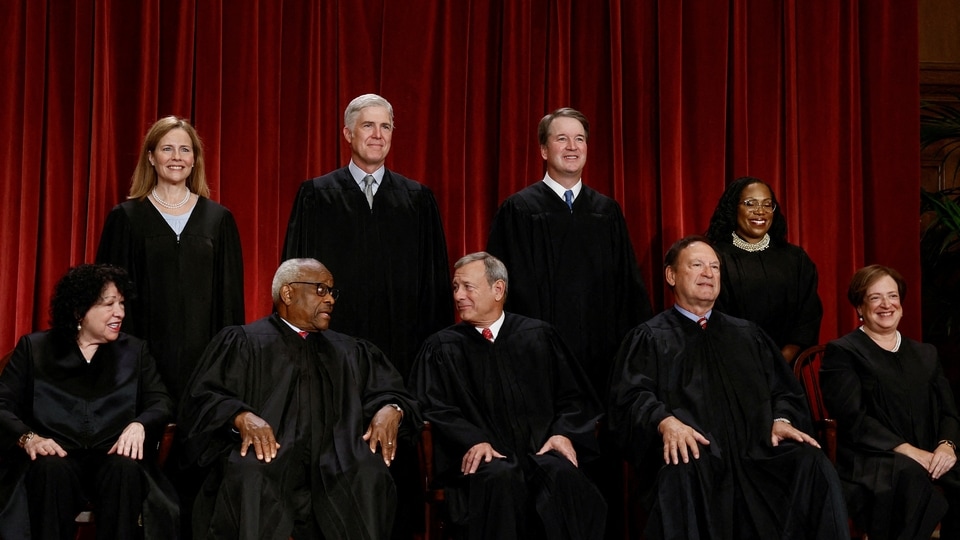
Ketanji Brown Jackson, Elena Kagan and Sonia Sotomayor joined Amy Coney Barrett, Neil Gorsuch and John Roberts in voting to strike down the tariffs.

 Prefer HTon Google


The Supreme Court on Friday struck down President Donald Trump's global tariffs in a 6-3 majority.
"[T]he Government reads IEEPA to give the President power to unilaterally impose unbounded tariffs and change them at will. That view would represent a transformative expansion of the President's authority over tariff policy," the ruling said, referring to the International Emergency Economic Powers Act.
How the justices voted
Liberal justices Ketanji Brown Jackson, Elena Kagan and Sonia Sotomayor joined conservative justices Amy Coney Barrett, Neil Gorsuch and John Roberts in voting to strike down the tariffs.
Justices Samuel Alito, Clarence Thomas and Brett Kavanaugh dissented.
"The tariffs at issue here may or may not be wise policy. But as a matter of text, history, and precedent, they are clearly lawful," Justice Brett Kavanaugh wrote in his dissent.
The ruling did not address whether companies could recover the billions they have already paid in tariffs. Many, including the warehouse chain Costco, have already sought refunds in court. Kavanaugh noted the process could be complicated.
"The Court says nothing today about whether, and if so how, the government should go about returning the billions of dollars that it has collected from importers. But that process is likely to be a ‘mess,’ as was acknowledged at oral argument," he wrote.
Also Read: Why has US Supreme Court struck down Trump's global trade tariffs? A four-point explainer
Justice Clarence Thomas, in his dissent, wrote that “neither statutory text nor the Constitution provide a basis for ruling against the President."
He added, “The Court has long conveyed to Congress that it may vest the president with large discretion in matters arising out of the execution of statutes relating to trade and commerce with other nations.”