
 E-Paper



US slaps sanctions on Russia’s central bank over Ukraine invasion
The measures are likely to push Russian inflation higher, cripple its purchasing power and drive down investments


In what senior administration officials billed as the “most significant action taken against an economy of Russia’s size”, the US has prohibited “any US person from conducting any transaction” with the Central Bank of Russia, the National Wealth Fund of Russia, or Russia’s ministry of finance.
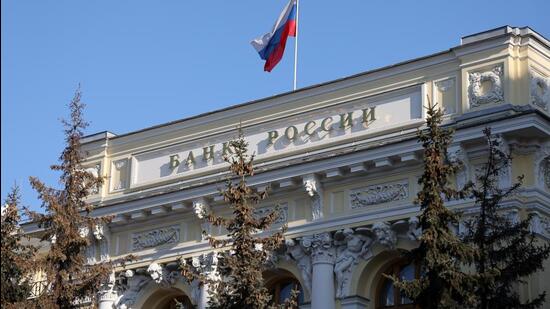
The measures mean that the Central Bank of Russia cannot conduct any transactions in dollars, it cannot access its reserves in dollars, its assets in the US are immobilised, and financial institutions that hold Russian reserves in dollars can’t move them. A treasury department statement said that the move will “disrupt Russia’s attempts to prop up its rapidly depreciating currency by restricting global supplies of the ruble and access to reserves that Russia may try to exchange to support the rouble”.
Secretary of state Antony J Blinken said that the US, in coordination with allies and partners, had taken further action against the Russian financial system “in response to Russia’s continuing premeditated war against Ukraine”.
“We took today’s actions to impair Russia’s ability to use its international reserves in ways that undermine the impact of our sanctions, as well as to prevent Russia from accessing its wealth fund for use in its ongoing war against Ukraine,” he said.
This follows a decision taken by President Joe Biden and a set of US allies over the weekend to impose restrictions on the central bank, as well as cut off a set of Russian banks from the SWIFT system. On Saturday, European Commission president Ursula von der Leyen had said that they would “paralyse the assets of Russia’s central bank”.
The department of treasury’s office of foreign assets control has also imposed sanctions on the Russian Direct Investment Fund, its subsidiaries and its chief executive officer, Kirill Dmitriev, who is supposed to be a close aide of Russian President Vladimir Putin.
The only exception that has been made are with regard to energy-related transactions, reflecting the US attempt to find a way to inflict costs on Russian economy without a skyrocketing of energy prices which will hit both the American and European markets.
US officials said the move is meant to show that Russia is “not sanctions-proof”, attack what Moscow thought was its “insurance policy” in terms of substantial reserves by making it impossible for Russia to access these reserves, disconnect Russia from the global economy, weaken the Russian currency even further, unleash a cycle of inflation, constrict the central bank’s routine functioning, exacerbate liquidity issues, make Russia’s aggression a “strategic failure”, and ensure that the Russian economy went backward as long as Putin moved forward with his aggression.
A senior administration official said that the move had been months in planning, and was being discussed with allies and partners since November. Russia, he indicated, had assumed that it could turn to its “war-chest” of over $630 billion when sanctions hit, but the US move, in coordination with United Kingdom and Europe, has rendered that difficult for reserves held in dollars, Euros, and pound sterlings — and constricted Russia’s ability to turn to bailouts.
The announcement was made on Monday morning eastern time in US, before the markets opened to limit Russia’s ability to access the funds immediately. As of last June last year, the Central Bank held 32% of its reserves, 16% in dollars, and 7% in pounds.
Edward Fishman, a former administration official who handled sanctions policy and now a non-resident senior fellow at the Atlantic Council, said that the US move was the “most ambitious form that this action could take”.
“The action renders ALL of the Russian government’s rainy day funds inert. It is comprehensive..This is sanctions action without precedent. As a result, the specific consequences aren’t easy to predict with a high level of confidence. But the consequences will be far-reaching. And it took a whole lot of courage for the US and Europe to take this step,” he said in a post on Twitter.


