
 E-Paper



Vision impairment, balance disruption: What happens to human body in deep space?
NASA's 45-day post-mission rehabilitation program is designed to help astronauts recover from the physical effects of spaceflight

 Prefer HTon Google


National Aeronautics and Space Administration (NASA) astronauts Sunita Williams and Butch Wilmore are returning to the Earth after a nine-month-long overstay at the International Space Station (ISS).
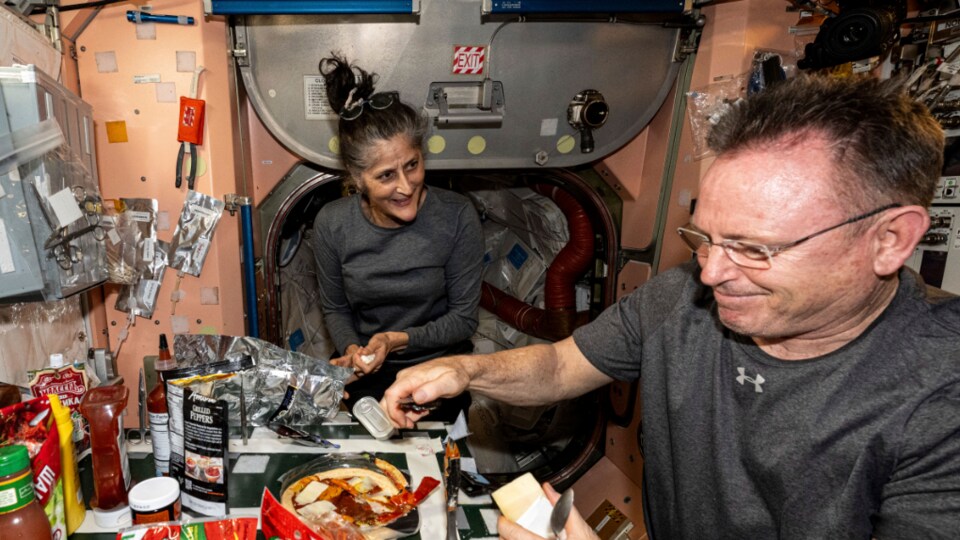
As Sunita ‘Suni’ Williams and Butch Wilmore return home, some of the health risks they have encountered are well-understood and managed, while others continue to remain unknown.
Also read | Sunita Williams return LIVE updates
The American astronauts are accompanied by astronaut Nick Hague and Russian cosmonaut Aleksandr Gorbunov, who reached the ISS in December on a rescue mission to bring the stranded duo back.
NASA said the Crew-9 members successfully undocked from the ISS as scheduled. “Sunni and Butch successfully begin their belated journey back home,” the agency said in its commentary.
The four-member crew undocked from the ISS at 1:05 am ET (10:35 am IST) and began a 17-hour trip back to Earth. The replacement crew was handed over the responsibilities of the mission to Crew-10 before Sunita Williams and Butch Wilmore returned to Earth.
Also read | Sunita Williams' homecoming: Why NASA astronauts' return was delayed for months
The four astronauts from Crew-9 expected to splash down in the Gulf of Mexico at 5:57 pm ET on Tuesday (3:27 am IST, Wednesday). The exact location of the landing will depend on local weather conditions.
The focus will now shift to their scientific discoveries and also their physical recovery after enduring challenging conditions in space.
Fluid shift, pressure on eyeballs, balance disruption
Humans' basic physical movements on Earth resist gravity, an element missing in space. Such challenging conditions lead to bone and muscle deterioration, radiation exposure, vision impairment, and loneliness due to physical isolation.
To counteract physical degradation, astronauts use three exercise machines on the ISS, including a 2009-installed resistance device that simulates free weights using vacuum tubes and flywheel cables.
Rihana Bokhari, an assistant professor at the Center for Space Medicine at Baylor College, told AFP that a two-hour daily workout keeps them in shape. “The best results that we have to show that we're being very effective is that we don't really have a fracture problem in astronauts when they return to the ground, though the bone loss is still detectable on scans,” she said.
Also see | NASA photos of Sunita Williams in space
Emmanuel Urquieta, vice chair of Aerospace Medicine at the University of Central Florida, said astronauts tend to lose balance after landing on Earth and must train their ears again. “This happens to every single astronaut, even those who go into space just for a few days,” he said.
Microgravity conditions also cause bodily fluids to be redistributed toward the head. This increases calcium levels in the blood, raising the risk of kidney stones.
Fluid shifts might also lead to increased intracranial pressure, altering the shape of the eyeball and causing spaceflight-associated neuro-ocular syndrome (SANS), causing mild-to-moderate vision impairment, the AFP report mentioned. Another theory suggests raised carbon dioxide levels are the cause.
Radiation levels at ISS
Radiation levels inside the ISS are higher as it passes through the Van Allen radiation belt, which safeguards the Earth's own magnetic field from being ripped off by cosmic events.
Though the Earth's magnetic field offers significant protection, astrophysicist Siegfried Eggl noted that missions to Mars and the Moon will increase exposure to cosmic radiation from the Sun.
NASA aims to limit astronauts' increased lifetime cancer risk to within three per cent. The agency's 45-day post-mission rehabilitation program is designed to help astronauts recover from the physical effects of spaceflight, particularly those experienced after long-duration missions on the International Space Station (ISS) or other space environments.
While the program lasts 45 days, full recovery may take longer, especially after extended space missions. Some astronauts report lingering effects even months or years later, particularly in bone density and cardiovascular health.
(With AFP inputs)


