
 E-Paper



What are ‘Dragon’ drones used by Ukraine to drop molten metal on Russian troops? 10 points
Videos have emerged on social media of the Ukrainian military dropping ‘Dragon' drones on the Russian army in the Russia-held region of Kharkiv in Ukraine.

 Prefer HTon Google


Over the past few days, videos have been posted on social media of Ukrainian military dropping fire-spewing ‘Dragon' drones on positions held by the Russian army in the Russia-held region of Kharkiv in Ukraine.
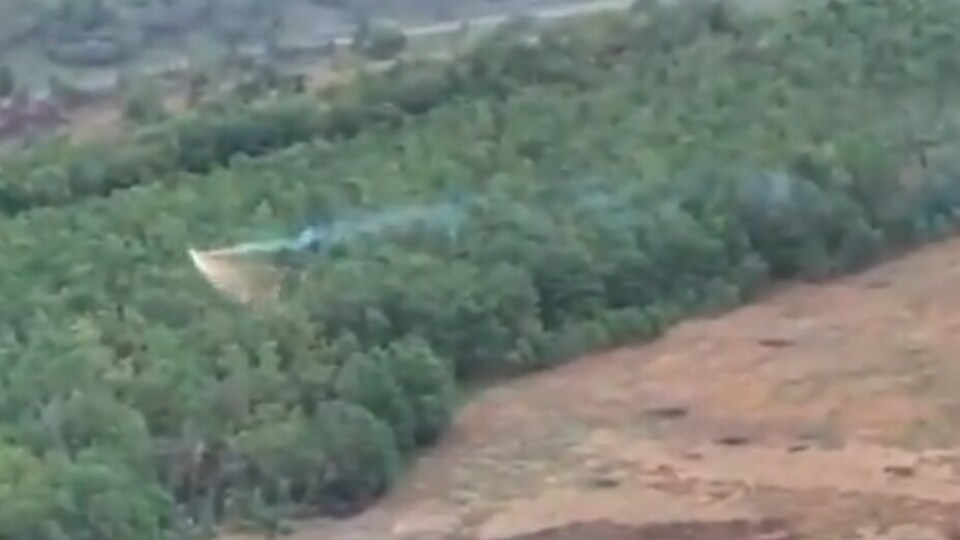
On Wednesday, even Ukraine's defense ministry uploaded a video to Telegram, showing the low-flying drones releasing ‘torrents of fire’ (actually molten metal).
What is a Dragon drone?
(1.) The drone actually drops thermite, a white-hot mixture of aluminum powder and iron oxide.
(2.) Thermite burns at temperatures up to 4000 degrees Fahrenheit (2200 degrees Celsius). Therefore, it can quickly burn off trees and vegetation cover.
(3.) As it comes down, the mixture resembles the fire spewed by the mythical dragon, and hence the name.
(4.) There is little protection against thermite as it can burn through almost everything, including even metals.
(5.) Previously, it has been used by Germany and the Allies in World War II, and by the United States military from the 1960s through 2014, and then resuming production again in 2023.
(6.) Discovered in the 1890s and originally used to weld railway tracks, the material is dropped ‘directly through the hatches, where the intense heat quickly ignites, and drops everything inside,’ according to Action on Armed Violence (AOAV).
(67) This precision, combined with the drone's ability to bypass traditional defense, makes thermite a ‘highly effective tool in modern warfare,’ says AOAV, a UK-based anti-war advocacy group.
(8.) Thermite is just one type of ‘incendiary weapon,’ with others including napalm and white phosphorous.
(9.) “Incendiary weapons cause massive destruction and environmental damage and produce fires that are difficult to predict and contain,” as per the United Nations Office for Disarmament.
(10.) These can inflict ‘fourth or fifth-degree burns’ and damage muscles, ligaments, tendons, nerves, blood vessels, and even bones, states Human Rights Watch (HRW).


