
For nearly three decades, the Shinawatra family in Thailand and Cambodia’s Hun clan have dominated the politics of their respective countries, while building amiable ties that stretched into business deals and protection from political enemies.
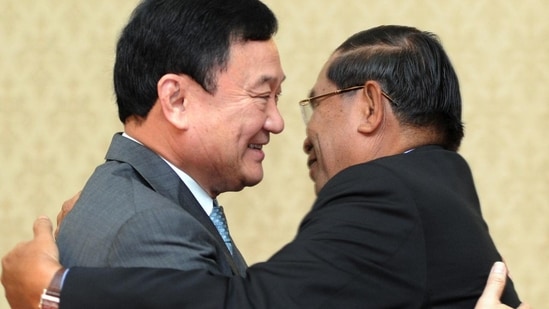
Now, the relationship between the powerful dynasties has spectacularly imploded and is inflaming a deadly border clash in the heart of Southeast Asia.
The details
Thai and Cambodian forces on Friday traded heavy fire across parts of their 500-mile border for a second day. The Cambodian military fired rockets and artillery, while its Thai counterpart dispatched armed drones and F-16 jet fighters to target ammunition depots and enemy strongholds, according to authorities in both countries and video footage released by the Thai military.
The clashes have killed at least 14 civilians in Thailand and one in Cambodia, injured dozens and forced more than 100,000 to flee their homes. It is the deadliest escalation since at least 2011 of a dispute that dates back more than a century to when Cambodia was still a French colony.
The contested territories include several ancient stone temples built during the Khmer Empire, which ruled swaths of Southeast Asia some 1,000 years ago and constructed the world-famous Angkor Wat complex in northern Cambodia. Both Thailand and Cambodia consider the Hindu monuments an important part of their cultural heritage.
{{/usCountry}}The contested territories include several ancient stone temples built during the Khmer Empire, which ruled swaths of Southeast Asia some 1,000 years ago and constructed the world-famous Angkor Wat complex in northern Cambodia. Both Thailand and Cambodia consider the Hindu monuments an important part of their cultural heritage.
{{/usCountry}}The Preah Vihear temple near the Cambodia-Thailand border is part of the contested territories.Damage from a fire caused by Cambodian artillery at a convenience store is seen in the Thai border province of Sisaket.
The context
It is unclear what exactly triggered the unraveling of the alliance between two of the region’s most enduring political families. On May 28, Thai and Cambodian troops exchanged gunfire near one of the contested temples, leading to the death of one Cambodian soldier and raising tensions between both sides.
Weeks later, Hun Sen, Cambodia’s longtime leader and the father of current Prime Minister Hun Manet, released a recording of a phone conversation with Thai Prime Minister Paetongtarn Shinawatra, herself the daughter of Thailand’s influential former leader and telecommunications tycoon Thaksin Shinawatra.
In the call, Paetongtarn referred to Hun Sen as her “uncle” and herself as his “niece“ and pledged to do “anything he wants” to relieve the border tensions. She also called Thailand’s powerful military “the opposing side.” The leaked audio damaged her reputation in Thailand and prompted the country’s Constitutional Court to suspend Paetongtarn from office as it deliberates charges that she undermined her country’s sovereignty.
Her father waded into the conflict on Thursday, when he used his account on X to reject outside offers to mediate. “We probably need to let the Thai military do their duty to teach Hun Sen a lesson about his cunning ways first,” Thaksin wrote.
Hun Sen, whose government welcomed hundreds of Thaksin allies when they were forced into exile following a 2014 coup, shot back on his Facebook page. “Now, under the pretext of taking revenge on Hun Sen, [Thaksin] is resorting to war, the ultimate consequence of which will be the suffering of the people,” the former Cambodian leader wrote.
What’s next?
Analysts say that the breakdown in relations, along with the Shinawatras’ weakening grip on power in Thailand following Paetongtarn’s suspension, could make it harder to resolve the current clashes.
Boonlai Wila, a Thai farmer who had sought refuge at a temple away from the border with Cambodia, said: “Villagers are saying Hun Sen and the Shinawatras are fighting, betraying each other.”
“We’ve also been asking: Why didn’t they handle this sooner—before it got this big?”
Write to Gabriele Steinhauser at Gabriele.Steinhauser@wsj.com