It is not only goods that travelled along the iconic Silk Road that touched India, but also intestinal parasites, according to new research by Cambridge researchers who discovered them in 2,000-year-old faecal remains on “personal hygiene sticks”.
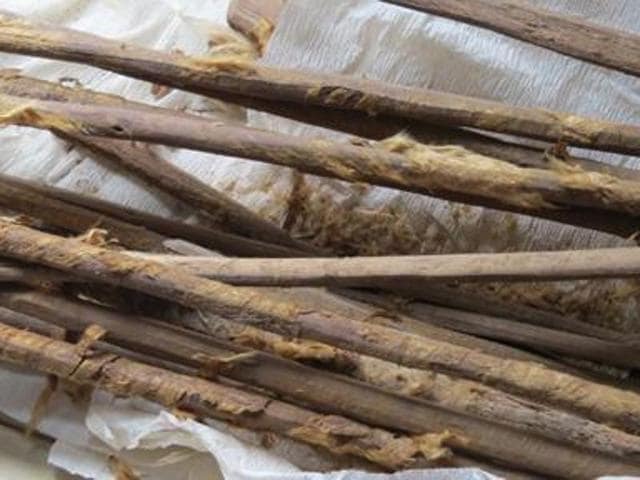
Excavation at an ancient latrine site near a desert in northwestern China revealed the first archaeological evidence that travellers along the Silk Road were responsible for the spread of infectious diseases along huge distances of the route.
Cambridge researchers Hui-Yuan Yeh and Piers Mitchell used microscopy to study preserved faeces on ancient “personal hygiene sticks” in the latrine at what was a large Silk Road relay station on the eastern margins of Tamrin Basin, a region that contains the Taklamakan desert.
They found eggs from four species of parasitic worm (helminths) were present - roundworm (Ascaris lumbricoides), whipworm (Trichuris trichiura), tapeworm (Taenia sp.), and Chinese liver fluke (Clonorchis sinensis) - according to findings published on Friday in the Journal of Archaeological Science: Reports.
Chinese liver fluke is a parasitic flatworm that causes abdominal pain, diarrhoea, jaundice and liver cancer. It requires well-watered, marshy areas to complete its life cycle.
{{/usCountry}}Chinese liver fluke is a parasitic flatworm that causes abdominal pain, diarrhoea, jaundice and liver cancer. It requires well-watered, marshy areas to complete its life cycle.
{{/usCountry}}The Xuanquanzhi relay station was located at the eastern end of the arid Tamrin Basin, an area that contains the fearsome Taklamakan desert. The liver fluke could not have been endemic in this dry region, the study says.
Based on current prevalence of the Chinese liver fluke, its closest endemic area to the latrine’s location in Dunhuang is around 1,500km away, and the species is most common in Guandong province – some 2,000km from Dunhuang.
“When I first saw the Chinese liver fluke egg down the microscope I knew that we had made a momentous discovery,” said Hui-Yuan Yeh, one of the study’s authors. “Our study is the first to use archaeological evidence from a site on the Silk Road to demonstrate that travellers were taking infectious diseases with them over these huge distances.”
The Silk Road or Silk Route came to prominence during the Han Dynasty in China (202 BC-AD 220) as merchants, explorers, soldiers and government officials journeyed between East Asia and the Middle East and Mediterranean region.