E-Paper



WHO highlights omissions in report criticising UN health body’s Covid response
The Lancet Commission blamed the UN health body for not declaring Covid-19 a public health emergency and recognising the airborne spread of the virus on time

 Prefer HTon Google


The World Health Organisation (WHO) on Thursday cited “several key omissions and misinterpretations” in the Lancet Commission report which on Wednesday blamed the UN health body for not declaring Covid-19 a public health emergency and recognising the airborne spread of the virus on time.
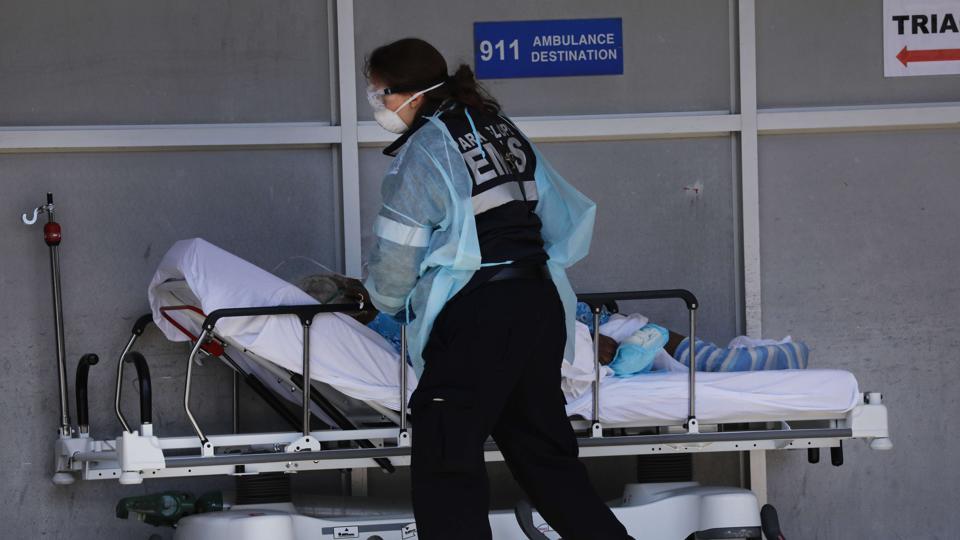
“There are several key omissions and misinterpretations in the report, not least regarding the public health emergency of international concern (PHEIC) and the speed and scope of WHO’s actions,” WHO said in a statement.
It detailed its actions to help member countries deal with the pandemic in time and said it has regularly updated guidance and strategies based on the latest knowledge about the SARS-Cov-2 virus, which causes Covid-19, through its global expert networks and guideline development groups from day one.
WHO said it received the first alerts of cases of pneumonia of unknown cause in China’s Wuhan on December 30, 2019, and sought further information from Chinese health authorities the next day. On 1 January 2020, WHO said, it activated its Incident Management System to manage daily activities. A team, which includes focal points on clinical care, infection prevention, and control, diagnostics, logistics, and communications, met daily throughout 2020 into 2021 and continues to meet this year, WHO said.
WHO said it issued a global alert to all member states based on its initial risk assessment of the situation in China on January 5, 2020. “This alerted the Member States and advised them to take measures to identify cases, care for patients, and prevent infection and onward human-to-human transmission for acute respiratory pathogens with epidemic and pandemic potential,” said the statement. “This was WHO’s first global warning to take concrete measures for an unknown respiratory disease. WHO has consistently driven knowledge-sharing through dedicated briefings for countries, during which the critical experiences of early-affected countries were shared and the elements of WHO’s comprehensive response were outlined.”
WHO said it started discussions on January 9, 2020, with established global expert networks on all available information on the cluster reported from China. It added these networks enabled the real-time exchange of direct knowledge, experience, and early study findings, which fed directly into WHO’s early advice and recommendations. Between January 10 and 12, a comprehensive package of technical guidance was published for countries, it added.
WHO said it published the first protocol on January 13, to develop PCR tests to identify cases based on the release of the full genome sequence two days earlier. It added it began shipping validated PCR assays by February 2 to countries globally. WHO said on January 22 and 23, when there were nine cases and no deaths reported outside China, its convened the Emergency Committee to meet, and advise whether the event constituted a public health emergency of international concern. The committee advised that it did not.
WHO said from January 27 to 28, a team travelled to China to meet with top government officials, gather information about the outbreak, and seek cooperation. It added on January 30, when 98 cases (and no deaths) were reported in 18 countries outside China, the Emergency Committee was reconvened and advised the outbreak constituted a public health emergency of international concern and was formally declared so issuing temporary recommendations for how countries could further prepare and respond.
WHO said on February 4, WHO’s Strategic Preparedness and Response Plan was published and outlined comprehensive measures needed to take to suppress transmission and save lives. “WHO played, and continues to play, a vital role in getting COVID-19 tools to countries in need… The pandemic is not over, though the end is in sight, and WHO continues its response, while laying a stronger foundation for the future.”