E-Paper



Why China is sending its foreign minister to India
Though Wang's visit is linked more to Beijing’s geostrategic imperatives related to the turmoil created by the war in Ukraine, India should keep the focus on the resolution of the standoff in Ladakh

 Prefer HTon Google


China’s decision to send foreign minister Wang Yi on a visit to India is linked more to Beijing’s geostrategic imperatives related to the turmoil created by the war in Ukraine than efforts to end the military standoff on the Line of Actual Control (LAC) that began almost two years ago.
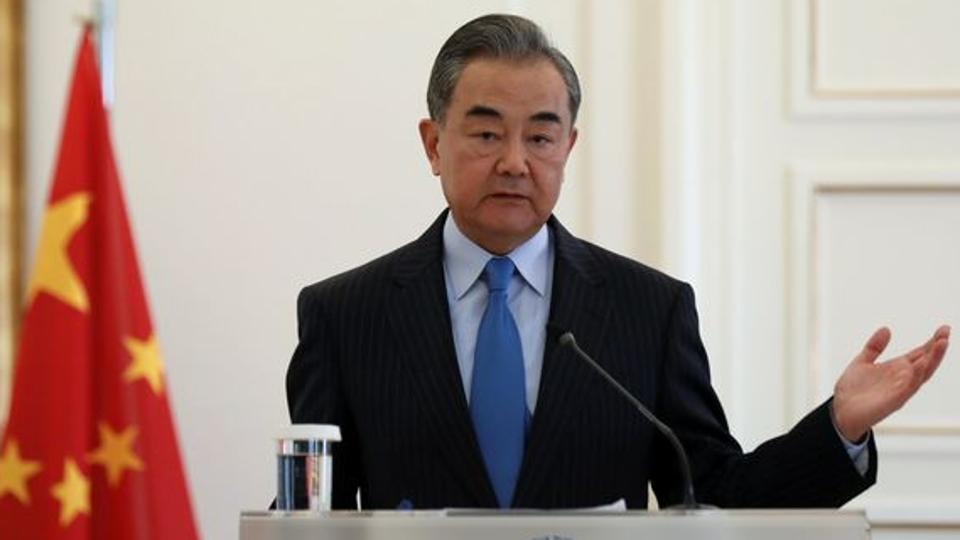
Experts contend it is imperative for the Indian side to keep the focus for Wang’s visit squarely on the resolution of the standoff in Ladakh sector that has taken bilateral relations to an all-time low following the first fatalities on LAC in 45 years.
Wang, who holds the rank of state councillor, is set to fly into India later on Thursday after a previously unannounced trip to Afghanistan for talks with Taliban leaders, including acting foreign minister Amir Khan Muttaqi. The trip to Kabul was reportedly cobbled together hastily to get around the problem of flying directly from Pakistan – where Wang attended a meeting of foreign ministers of the Organisation of Islamic Cooperation (OIC) – to India.
As speculation swirled in New Delhi regarding Wang’s visit over the past few days, neither China nor India made any official announcement regarding the trip, which was proposed by the Chinese side. Behind the scenes, there were hectic consultations on the agenda for the discussions. Though Wang is the first senior Chinese leader to visit India since the Ladakh standoff began, a meeting with the Indian prime minister reportedly isn’t on the cards despite considerable efforts made by the Chinese side.
A day before the visit, the Indian side rejected Wang’s remarks at the OIC meeting in Islamabad that endorsed the views expressed by other leaders such as Pakistan Prime Minister Imran Khan and the Saudi foreign minister on the Kashmir issue. The external affairs ministry reiterated that Kashmir is an internal matter and China has no locus standi to comment on the issue.
Experts believe China’s decision to reach out to India at this juncture is more about the worldwide response to Russia’s invasion of Ukraine and gaining Indian support for efforts to prevent the isolation of Russian President Vladimir Putin. China is among the rare countries that have voted in favour of Russia during Ukraine-related sessions of UN bodies.
Former ambassador Vishnu Prakash, a leading commentator, said China is feeling the heat because of the stand it has taken on the Ukraine crisis and Russia’s role.
“There is also China’s desire to get the Indian prime minister to attend the Brics (Brazil-Russia-India-China-South Africa) Summit they will host later this year,” he said.
Experts, however, believe India should ensure that the focus remains on the LAC standoff, especially since the two sides are yet to agree on disengagement and de-escalation at several friction points despite numerous rounds of diplomatic and military talks.
“The Chinese side will never admit its mistake. That is not their way of doing things,” Prakash said.
“This visit is a kind of signal, and purely a tactical manoeuvre. In the bigger scheme of things, India remains an irritant and has to be shown its place,” he said.
Sameer Patil, senior fellow at the Observer Research Foundation (ORF), said the major reason behind Wang’s visit is the conflict in Ukraine.
“This could be China’s attempt to give some manoeuvring space to Russia and ensure that India continues its neutral approach to the hostilities. In addition, the Brics Summit is scheduled later this year and Wang wants to ensure that India is represented at the highest level at the summit,” Patil said.
“It will be a major perception victory for Chinese President Xi Jinping, who besides Russian President Vladimir Putin, hasn’t hosted any other major world leader since the outbreak of Covid-19. But I think New Delhi will persist with its stance that without end to the border standoff, it will be difficult for India to accommodate Chinese demands,” he added.
Following the India-Japan Summit last week, foreign secretary Harsh Shringla had made it clear that it couldn’t be “business as usual” in the relationship with China till peace and tranquillity is restored in the border areas. This is in marked contrast to China’s repeated calls to put the standoff in its “appropriate” place in bilateral relations while taking forward contacts in areas such as trade. For New Delhi, it will be key to ensure that there is forward movement on the border issue during the Chinese foreign minister’s visit.