
 E-Paper



Why Donald Trump is putting his face on a coin
Trump is bypassing tradition to put his face on currency, echoing historical rulers and sparking debate over modern democratic norms and personal branding


 Prefer HTon Google


“You’ve got to put your name on stuff or no one remembers you.” This, according to Politico, was President Donald Trump’s verdict when touring George Washington’s Mount Vernon estate. The founding father failed to name his property after himself and is now entirely forgotten.
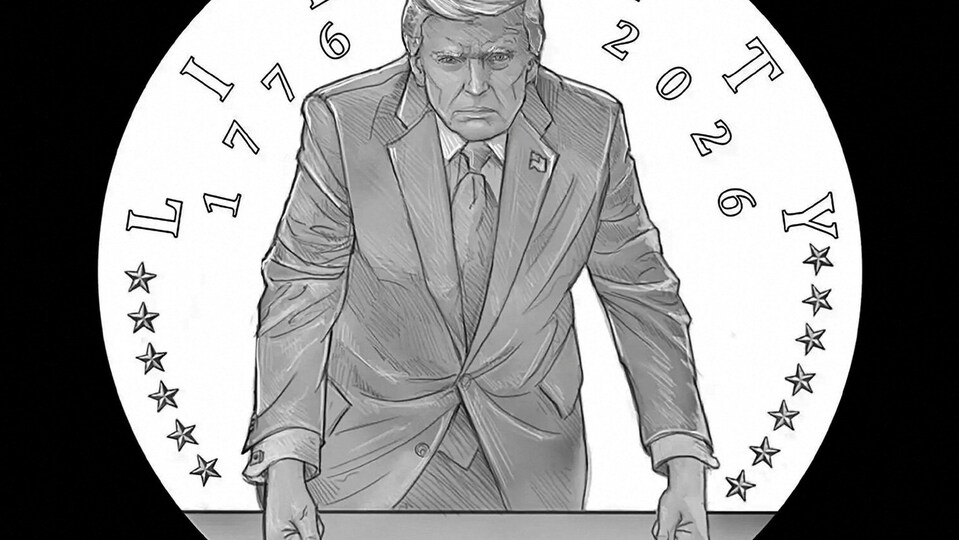
In addition to putting his name on stuff, Mr Trump is energetically putting his picture on stuff, too. Gigantic banners bearing what a cabinet member called his “big, beautiful face” hang outside government buildings all over the District of Columbia, as America’s capital city is universally known. On the Trump Gold Card, which for $1m allows the bearer to live in America, the president’s image is larger than that of the Statue of Liberty. And now Mr Trump is putting his face on American money.
On March 19th the us Commission of Fine Arts (its members handpicked by the president) approved a golden coin with Mr Trump’s likeness to commemorate America’s 250th birthday. The coin shows Mr Trump leaning over a desk projecting toughness: fists clenched, brow furrowed, cheekbones chiselled. The word “liberty” is inscribed above him. An eagle will grace the back of the coin.
This represents a break with tradition. Serving political leaders of democracies are not usually depicted on currencies. Symbolic heads of state sometimes are, such as the monarchs of Britain and Sweden. Dictators often are, too: Mobutu Sese Seko, the late tyrant of Zaire, had himself portrayed on banknotes wearing a leopard-skin hat. But America has largely restricted itself to putting the faces of dead presidents or other notable figures on notes and coins.
Indeed, federal law bars the depiction of living presidents on currency. The Trump administration is using a loophole that allows the US Mint to issue commemorative gold coins without explicit congressional approval, according to the Treasury. The last time a living American president was put on a coin was in 1926, when Calvin Coolidge appeared on one celebrating America’s 150th birthday.
The practice of putting rulers’ faces on money to remind everyone who’s in charge dates back centuries. Julius Caesar was the first living Roman to do it, with coins that declared him dictator for life and heralded the end of the Roman republic. Commodus, a later emperor, had himself depicted on coins as Hercules, a demigod strong enough to hold up the sky.
But in modern democracies, such displays of pomp are unfashionable. Britain recently decided that even dead famous people may be too controversial to put on banknotes, and will now honour wildlife instead (as well as King Charles).


