
 E-Paper



India had offered dialogue to Nepal on row over map. Why PM Oli ignored it
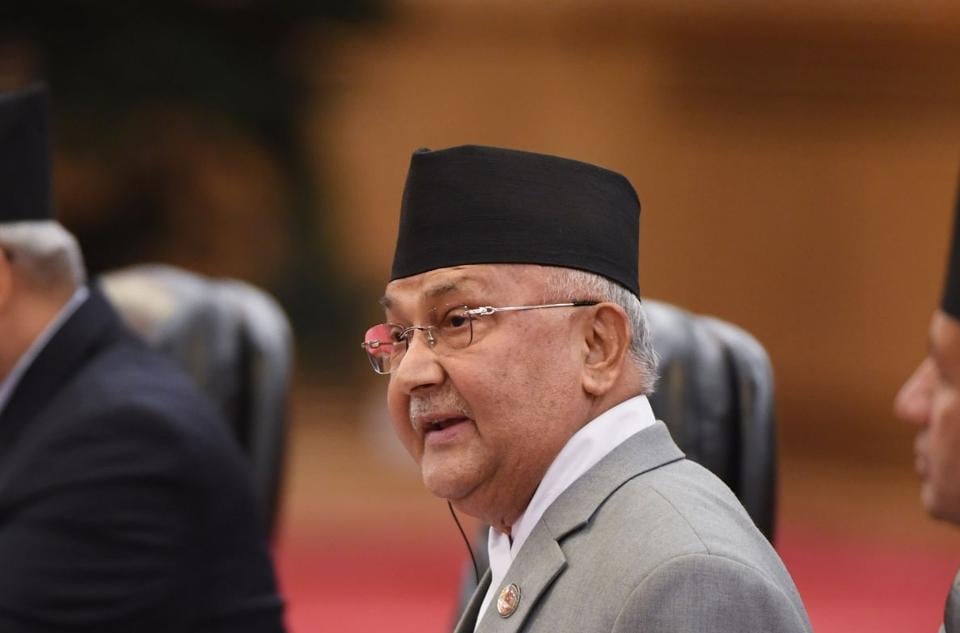
Prime Minister KP Sharma Oli has let self-preservation trump national interest

 Prefer HTon Google


On Saturday, the lower house of the Nepali Parliament passed the constitutional amendment bill updating the so-called “political map of Nepal”. The “updated map” includes territories that are parts of the Indian states of Uttarakhand and Bihar. The bill will now go through Nepal’s upper house before receiving presidential assent. According to experts, that is a mere formality.
In Nepal, a question that continues to be raised among the intelligentsia, public, politicians is why India has been silent on diplomatic dialogue.
But first, lets focus on the ongoing political context in Nepal
A screen shot of public debate within Nepal would reveal a widespread belief that the constitutional amendment was being used by Prime Minister KP Sharma Oli to hold on to his position within the Nepal Communist Party, which was highly shaky in early May when pressure on him to vacate the Prime Minister’s post had become unbearable.
Also Read: Nepal parliament clears new map, shuts possibility of talks on boundary row
There were saner voices in Kathmandu that advised him not to bring the constitutional amendment. On the contrary, PM Oli was told, that the constitution amendment bill would close the channels of diplomatic communication with India.
On the diplomatic dialogue to discuss the outstanding boundary issue, Nepal seems to have adopted a twin approach. A public call for dialogue combined with an active private effort to scuttle it.
In public pronouncements, including in response to questions of lawmakers in Parliament on the status of dialogue with India, Foreign Minister Pradeep Kumar Gyawali had expressed surprise that India was sitting down for talks with China but was ignoring Nepal’s offer for talks.
Why indeed has India not offered to sit down for talks? Has it actually snubbed Nepal’s request, as Pradeep Kumar Gyawali seems to claim.
Also Read: In 4 sentences, Army chief hints India’s approach to Nepal after map row
A top foreign ministry source in Kathmandu, however, told Hindustan Times that this wasn’t accurate.
The source said India had made a clear-cut offer of a foreign secretary-level phone call; to be followed by a video conference between the two foreign secretaries and then, a visit of Nepal’s foreign secretary to India to discuss the boundary issue.
External affairs ministry sources in New Delhi confirmed that this offer was available with foreign minister Gyawali and Prime Minister Oli even before the constitution amendment bill was tabled.
This offer was made a full one week before foreign minister Gyawali stated that India has been snubbing Nepal’s requests for talks on the border issue.
Only foreign minister Gyawali can answer if an offer of a phone call, a video conference and exchange of visits a snub as he described it.
Nepal’s foreign ministry sources confirmed that Prime Minister Oli seemed disinterested in India’s offer. For reasons best known to him, he was neither ready to halt nor take a step back on the constitutional amendment despite knowing that the constitutional amendment is viewed by India as an irrevocable step which predetermines the outcome of any future negotiations.
Indeed, according to some interlocutors, in his private meetings, Prime Minister Oli has reportedly conveyed that he would proceed ahead with the amendment irrespective of the impact it might have on people-to-people relations between India and Nepal.
What we seem to have here is a carefully crafted pattern of deceit and deception where the Indian offer is not shared with Parliamentarians; and public and lawmakers are misled - all so that PM Oli can damage the special relationship that the people of the two countries continue to nurture.
Given that PM Oli has ignored that offer of diplomatic dialogue and gone ahead with amending the constitution, it is now up to him to create, if he so wishes, a conducive atmosphere in case he is interested in a bilateral dialogue on the boundary issue.
A leader of PM Oli’s experience and wisdom would know well that the time for verbal fudging is over; he now needs to walk the talk.


