
 E-Paper



With second sandstorm in 2 weeks, China reminded of pollution challenge
Concerns have grown as the storm was the second to hit Beijing in less than two weeks. Earlier in the month, Beijing faced the worst sandstorm in a decade when people woke up to orange skies as 12 provinces were blanketed in yellow sand and dust.

 Prefer HTon Google


A sandstorm hit China’s capital Beijing on Sunday morning pushing the air pollution levels in the city off the charts. The sandstorm resulted in the sky turning yellow and the sun reducing to a mere blue dot. The air quality index of the city hit the maximum reading of 500 on Sunday afternoon and the visibility in Beijing stood at less than 1,000 metres, reminding China of the pollution challenge that its capital city faces. The PM10, which shows the floating particles that can enter the lungs, surpassed 2,000 micrograms per cubic metre in some districts. Readings of smaller PM2.5 particles which can enter the bloodstream were above 300 micrograms per cubic metre
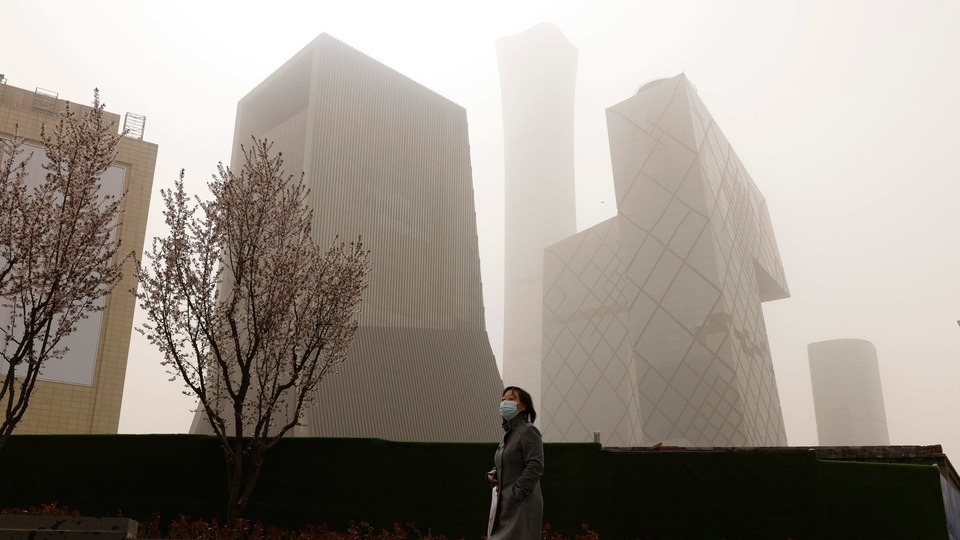
Parts of inner Mongolia, Shaanxi, Shanxi, Hebei, Tianjin, Liaoning and Jilin have also been affected by the storm which according to the meteorological department is expected to last for about 12 hours.
The department also said that the sandstorm was caused by strong winds which were carrying dust from drought-hit Mongolia and other parts of northwest China because of warmer temperature in the spring and lack of rain which created the sandstorm.
Concerns have grown as the storm was the second to hit Beijing in less than two weeks. Earlier in the month, Beijing faced the worst sandstorm in a decade when people woke up to orange skies as 12 provinces were blanketed in yellow sand and dust. The meteorological department has further said that Beijing might face more sandstorms in April, a prediction that has caused more worry for the city.
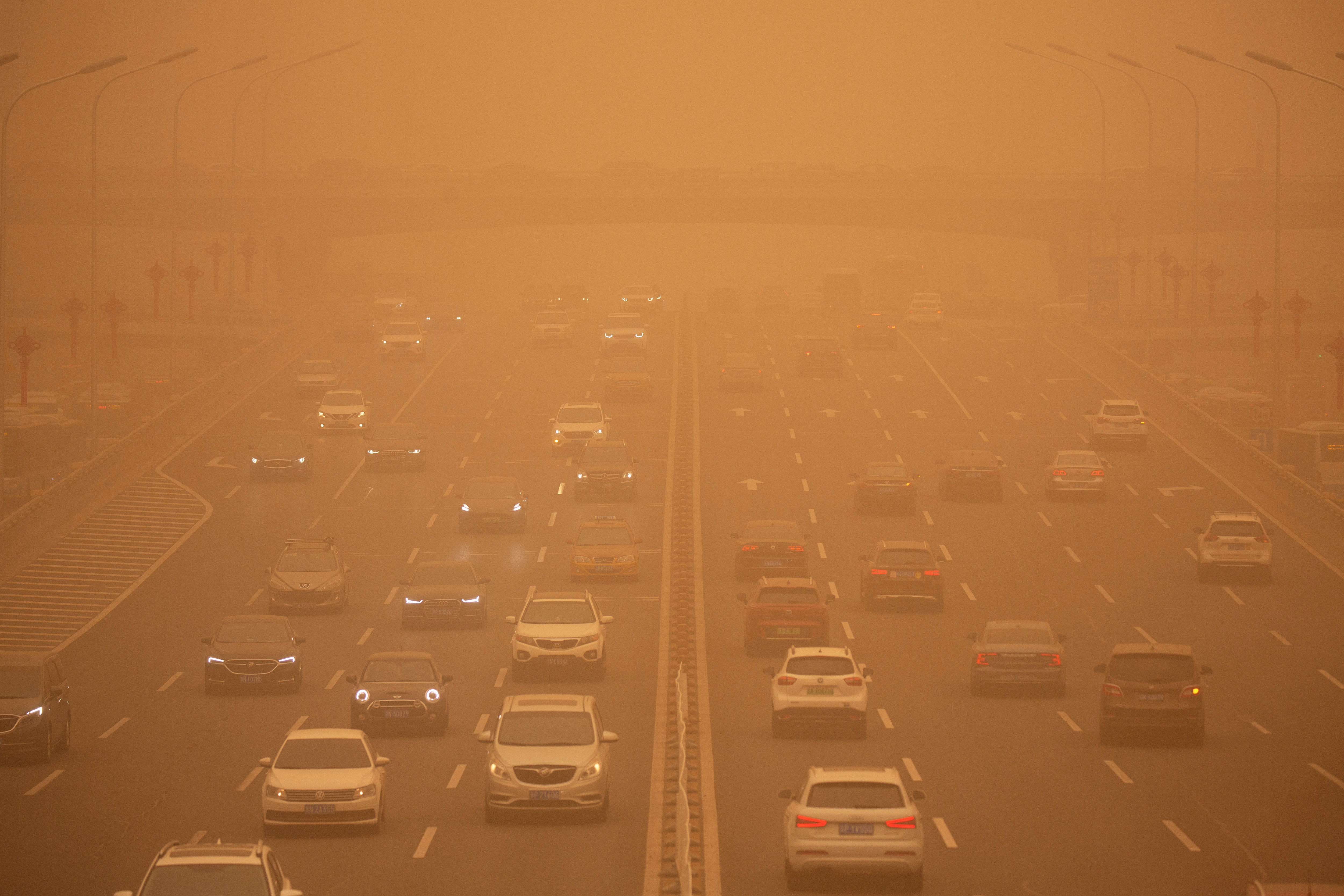
Pollution levels in Beijing
According to a 2020 report by Swiss monitoring group IQAir, residents in Beijing residents were subjected to “moderate” levels of pollution for only two months in 2019 which were August and September. The report added that for the remaining part of the year, residents experienced air quality which was “unhealthy for sensitive groups.” In 2019, the city had 42.1 µg/m³ of a PM2.5 average. In 2018 and 2017, 50.9 µg/m³ and 58.8 µg/m³ were the respective concentrations, the report said.


