
 E-Paper



Xi Jinping’s latest purge: paranoid or purposeful?
The message was clear: Mr Xi is firmly in charge, and unabashed about showing the party and the world that he will dump anyone deemed to be a bad actor.


 Prefer HTon Google


XINWEN LIANBO, the flagship evening newscast on Chinese state television, is known for its rigid consistency. True to form, its coverage of the Communist Party’s recently concluded plenum pretty much stuck to the pattern of recent years. It started with a wide-angle shot of the Great Hall of the People, followed by a clip of Central Committee members applauding as Politburo leaders walked in. Taking his place in the middle of the stage, Xi Jinping coolly gazed upon the assembled crowd. As he spoke, Committee members were rapt; many took notes.
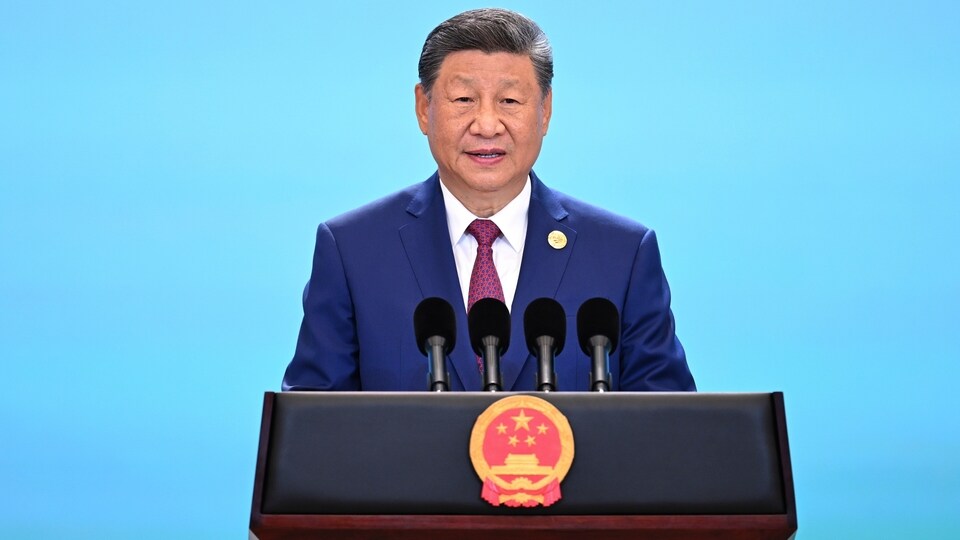
But as the camera panned back to the crowd again, a difference from previous plenums leapt out. Four largely empty rows gaped in the room. In all, 37 of the committee’s 205 full-time members were missing—a hint that many, probably most, of them had been purged. The planning for such an event is meticulous, so it was no accident that these vacant seats were shown. Indeed, in several shots the camera placed them dead-centre.
The message was clear: Mr Xi is firmly in charge, and unabashed about showing the party and the world that he will dump anyone deemed to be a bad actor. It was unclear what, exactly, the purged officials had done to deserve their punishment. State media accused some of corruption, without giving details. To cause such an extensive and public cleansing of the Party’s leadership ranks, their crimes had to be more than run-of-the-mill bribes.
China’s ongoing purge is remarkable for two reasons. One is its scale. By some measures it is the largest since Mao’s era. The last time attendance at a plenum was so low was during the Cultural Revolution. Mr Xi’s main focus has been the armed forces. The party expelled nine generals this month, taking the total to at least 22 since he came to power. His three immediate predecessors—Deng Xiaoping, Jiang Zemin and Hu Jintao—never removed a single general.
Just as remarkable is the fact that the latest purges are taking place nearly 13 years into Mr Xi’s rule. It was understandable that he should have cleaned out the party in his early years. Back then corruption was extreme. Mr Xi used his anti-graft sweep as a way to put his stamp on the army and get rid of potential enemies. Now, though, he is purging his own appointees. These are generals whom, presumably, he had thoroughly vetted before their promotion.
The purges have fuelled a debate among observers. Do they mean that Mr Xi is weaker than he appears since he cannot trust his own people? Or, rather, are they evidence of his iron grip?
The party itself offers few clues. A recent editorial in the People’s Liberation Army (PLA) Daily, the official military newspaper, provided the most clarity yet—or, better put, the least opacity—about the expulsion of the nine generals. It wrote they had been suspected of crimes involving “extraordinarily large sums of money”. It added an even more damning line, saying that they had been disloyal and had “undermined the principle of the party commanding the gun”.
According to Deng Yuwen, a former editor of a party newspaper who now lives in exile, this wording suggests that their gravest sin was factionalism: not that there was a power struggle but that generals had cultivated their own patronage networks. Another piece of circumstantial evidence is that many were previously involved in the same military formation, the former 31st Group Army. But even if true, this does not necessarily mean that Mr Xi had lost control of them, only that he was pruning his garden. In that sense the purges ought to be seen, in the first instance, as evidence of his raw power. Whether promoting officials or toppling them, the one constant is that Mr Xi calls the shots.
Purged and primed
The more interesting question is whether purges help or hinder China’s policymaking and its military capabilities. Many believe that such a harsh crackdown will beget more problems. Critical posts in the armed forces are now vacant, including three of seven seats on the central military commission, the highest decision-making body. Morale throughout the armed forces is likely to be damaged. More generally, fears about what will happen now and who is next for the chop may deter officials at all levels in the system from showing initiative. The combined effect—fear, anxiety, paranoia—is a recipe for sclerosis.
Yet there is a contrary case: that the purges serve a higher purpose for China. For this to be true, it must follow that corruption—the extraordinarily large sums of money mentioned in the PLA Daily—was at the root of the problem. “For Xi to have gone to such lengths in appointing these generals, only to turn around and fire them, something egregious must have happened,” says Lyle Morris of the Asia Society Policy Institute, a think-tank. The Pentagon’s 2024 annual report on China’s armed forces noted that some of the PLA’s dismissals may have been linked to fraud in the construction of underground silos for ballistic missiles—shocking given their importance for China’s nuclear posture. But it also noted that graft investigations had probably led the PLA to fix the silos, boosting its operational readiness. The corollary, then, is that purges may provide the same impetus on a systemic level. Little by little, they will mould the armed forces into a cleaner, more professional organisation, one that is ready to “fight and win wars”, as Mr Xi has repeatedly said.
This generous interpretation may seem easy to dismiss. Purges will probably never stop in China. Opportunities for graft are too vast when so much power is vested in high-ranking officials, with so little transparency restraining them. The country is thus doomed to repeat its pattern of corruption, crackdown and paranoia.
Yet those assessing China’s rise must weigh an unsettling possibility: that Mr Xi’s purges, far from being self-defeating, have become part of the system itself. If so, their role may be to strengthen it.


