
 E-Paper



A century of Indianising cricket in a corner of England
Nestled in a residential area in Osterley, the Indian Gymkhana has a long history related to cricket and the changing fortunes of the Indian community before and after independence. From 16 acres in 1922, it now sprawls over 10 acres of history.


Social scientists and cricket historians have long focussed on cricket as the symbol of de-colonisation, but one venue that has rarely figured in the discourse is the Indian Gymkhana in west London, which completes a century this year.
Nestled in a residential area in Osterley, the Indian Gymkhana has a long history related to cricket and the changing fortunes of the Indian community before and after independence. From 16 acres in 1922, it now sprawls over 10 acres of history.
Malcolm Muggeridge once joked that “Indians were the last living Englishmen”, reflecting the fact that while Britain lost its empire, aspects of its culture came to be rooted in its colonies. But in a reversal of sorts, the Gymkhana began the de-colonisation of cricket in England itself.
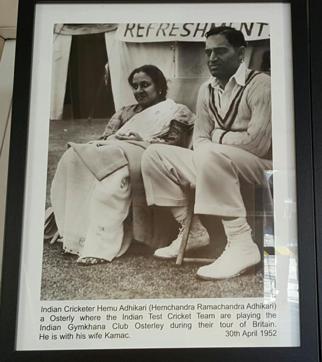
The Gymkhana’s story is closely linked to that of Indian cricket. Until recently, it was a tradition that every visiting Indian team would play its first match here. Almost every top Indian cricketer of note has played on its grounds over the decades.
“The Gymkhana was promoted by Indian maharajahs at a time when cricket was used as a political instrument. It was more than a place for cricket, a semi-political place, where Indians were trying to say to the British that we are equal, better than you, like you,” writer and broadcaster Mihir Bose told HT.
“It was unique in that no other former colony quite had a space like the Indian Gymkhana. It was also a home away from home for Indian cricket. The Indian diaspora used to welcome the visiting team at the Gymkhana, but things have changed in recent years.”
Established in 1916, the Gymkhana was patronised by Englishmen, Indian princes and the elite of the Indian community, but did not have a ground of its own. The story of it acquiring the current premises is the stuff of legend.
On a sunny summer day in 1920, two teams gathered to start play at Mill Hill in north London. The Gymkhana team was to be introduced to several invited celebrities as part of efforts to raise funds to buy the ground.
The two captains walked to the pitch for the toss, but as if on cue, the landlord rushed up with seven strong men, and said: “No money, no play.” The cricketers were standing on land which they were negotiating to buy for the club and had promised the landlord an advance deposit after the game.
MP Banjana, one of the first Indian-origin county cricketers who played for Somerset, said: “Let us play and we will settle the money problem afterward.” But the landlord was having none of that. Tempers rose, the landlord ordered the seven men to march the team off the pitch and the match ended before it had begun.
The two teams and celebrity visitors left feeling humiliated, but the incident added vigour to fund-raising efforts. TBW Ramsay, a barrister-at-law, enlisted the help of Lord Hawke, president of the MCC, and appealed for £15,000 to purchase a ground.
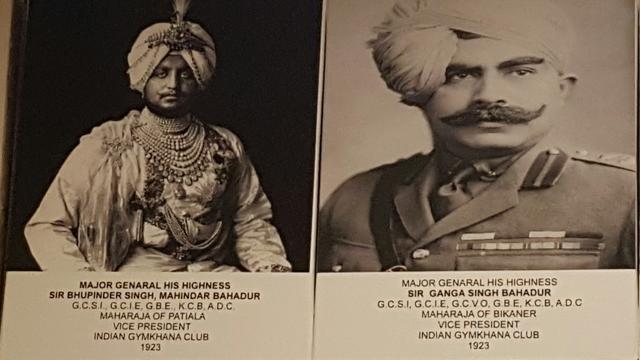
The princes and others who had been unceremoniously ousted from the Mill Hill pitch rallied to the cause. The Maharaja of Patiala came forward with a financial guarantee. Others such as the Maharajas of Kapurthala, Jaipur, Jodhpur, Cooch Behar and Indore, the Nizam of Hyderabad and Sir Victor Sassoon became founders and patrons.
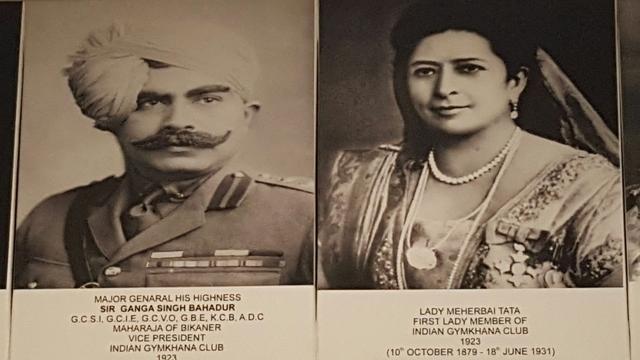
Lord Hawke became its first president and Dorabji Tata, Sayaji Rao Gaekwad of Baroda and Ganga Singh of Bikaner its first vice-presidents. Meherbai Tata became its first woman member in 1923.
The Gymkhana has since been supported by several prominent Indians, such as Swraj Paul, Ghulam Noon and Rami Ranger. Its current president is Nat Puri.
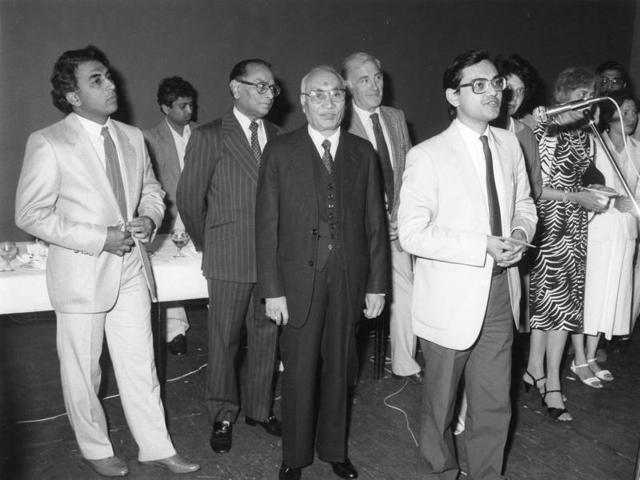
Cricket writer and commentator Ashis Ray, who played on its grounds, recalls an event to felicitate Sunil Gavaskar in 1984, at a time when the club was going through a rough patch financially: “The Gymkhana has a unique place in the history of Indian cricket.”
Bose said: “Well-off Indians felt at home here at a time when there was no other place for them to meet and interact. But over the years, the Indian community has grown, found new, better places to gather.”
SK Soni, Gymkhana secretary, recalls that an astro-turf hockey ground was laid in the mid-1980s, and proudly says that the Gymkhana’s hockey team is today a prominent participant in the national league. It also runs camps for children and people of various age groups.
As Bose said, the Gymkhana’s history reflects a world that has gone, but today it remains a vibrant place for sports and social interaction, with Indian and non-Indian members supporting it on and off the pitch – on the grounds, in a new gym, and a lively bar accompanied by Indian food.
The Indian high commission holds its annual Independence Day celebrations on the Gymkhana grounds, attended by thousands of people from various parts of Britain.


