Love her or loathe her, one thing's beyond dispute: Margaret Thatcher transformed Britain.
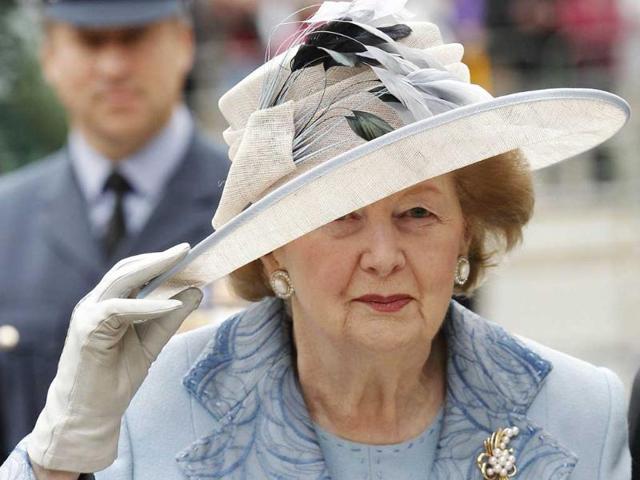
Britain's Iron Lady who ruled for 11 remarkable years imposed her will on a fractious, rundown nation — breaking the unions, triumphing in a far-off war, and selling off state industries at a record pace. She left behind a leaner government and more prosperous nation by the time a mutiny ousted her from No. 10 Downing Street.
Thatcher's spokesman, Tim Bell, said the former prime minister died on Monday morning of a stroke. She was 87.
Flags were at half-mast at Buckingham Palace, Parliament and Downing Street as a show of respect.
The British government said Thatcher will receive a ceremonial funeral with military honors. It was unclear when the service would be held.
Queen Elizabeth II authorised the ceremonial funeral — a step short of a state funeral — to be held at St. Paul's Cathedral in London. The service will be followed by a private cremation.
British prime minister David Cameron cut short a trip to Spain and France upon hearing the news.
For admirers, Thatcher was a savior who rescued Britain from ruin and laid the groundwork for an extraordinary economic renaissance. For critics, she was a heartless tyrant who ushered in an era of greed that kicked the weak out onto the streets and let the rich become filthy rich.