
 E-Paper



Scroll row puts art ambitions of China's rich on display
With two museums already in his empire, tycoon Liu Yiqian is a would-be Chinese Getty or Guggenheim, but a row over the authenticity of a scroll that cost him millions of dollars threatens his artistic legacy.


With two museums already in his empire, tycoon Liu Yiqian is a would-be Chinese Getty or Guggenheim, but a row over the authenticity of a scroll that cost him millions of dollars threatens his artistic legacy.

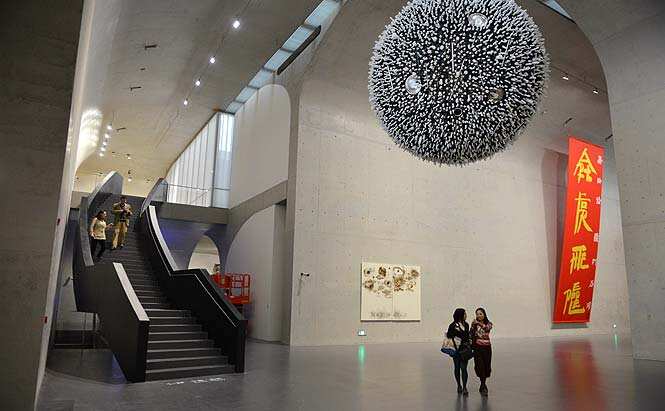
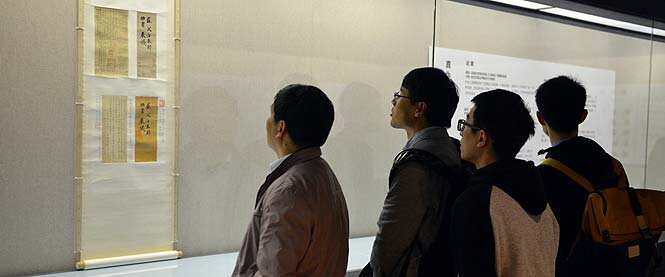
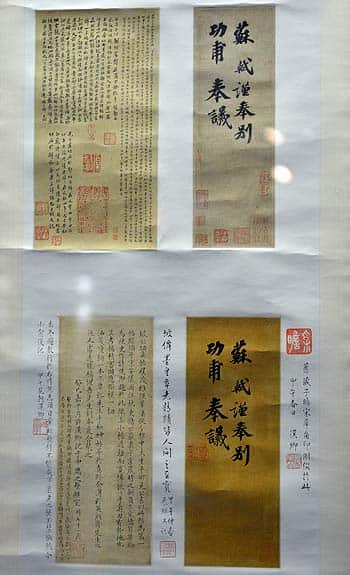
The work, with nine Chinese characters in black ink reading "Su Shi respectfully bids farewell to Gong Fu, Gentleman Court Consultant", is the star exhibit at Liu's newly-opened Long Museum West Bund in Shanghai.
The calligraphy is a mere 28 centimetres long by 10 centimetres wide (11 by 4 inches), but Liu paid $8.2 million to secure it at a Sotheby's auction in New York in September.
A taxi driver turned financier who is now one of the country's wealthiest people, he is among the new Chinese super-rich scouring the globe for artwork, snapping up objects and driving up prices, some even building their own museums to house their collections.
"Like the Gettys and the Guggenheims and the Whitneys... there's a long history of museums in the West and maybe now in China of collectors wanting to make a name for themselves and make a mark on history," said Clare Jacobson, author of "New Museums in China".
But the grand opening has been upset by a public argument with a renowned trio of experts from the state-backed Shanghai Museum who derided the work as a fake.
In the shadowy world of money and art, there are suggestions China's established official museums resent competition from private ones. There are also rumours, denied in the media, that the scroll once passed through the hands of the Shanghai Museum.
Attributed to poet Su Shi, one of the recognised four great calligraphers of the Song Dynasty of 960 to 1279, the scroll is known as the "Gong Fu Tie" after the official named in it.
But the Shanghai Museum researchers, Shan Guolin, Zhong Yinlan and Ling Lizhong, launched an unusual attack after the purchase, saying it was a much later copy.
"Traditional visual identification is already enough to make the judgement that Sotheby's 'Gong Fu Tie' is a counterfeit version," they said in one article. Some brushstrokes appeared "awkward" and unlike the writer's style, they have argued.
They declined to comment to AFP.
Liu stands behind the scroll's authenticity, as does Sotheby's, which along with rival Christie's has been courting Asian buyers, with China now among the largest art markets in the world.
"This is a good thing, debate on the authenticity of 'Gong Fu Tie' helps restore historical truth," Liu told state media, though he added the controversy had left him physically and mentally exhausted.
Liu declined an interview with AFP, citing unhappiness with a New York Times series last year on China's art market, which described it as riddled with fakes and inflated prices and called him a "new collector".
Lavish spending
Liu, 50, made his first fortune speculating in Shanghai's newly established stock market in the 1990s, but now runs a huge conglomerate active in several industries, and his wealth is estimated at $1.6 billion.
He is one of a number of Chinese collectors who have made headlines in global art sales circles.
But some have faced a domestic backlash with accusations of lavish spending and showing off, even as they claim to be returning cultural relics to China.
Critics have openly challenged the motives of real estate developer Huang Nubo, who paid $1.6 million for seven white marble columns from Beijing's Old Summer Palace which will be displayed at his alma mater, Peking University.
"The recovery of relics should be a state action, which ought to be achieved by justice without paying for them," Yao Le, researcher at Jiangsu province's Academy of Social Sciences, said in the Global Times newspaper.
Another tycoon, Wang Jianlin, came under fire after his company spent $28 million on a Picasso, with people saying the money would be better spent helping China's poor.
The scroll at the centre of the latest controversy is housed in a glass case in its own room in the basement of the new museum, a vast building in a government-backed art district.
A small sign headed "Su Shi" reads: "His brushwork is round, rich and full of changes, yet with a touch of innocence and brilliance."
On opening day, a visitor struggled to read the scroll, written in classical Chinese and the complex characters which gave way to a simplified version after the founding of the People's Republic of China by the Communist Party in 1949.
"We can't understand it," said the middle-aged woman, declining to give her name. "For us, it's too troublesome to appreciate."


